
Weak MedTech performance weighs on JNJ shares – Johnson & Johnson stock forecast following Q3 results
Weak MedTech results did not prevent Johnson & Johnson shares from recovering after their initial reaction to the report. Growth in Innovative Medicine and an upgraded full-year outlook are supporting JNJ shares and the potential for further gains.
Johnson & Johnson (NYSE: JNJ) ended Q3 2026 with revenue rising to 25.4 billion USD and adjusted earnings of 2.59 USD per share, exceeding market expectations. The company raised its full-year outlook, but the shares fell 5.7% following the report due to another slowdown in MedTech. At the same time, Innovative Medicine continues to deliver strong growth and offset declining Stelara sales.
This article analyses Johnson & Johnson shares following the Q3 2026 report, examining the performance of Innovative Medicine and MedTech and the key business drivers. It also provides a fundamental analysis of JNJ, analyst forecasts, and a technical analysis of JNJ, which form the basis for a Johnson & Johnson stock forecast for 2026.
About Johnson & Johnson
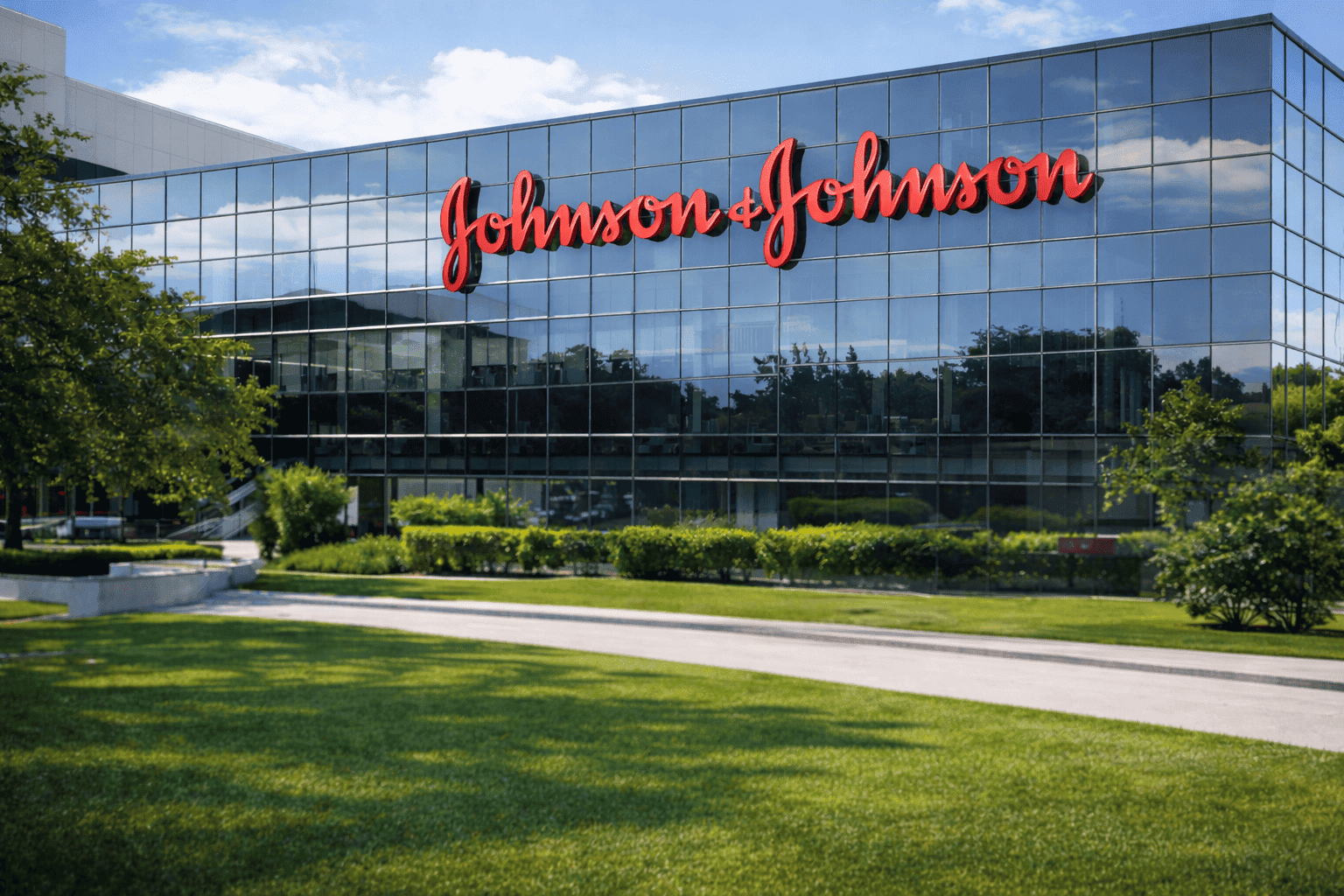
Founded in 1886 in the US, Johnson & Johnson manufactures a range of medical products, pharmaceuticals, and health-related items, including personal care products and medical devices. J&J is renowned for its popular brands, including Band-Aid, Neutrogena, Tylenol, and others. The company went public in 1944 and is now one of the largest healthcare corporations in the world.
Johnson & Johnson’s business model
Johnson & Johnson is one of the world’s largest healthcare companies. Following the separation of its consumer health business, Kenvue, the company is focused on two main areas – Innovative Medicine and MedTech:
- Innovative Medicine includes the development and sale of prescription medicines. Its main therapeutic areas include oncology, immunology, neuroscience, cardiovascular diseases, and other areas. The company’s key medicines include Darzalex, Tremfya, Carvykti, Spravato, Erleada, and Rybrevant/Lazcluze. The pharmaceutical business accounts for the majority of Johnson & Johnson’s revenue and has remained the company’s main source of growth in recent quarters.
- MedTech encompasses medical devices and technologies for surgery, orthopaedics, cardiovascular medicine, and other areas. The segment includes, among other products, Abiomed’s Impella heart pumps, Shockwave Medical technologies, electrophysiology equipment, and surgical systems. Looking ahead, the OTTAVA robotic platform could become an additional source of growth.
Johnson & Johnson’s business model combines pharmaceuticals and medical technologies. This structure reduces the company’s dependence on any single product or business area. At the same time, its performance depends significantly on the successful launch of new medicines, patent protection, the pace of MedTech development, and the ability of new products to offset declining sales of medicines that have lost exclusivity.
Johnson & Johnson Q2 2024 financial results
Johnson & Johnson released its Q2 2024 results on 17 July 2024. In addition to the key financial metrics, the company disclosed segmental data for Innovative Medicine (pharmaceuticals, health and personal care products) and MedTech (medical devices and equipment). Below are the figures compared with the same period last year:
- Revenue: 22.45 billion USD (+4.3%)
- Net profit: 4.68 billion USD (−12.8%)
- Earnings per share: 2.82 USD (+10.2%)
- Innovative Medicine revenue: 14.49 billion USD (+5.5%)
- US: 8.51 billion USD (+8.9%)
- Rest of the world: 5.98 billion USD (+1.1%)
- MedTech revenue: 7.96 billion USD (+2.2%)
- US: 4.05 billion USD (+5.7%)
- Rest of the world: 3.89 billion USD (−1.3%)
Johnson & Johnson’s management described its Q2 2024 performance as strong. In particular, Chairman and CEO Joaquin Duato highlighted that the results reflect the company’s ongoing commitment to advancing the next wave of medical innovations, which has driven significant sales growth and improved operating earnings per share (EPS). With a robust product portfolio, the integration of Shockwave, and the continued expansion of its pharmaceutical range, the company maintains a solid foundation for both near- and long-term growth.
Johnson & Johnson issued an upbeat outlook for 2024, expecting continued expansion across its core segments – Innovative Medicine and MedTech.
The company forecast full-year revenue of 89.30–90.30 billion USD, representing a 4.0–5.0% year-on-year increase. Earnings per share (EPS) were projected in the 10.70–10.80 USD range, marking a 2.5–3.5% rise from 2023.
Management emphasised that Johnson & Johnson remains well-positioned for long-term growth, supported by its diversified product portfolio and sustained investment in innovation.
Johnson & Johnson Q3 2024 financial results
On 15 October 2024, Johnson & Johnson released its Q3 2024 results, showing that revenue once again exceeded the figure recorded in the same period in 2023. Below are the key figures compared with Q3 2023:
- Revenue: 22.47 billion USD (+5.2%)
- Net profit: 2.69 billion USD (−37.5%)
- Earnings per share (EPS): 2.42 USD (−9.0%)
- Innovative Medicine revenue: 14.58 billion USD (+4.9%)
- US: 8.87 billion USD (+7.5%)
- Rest of the world: 5.70 billion USD (+1.2%)
- MedTech revenue: 7.89 billion USD (+7.1%)
- US: 4.03 billion USD (+5.7%)
- Rest of the world: 3.85 billion USD (+3.9%)
Joaquin Duato stated that J&J’s Q3 2024 results demonstrate the strength and diversity of the company’s business model and reflect its commitment to innovation in healthcare. He highlighted continued progress in developing treatments for diseases with high unmet needs, positioning J&J for sustainable long-term growth.
The earnings commentary noted significant progress in expanding the product portfolio, including regulatory approval for TREMFYA in ulcerative colitis and the combination of RYBREVANT with LAZCLUZE for treating non-small cell lung cancer. It also mentioned applying for exclusive rights related to the development of the OTTAVA general-purpose robotic surgery system.
The company attributed the decline in net profit to one-off research and development expenses associated with the acquisition of M-Wave’s research outcomes.
Johnson & Johnson Q4 2024 financial results
On 22 January 2025, Johnson & Johnson released its Q4 2024 results, which exceeded expectations, although the key indicator dynamics were mixed:
- Revenue: 22.52 billion USD (+5.3%)
- Net profit: 3.43 billion USD (−17.5%)
- Earnings per share (EPS): 2.04 USD (−10.9%)
- Revenue from Innovative Medicine: 14.33 billion USD (+4.4%)
- US: 8.97 billion USD (+11.1%)
- Rest of the world: 5.35 billion USD (−5.1%)
- Revenue from MedTech: 8.18 billion USD (+6.7%)
- US: 4.22 billion USD (+7.6%)
- Rest of the world: 3.96 billion USD (+5.8%)
Joaquin Duato described 2024 as a "year of transformation" for Johnson & Johnson, highlighting robust growth and accelerated progress in the company’s product portfolio. J&J achieved annual sales of 88.80 billion USD and an EPS of 9.98 USD, representing growth compared to 2023, but was slightly below the forecast it provided in its Q2 2024 earnings commentary.
The decline in net profit was attributed to increased costs related to acquisitions, operational activities, adverse foreign exchange movements, and legal settlement expenses.
For 2025, the company provided a cautious outlook, expecting sales to range between 89.20 billion USD and 90.00 billion USD, below analysts’ expectations of 91.04 billion USD. The adjusted EPS forecast was set at 10.50-10.70 USD per market expectations.
Following the earnings release, J&J’s stock price declined, likely due to the conservative sales forecast for 2025.
Johnson & Johnson Q1 2025 financial results
On 15 April 2025, Johnson & Johnsonpublished its Q1 2025 financial results, which exceeded expectations. The key figures compared with Q1 2024 are as follows:
- Revenue: 21.89 billion USD (+2.4%)
- Net income (non-GAAP): 6.71 billion USD (+1.9%)
- Earnings per share (non-GAAP): 2.77 USD (+2.2%)
- Innovative Medicine revenue: 13.87 billion USD (+2.3%)
- US: 8.09 billion USD (+6.3%)
- Rest of world: 5.78 billion USD (–2.9%)
- MedTech revenue: 8.02 billion USD (+2.5%)
- US: 4.21 billion USD (+5.1%)
- Rest of world: 3.81 billion USD (–0.2%)
The company delivered strong results, exceeding Wall Street analysts’ expectations for both earnings per share and revenue, supported by steady growth in the Innovative Medicine and MedTech segments. The company’s ability to maintain strong performance despite challenges such as biosimilar competition for Stelara and macroeconomic constraints in key markets highlights its strategic resilience and operational efficiency.
The company continues to strengthen its portfolio through strategic acquisitions. The 14.6 billion USD acquisition of Intra-Cellular Therapies is nearing completion. Progress in new product development, including the approval of TREMFYA for the treatment of Crohn’s disease and positive trial results for RYBREVANT in the treatment of lung cancer, demonstrates the company’s commitment to innovation. In addition, launching clinical trials for the OTTAVA robotic surgical system positions J&J as a potential competitor to leading medical technology players, such as Intuitive Surgical.
From a financial perspective, Johnson & Johnson remains highly resilient. The company increased its quarterly dividend to 1.30 USD per share, marking the 63rd consecutive year of dividend increases. It also raised its full-year 2025 revenue outlook to 91.0–91.8 billion USD, taking into account expected tariffs of around 400 million USD as well as the impact of the nearly completed acquisition of Intra-Cellular Therapies.
Johnson & Johnson Q2 2025 financial results
On 16 July 2025, Johnson & Johnsonpublished its Q2 2025 financial results, which once again exceeded expectations. The key figures compared with Q2 2024 are as follows:
- Revenue: 23.74 billion USD (+5.8%)
- Net income (non-GAAP): 6.70 billion USD (–2.1%)
- Earnings per share (non-GAAP): 2.77 USD (–1.8%)
- Innovative Medicine revenue: 15.20 billion USD (+4.9%)
- US: 9.16 billion USD (+7.6%)
- Rest of world: 6.04 billion USD (+1.0%)
- MedTech revenue: 8.54 billion USD (+7.3%)
- US: 4.38 billion USD (+8.0%)
- Rest of world: 4.16 billion USD (+6.7%)
Johnson & Johnson delivered strong Q2 2025 results, exceeding market expectations. Revenue reached 23.7 billion USD, up 5.8% year-on-year, while adjusted earnings per share (EPS) came in at 2.77 USD, significantly above analysts’ forecasts. Management highlighted solid growth in both Innovative Medicine and MedTech, with oncology and cardiovascular products performing particularly well. Darzalex once again exceeded expectations, with sales reaching 3.54 billion USD, up 22%, while MedTech continued to grow, supported by electrophysiology and cardiovascular surgery, and delivered double-digit growth.
The company has made an aggressive push into oncology, targeting 50 billion USD in revenue from this area by 2030, while actively advancing new developments in oncology, immunology, cardiology, and robotic surgery. These positive trends prompted management to raise its 2025 outlook, with revenue now expected to reach 93.2–93.6 billion USD and EPS projected at 10.80–10.90 USD, up from the previous forecast of 10.50–10.70 USD.
The company did not provide guidance for Q3 2025, but management’s overall positive outlook and the raised full-year guidance indicated that growth momentum was continuing.
Johnson & Johnson Q3 2025 financial results
On 14 October 2025, Johnson & Johnsonpublished its Q3 2025 financial results. The key figures compared with Q3 2024 are as follows:
- Revenue: 23.99 billion USD (+6.8%)
- Net income (non-GAAP): 6.80 billion USD (+15.7%)
- Earnings per share (non-GAAP): 2.80 USD (+15.7%)
- Innovative Medicine revenue: 15.56 billion USD (+6.8%)
- US: 9.40 billion USD (+6.0%)
- Rest of world: 6.16 billion USD (+7.9%)
- MedTech revenue: 8.43 billion USD (+6.8%)
- US: 4.31 billion USD (+6.6%)
- Rest of world: 4.12 billion USD (+7.0%)
Johnson & Johnson’s Q3 2025 results exceeded analysts’ expectations. Revenue reached 23.99 billion USD, slightly above the market forecast of 23.79 billion USD. Adjusted earnings per share came in at 2.80 USD, also above expectations of 2.75 USD.
Sales increased across all key business areas. Within Innovative Medicine, oncology and neuroscience products performed particularly well, including Darzalex, Carvykti, Erleada, Rybrevant/Lazcluze, as well as Spravato for the treatment of depression. Sales of Stelara and Imbruvica declined, partly due to the entry of lower-cost alternatives (biosimilars) and changes to the government Medicare program. According to the company, Stelara’s loss of exclusivity reduced the growth rate by around 10.7 percentage points. Sales of Darzalex, one of the company’s key medicines, reached 3.67 billion USD for the quarter.
The company raised its full-year revenue outlook to 93.5–93.9 billion USD, with a midpoint of 93.7 billion USD. Its earnings-per-share outlook remained unchanged at 10.80–10.90 USD. Currency movements provided additional support, adding around 1.4% to revenue in the quarter.
Johnson & Johnson Q4 2025 financial results
On 21 January 2026, Johnson & Johnsonpublished its Q4 2025 financial results. The key figures compared with Q4 2024 are as follows:
- Revenue: 24.56 billion USD (+9.1%)
- Net income (non-GAAP): 6.01 billion USD (+21.5%)
- Earnings per share (non-GAAP): 2.46 USD (+20.6%)
- Innovative Medicine revenue: 15.76 billion USD (+10.0%)
- US: 9.68 billion USD (+7.9%)
- Rest of world: 6.07 billion USD (+13.4%)
- MedTech revenue: 8.80 billion USD (+7.5%)
- US: 4.51 billion USD (+6.6%)
- Rest of world: 4.30 billion USD (+8.5%)
Johnson & Johnson exceeded revenue expectations in Q4 2025, while earnings per share came in line with forecasts. Quarterly revenue reached 24.6 billion USD, up 9% compared with Q4 2024 and 400 million USD above the analyst consensus estimate. Revenue growth was driven primarily by the pharmaceutical and medical technology segments. Adjusted earnings per share came in at 2.46 USD, in line with market expectations.
Management provided guidance for the 2026 financial year that exceeded the average analyst consensus, a positive signal for the market. Johnson & Johnson expects revenue of 100.0–101.0 billion USD and adjusted earnings per share of 11.43–11.63 USD. This corresponds to expected growth of 6–7% in both revenue and earnings compared with 2025 and exceeds analysts’ average forecasts. Management attributed this optimism to the expansion of its innovative medicines portfolio, stronger activity in oncology, immunology, and other key therapeutic areas, as well as continued investment in R&D and manufacturing.
Johnson & Johnson Q1 2026 financial results
On 14 April 2026, Johnson & Johnson published its Q1 2026 financial results. The key figures compared with Q1 2025 are as follows:
- Revenue: 24.06 billion USD (+9.9%)
- Net income (non-GAAP): 6.61 billion USD (–1.4%)
- Earnings per share (non-GAAP): 2.70 USD (–2.5%)
- Innovative Medicine revenue: 15.43 billion USD (+11.2%)
- US: 8.87 billion USD (+9.6%)
- Rest of world: 6.56 billion USD (+13.4%)
- MedTech revenue: 8.64 billion USD (+7.7%)
- US: 4.46 billion USD (+5.9%)
- Rest of world: 4.18 billion USD (+9.7%)
Johnson & Johnson delivered strong Q1 2026 results, exceeding market expectations for both revenue and adjusted earnings. Revenue rose to 24.1 billion USD, up 10% year-on-year and above the analyst consensus estimate of 23.6 billion USD. Adjusted earnings per share came in at 2.70 USD, compared with expectations of 2.66 USD.
Innovative Medicine revenue increased 11.2%, with Darzalex, Carvykti, Erleada, Rybrevant/Lazcluze, Tremfya, and Spravato driving growth. At the same time, Johnson & Johnson explicitly noted that declining Stelara sales following the launch of biosimilars continued to weigh on the pharmaceutical segment. According to Reuters, Stelara sales fell about 60% to 656 million USD in the quarter, but strong growth in Darzalex sales to 4.0 billion USD and Tremfya sales to 1.6 billion USD offset the decline.
Management raised its full-year 2026 outlook, now expecting revenue of 100.3–101.3 billion USD, up from the previous forecast of 100.0–101.0 billion USD, and adjusted earnings per share of 11.45–11.65 USD, up from the previous range of 11.43–11.63 USD. The new revenue guidance was slightly above the average market forecast. Overall, the results confirm that Johnson & Johnson’s operating model remains strong, with newer medicines helping to offset pressure from Stelara, while management remains confident about the full year.
Johnson & Johnson Q2 2026 financial results
On 15 July 2026, Johnson & Johnson published its Q2 2026 financial results. The key figures compared with Q2 2025 are as follows:
- Revenue: 25.31 billion USD (+6.6%)
- Net income (non-GAAP): 7.08 billion USD (+5.7%)
- Earnings per share (non-GAAP): 2.90 USD (+4.7%)
- Innovative Medicine revenue: 16.38 billion USD (+7.8%)
- US: 9.98 billion USD (+8.9%)
- Rest of world: 6.41 billion USD (+6.0%)
- MedTech revenue: 8.93 billion USD (+4.5%)
- US: 4.55 billion USD (+3.9%)
- Rest of world: 4.37 billion USD (+5.2%)
Johnson & Johnson exceeded market expectations for both revenue and adjusted earnings. Revenue reached 25.31 billion USD, up from the forecast of 25.05 billion USD, while earnings per share came in at 2.90 USD, up from expectations of 2.85 USD.
Innovative Medicine was the main contributor to growth. Sales were supported by Darzalex, Carvykti, Tecvayli, Rybrevant/Lazcluze, Tremfya, Spravato, and Caplyta. Growth in these medicines helped offset declining Stelara sales amid competition from biosimilars.
MedTech results came in below expectations, with revenue reaching 8.93 billion USD versus the forecast of 8.97 billion USD. A decline in demand for Impella heart pumps in the US raised additional concerns. Despite the overall results exceeding expectations, JNJ shares fell 2.7% on the day of the report.
Management raised its full-year 2026 outlook. At the time of the report, the company expected revenue of 100.8–101.4 billion USD, up from the previous forecast of 100.3–101.3 billion USD, and adjusted earnings per share of 11.60–11.75 USD, up from 11.45–11.65 USD. The results showed that growth in the pharmaceutical business was helping the company offset declining Stelara sales, although weaker MedTech performance continued to weigh on investor confidence.
Johnson & Johnson Q3 2026 financial results
On 13 October 2026, Johnson & Johnsonpublished its Q3 2026 financial results. The key figures compared with Q3 2025 are as follows:
- Revenue: 25.40 billion USD (+5.9%)
- Net income (non-GAAP): 6.34 billion USD (–6.8%)
- Earnings per share (non-GAAP): 2.59 USD (–7.5%)
- Innovative Medicine revenue: 16.76 billion USD (+7.7%)
- US: 10.45 billion USD (+11.1%)
- Rest of world: 6.31 billion USD (+2.4%)
- MedTech revenue: 8.64 billion USD (+2.5%)
- US: 4.51 billion USD (+4.8%)
- Rest of world: 4.13 billion USD (+0.1%)
On 13 October, after releasing its Q3 2026 results, JNJ shares closed 5.7% lower at 248.60 USD, even though the company beat expectations on adjusted earnings and raised its full-year outlook. The reaction suggests that the modest improvement in overall results did not offset disappointment with the performance of individual business areas.
The main issue was another MedTech shortfall relative to expectations. Revenue in the segment rose 2.5% to 8.64 billion USD, compared with expectations of around 8.71 billion USD. Outside the US, sales were virtually unchanged. Management attributed the weakness to Middle Eastern countries reallocating budgets towards defence, spending constraints in Europe, and pricing pressure in China. The company acknowledged that results fell short of its own expectations.
The nature of the slowdown is also a concern: MedTech revenue growth slowed from 7.7% in Q1 to 4.5% in Q2 and 2.5% in Q3. This represents a sequential deterioration in growth. The segment accounts for around one-third of Johnson & Johnson’s sales, so its weakness is noticeably limiting the group’s overall growth potential.
At the same time, MedTech still has promising areas of growth. Shockwave sales increased 17%, although physician caution in patient selection continues to affect Abiomed. The company expects to obtain additional clinical data on Impella pumps in 2027. The OTTAVA robotic system could also become a source of growth, but management expects its contribution to increase gradually. It is therefore premature to expect new products to eliminate the segment’s current weakness quickly.
The pharmaceutical business remains the main argument in favour of JNJ shares. Innovative Medicine revenue increased 7.7% to 16.76 billion USD. Growth was supported by Tremfya, Darzalex, Carvykti, and other medicines. This confirms the company’s ability to expand its business despite declining Stelara sales following the launch of biosimilars. Johnson & Johnson’s total revenue rose 5.9% to 25.40 billion USD. However, adjusted earnings per share declined 7.5% to 2.59 USD: higher sales have yet to translate into comparable earnings growth.
Following Q3, Johnson & Johnson raised its outlook relative to the updated guidance issued on 29 July. The company now expects revenue of 101.0–101.4 billion USD and adjusted earnings per share of 11.05–11.15 USD. However, the earnings outlook remains below the 11.60–11.75 USD range provided alongside the Q2 report: in late July, the company lowered its guidance due to expenses related to the Firefly Bio and Sail Biomedicines transactions.
The 95.9% decline in GAAP net income to 210 million USD also warrants attention. The result was affected by expenses recognised in connection with the proposed settlement of talc-related claims. The 5.5 billion USD settlement was announced in July, so it would be incorrect to treat it as the main new explanation for the October decline in the shares. Nevertheless, future payments still matter for the company’s cash position: the first payment, no more than 3 billion USD, is scheduled for 2027, and the settlement requires participation by at least 95% of the remaining claims.
Overall, Q3 2026 results show that Johnson & Johnson continues to grow revenue thanks to strong performance in its pharmaceutical business, which offsets declining Stelara sales and a slowdown in MedTech. However, business growth is currently accompanied by a decline in adjusted earnings, driven by expenses from acquisitions and new agreements.
Fundamental analysis of JNJ and key drivers of Johnson & Johnson shares
In 2026, the outlook for Johnson & Johnson shares depends on pharmaceutical growth, a recovery in medical equipment demand, and the company’s ability to fund development. New medicines are helping to offset declining Stelara sales, although the slowdown in MedTech is limiting the company’s overall growth. Four key metrics can be used to assess the outlook for JNJ shares:
- MedTech Operational Sales Growth
- Innovative Medicine Operational Sales Growth
- Abiomed Revenue
- Free Cash Flow
MedTech Operational Sales Growth measures the growth rate of medical equipment sales excluding the impact of currency movements. In 2026, the metric declined sequentially from 4.6% in Q1 to 3.6% in Q2 and 2.5% in Q3. A return to higher growth rates would signal a business recovery and could support investor confidence. A further slowdown would increase the company’s dependence on its pharmaceutical business.
Innovative Medicine Operational Sales Growth measures the growth rate of pharmaceutical sales excluding the impact of currency movements. In Q3 2026, the metric reached 7.9%, compared with 6.8% in the previous quarter. The metric includes contributions from acquisitions, so its improvement should be assessed alongside the performance of individual medicines. Sustained demand for these medicines provides a foundation for future earnings growth.
Abiomed Revenue represents quarterly revenue from the business that produces Impella heart pumps. After rising to 488 million USD in Q1 2026, sales declined to 440 million USD in Q2 and 412 million USD in Q3. A continued decline would signal that the business needs more time to return to growth.
Free Cash Flow represents the cash remaining after capital expenditure. It funds dividends, debt repayment, acquisitions, and legal settlements. Sustained cash flow supports Johnson & Johnson’s financial flexibility. A decline would limit the company’s ability to invest in business growth while meeting its obligations.
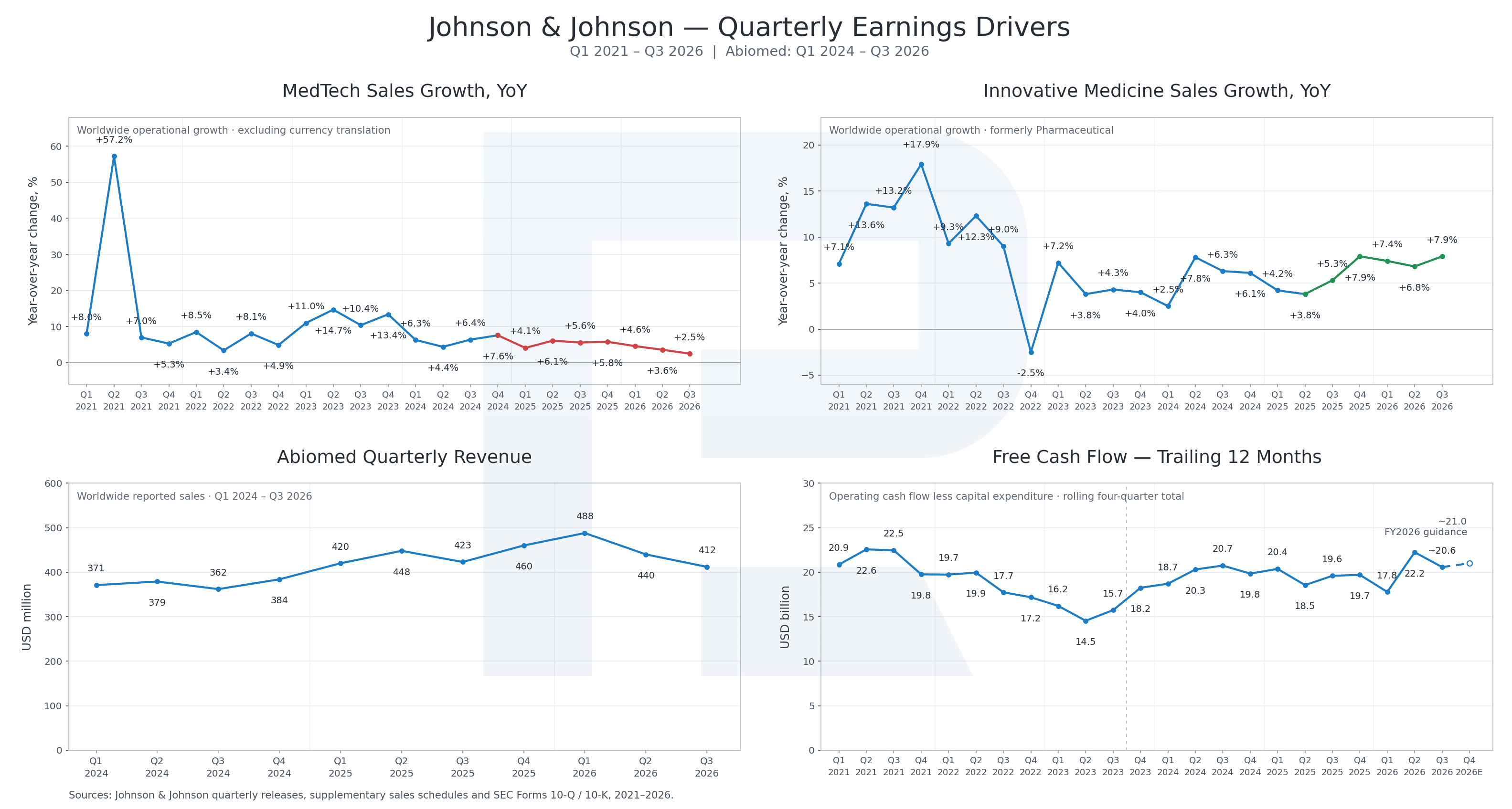
The fundamental analysis of JNJ shows that Johnson & Johnson’s core business remains resilient. The pharmaceutical business provides the main support. At the same time, free cash flow over the past 12 months reached 20.6 billion USD, compared with 19.6 billion USD a year earlier. This preserves the company’s ability to fund development and make payments to shareholders.
The main constraint remains the slowdown in MedTech. The segment’s growth rate declined from 7.6% in Q4 2024 to 2.5% in Q3 2026. Abiomed is adding further pressure, with quarterly revenue from the business falling from 488 million USD in Q1 2026 to 412 million USD in Q3. This trend increases the dependence of the company’s overall results on its pharmaceutical business and limits confidence that growth will accelerate.
Management maintains its guidance for positive free cash flow of around 21 billion USD for full-year 2026. This guidance implies continued substantial cash generation but does not in itself indicate a sharp improvement in financial performance. Upcoming legal payments and investment in new developments will continue to require funding.
Overall, these metrics support a moderately positive assessment of Johnson & Johnson’s business. A recovery in MedTech momentum alongside sustained growth in Innovative Medicine is needed for the fundamental picture to improve further. More balanced growth across these businesses, combined with higher earnings, would provide a solid foundation for long-term growth in JNJ shares.
Analyst forecasts for Johnson & Johnson shares
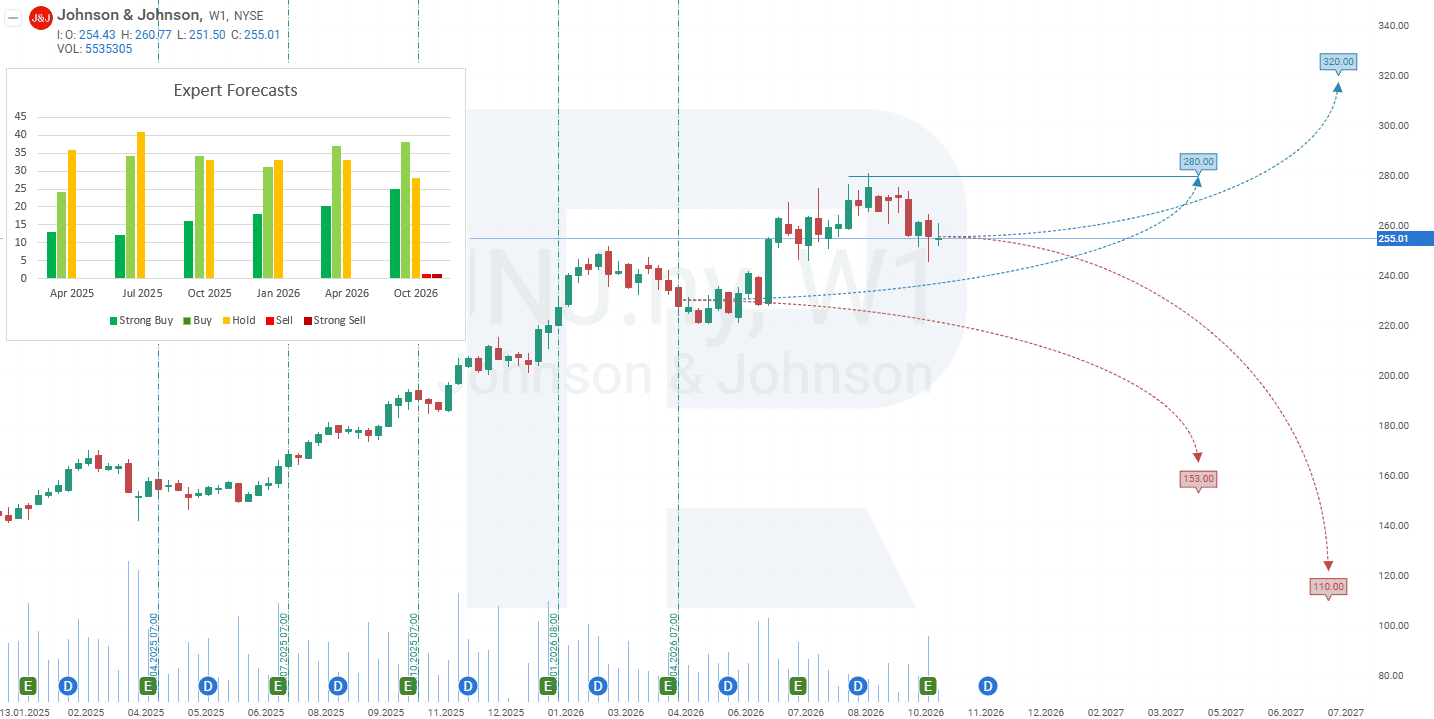
The analyst forecasts below cover a 12-month horizon, with the upper and lower bounds representing JNJ share price targets over this period:
- Barchart: 14 of 25 analysts rated Johnson & Johnson shares a Strong Buy, 3 a Buy, and 8 a Hold. The upper price target is 320 USD, while the lower target is 220 USD.
- MarketBeat: 18 of 26 analysts rated the shares a Buy, while 8 recommended Hold. The upper price target is 320 USD, while the lower target is 210 USD.
- TipRanks: 12 of 19 analysts recommend Buy, 6 Hold, and 1 Sell. The upper price target is 320 USD, while the lower target is 110 USD.
- Stock Analysis: 11 of 23 analysts rated the shares a Strong Buy, 5 a Buy, 6 a Hold, and 1 a Strong Sell. The upper price target is 320 USD, while the lower target is 190 USD.
The analyst outlook for Johnson & Johnson shares remains generally positive, although the range of price targets is quite wide. Average price targets across most major platforms are above JNJ’s current share price, while some individual estimates are significantly below the market price. This suggests that the main source of disagreement is the company’s ability to maintain strong growth in Innovative Medicine while also restoring growth in MedTech.
Technical analysis of JNJ and Johnson & Johnson stock forecast
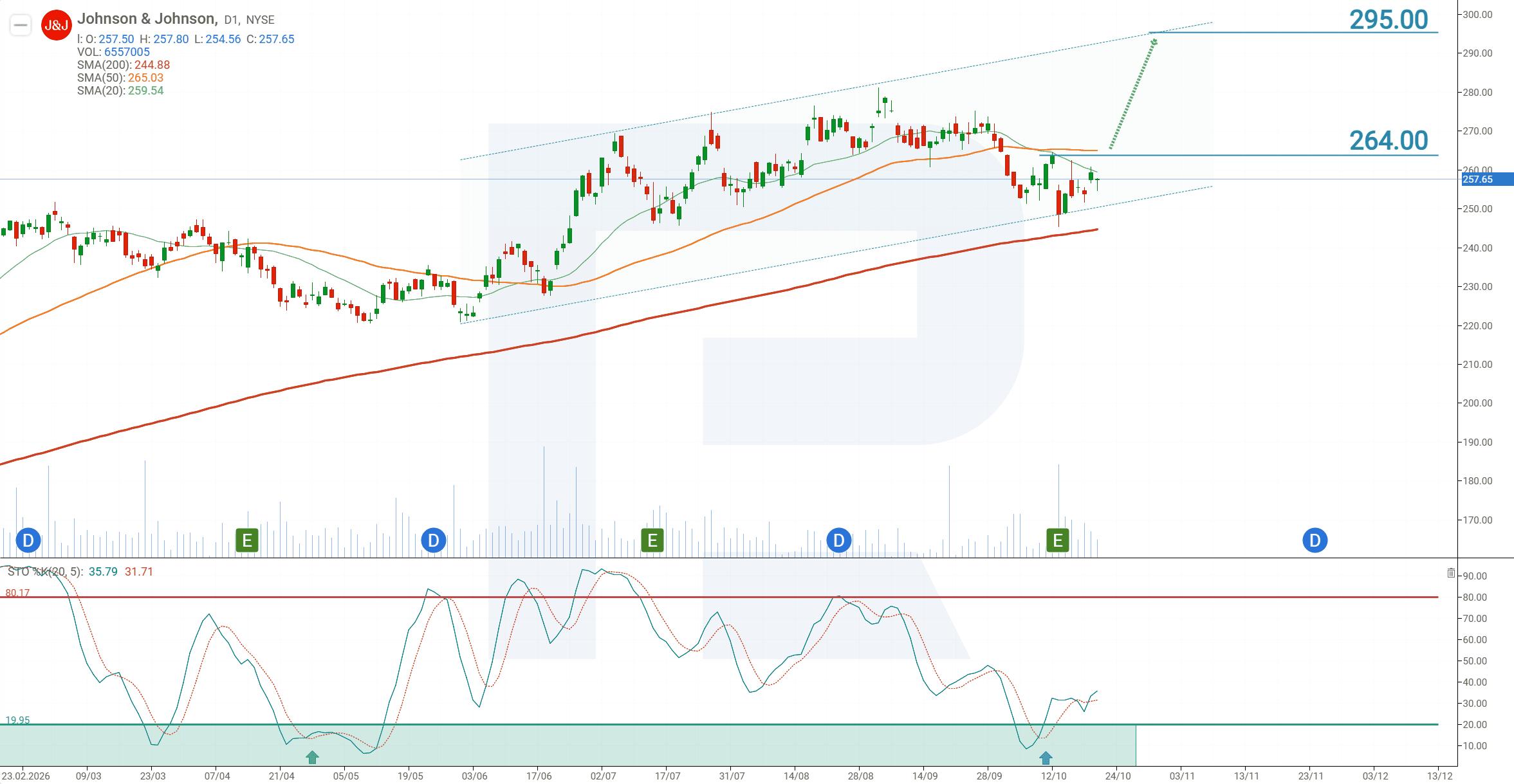
At the time of writing, JNJ shares are trading at 257 USD.
The current price action in Johnson & Johnson shares indicates that the long-term uptrend remains intact. On the daily timeframe, JNJ shares are trading above the 200-period Moving Average. The Stochastic oscillator has moved out of the oversold zone, signalling that the correction may be ending and growth could resume within the uptrend. In addition, the shares continue to trade within an ascending channel, with its upper boundary serving as a potential upside target. Therefore, the JNJ stock forecast for 2026 continues to point to further growth following a break above resistance at 264 USD.
The trading idea for JNJ shares is to place a Buy Stop order at 266.00 USD. The Stop Loss should be set at 249.00 USD and the Take Profit at the upper boundary of the ascending channel at 295.00 USD.
Buy Stop – 266.00
Take Profit – 295.00
Stop Loss – 249.00
Position management rule. Once the price moves 70% of the total distance towards the forecast target, the Stop Loss is set at the entry level. The protective order is then adjusted as the price advances, maintaining a distance of 5%. Position management continues until the position is closed at either the Take Profit or Stop Loss, depending on which level is reached first.
Ang mga pagtataya na ipinakita sa seksyong ito ay nagpapakita lamang ng pribadong opinyon ng may-akda at hindi dapat ituring bilang gabay para sa pagtetrade. Walang pananagutan ang RoboForex para sa mga resulta ng pagtetrade batay sa mga rekomendasyon sa pagtetrade na inilarawan sa mga analytical review na ito.