
DE 40 forecast: the index failed to break below support
After testing the support level, the DE 40 stock index has moved higher but remains within a sideways trend, with the longer-term uptrend prevailing. The DE 40 forecast for today is positive.
DE 40 forecast: key takeaways
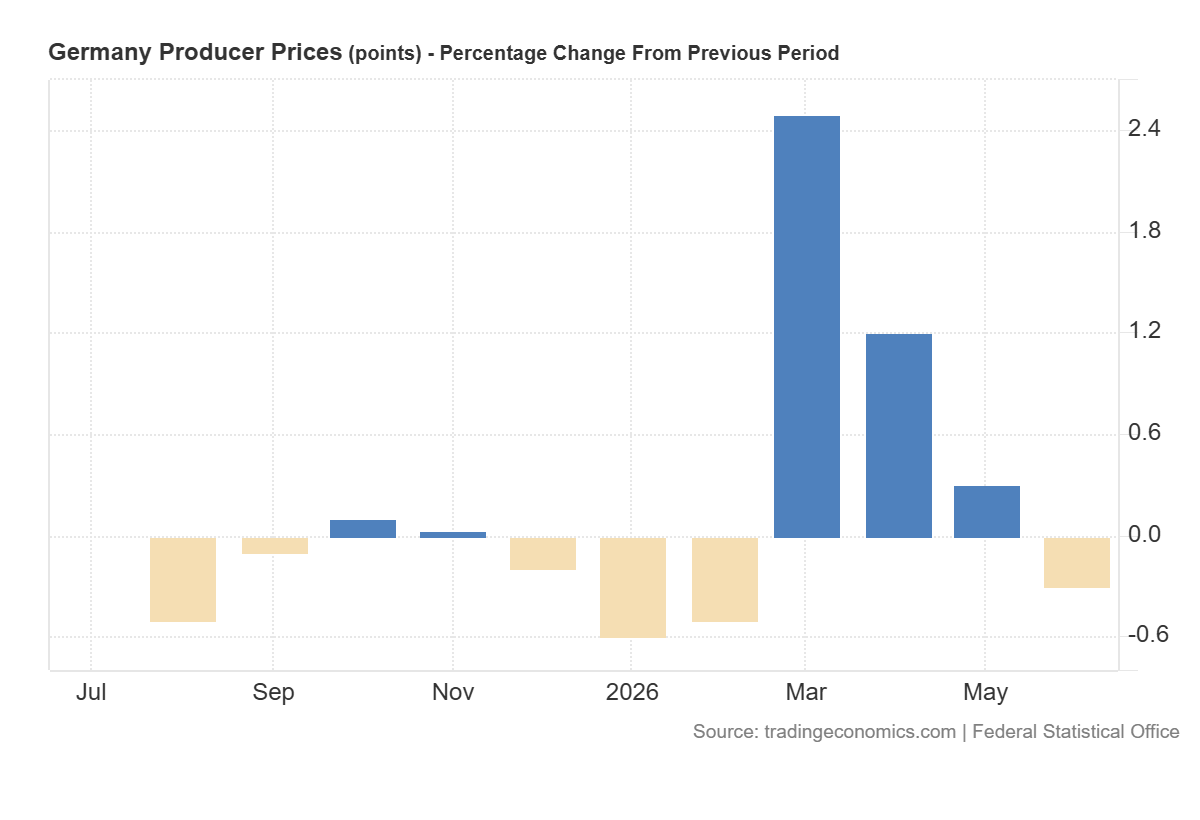
- Recent data: Germany’s PPI fell by 0.3% in July
- Market impact: the data creates a moderately positive backdrop for the German stock market
DE 40 fundamental analysis
Germany’s Producer Price Index fell by 0.3% month-on-month, a sharper decline than the market expected, as the forecast pointed to a 0.2% decrease. The sharp change from the previous month, when producer prices rose by 0.3%, is also significant. These figures indicate easing price pressures at the corporate level and may suggest that growth in production costs in Germany is slowing.
For the DE 40 index, the initial reaction may be moderately positive, as lower producer inflation typically reduces concerns about further interest rate hikes and supports expectations for a more accommodative ECB monetary policy. The subsequent reaction of the DE 40 will depend on the reasons behind the decline. If the fall is mainly due to lower energy prices, the news will be broadly favourable. However, if it is caused by weaker industrial demand, the positive impact on the index may be limited.
DE 40 technical analysis
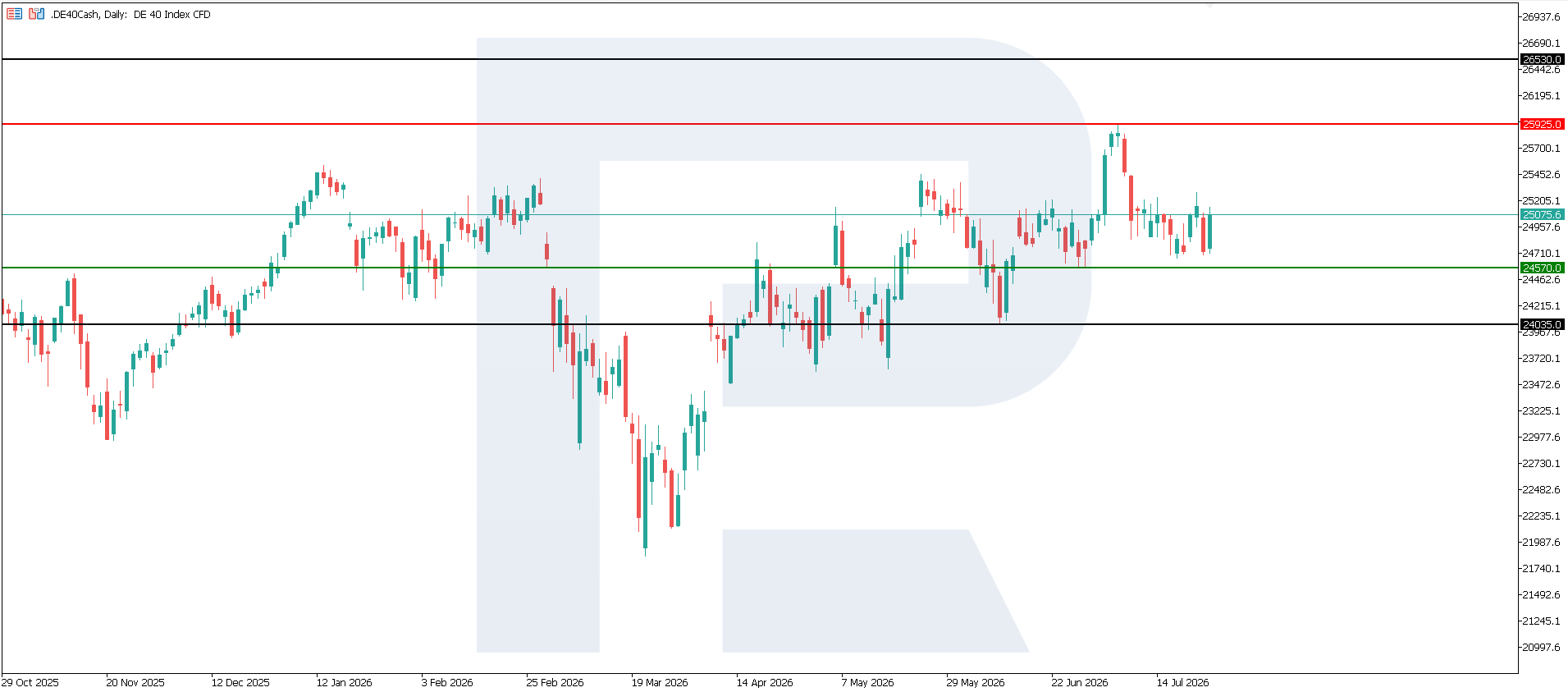
After reaching a new all-time high, the DE 40 index entered a corrective decline. The nearest resistance zone is located around 25,925.0, while the key support level has formed near 24,570.0. Despite the current negative momentum, the medium-term uptrend remains intact. A confident consolidation below the support level would signal a potential reversal. If the correction ends and growth resumes, the next target for the index could be 26,530.0.
The DE 40 price forecast outlines the following scenarios:
- Pessimistic DE 40 scenario: a breakout below the 24,570.0 support level could send the index down to 24,035.0
- Optimistic DE 40 scenario: a breakout above the 25,925.0 resistance level could push the index up to 26,530.0
Summary
Overall, the PPI data creates a moderately positive backdrop for the DE 40, as the decline was stronger than expected and reduces inflation risks. The most favourable scenario for the German market would be a combination of lower producer prices followed by stabilisation in industrial production, a recovery in orders, and improved business activity. In this case, companies could benefit from lower costs and more affordable financing without a significant decline in revenue. The nearest upside target remains 26,530.0.
Editors’ picks

EURUSD forecast 2026–2027: technical analysis, price levels & predictions
EURUSD has pulled back from the 2026 high of 1.1915 and is now trading near 1.1450 — below both EMA65 and EMA200 — with the active scenario shifting from bullish to bearish. The ECB raised rates to 2.40%, but the Fed holds at 3.75%, and US inflation (3.5%) continues to outpace the eurozone (2.8%). A confirmed break below 1.1280 opens the next downward wave toward 1.1080. We break down the key levels, three trading scenarios with entry triggers, and what Deutsche Bank, Morgan Stanley and UBS are forecasting for EURUSD in 2026.

Gold (XAUUSD) forecast 2026: predictions based on fundamental and technical analysis
Gold has corrected over 25% from its all-time high of 5,597 USD and is now trading near 4,100 USD — testing a critical support zone. Is this the bottom, or will the downtrend continue? We break down the key levels (support 3,920 USD, breakout trigger 4,500 USD), three trading scenarios with entry levels, and what J.P. Morgan, Goldman Sachs and Deutsche Bank are forecasting for gold in 2026.
Ang mga pagtataya na ipinakita sa seksyong ito ay nagpapakita lamang ng pribadong opinyon ng may-akda at hindi dapat ituring bilang gabay para sa pagtetrade. Walang pananagutan ang RoboForex para sa mga resulta ng pagtetrade batay sa mga rekomendasyon sa pagtetrade na inilarawan sa mga analytical review na ito.