
The yen is back in play: USDJPY targets 156.07
The USDJPY pair is declining, driven by a strengthening yen, a decline in US Treasury yields, and expectations of further monetary policy tightening by the Bank of Japan. The rate currently stands at 156.81. Discover more in our analysis for 26 October 2026.
USDJPY forecast: key takeaways
- Falling US Treasury yields and risk aversion are supporting the Japanese yen
- Inflation in Japan accelerated to 2.1%, sustaining expectations of further BoJ interest rate hikes
- USDJPY forecast for 26 October 2026: 156.07
Fundamental analysis
The USDJPY rate fell towards a five-week low around 156.10 before recovering to the 156.80–156.90 area. The yen's strengthening is supported by declining US government bond yields: the yield on 10-year US Treasuries remains near 4.95% following a sharp rise in bond prices the previous day.
Lower yields reduce the relative advantage of dollar-denominated assets, particularly as investor risk appetite weakens. The unwinding of carry trades may also support the yen: reducing positions financed through cheap borrowing in the Japanese currency requires investors to buy back yen and could sustain its appreciation.
Domestic conditions also remain favourable for the Japanese currency. Core inflation accelerated from 1.7% to 2.1% in September, exceeding the Bank of Japan's target for the first time in nine months. At its 30 October meeting, the central bank is expected to leave the policy rate unchanged at 1.25%, although the market sees December as a potential opportunity for another hike to 1.50%.
However, the interest rate differential between the US and Japan limits the yen's appreciation potential. The Federal Reserve's target rate range stands at 3.75–4.00%, and the market continues to price in the possibility of another hike in December. Consequently, further USDJPY movements will depend on the balance between US yields and the Bank of Japan's signals about the pace of further tightening.
The USDJPY forecast for 26 October 2026 is bearish.
Technical outlook
The USDJPY pair retains downward momentum following a sharp breakout below the 157.80–158.60 range. Buyers attempted to regain ground after the price tested the 156.40 level, but the pair remains below the middle Bollinger Band. Today's USDJPY forecast anticipates another decline towards a potential target at 156.07.
Technical indicators continue to favour sellers. The MACD remains below zero, with its line below the signal line, confirming bearish momentum. The Stochastic Oscillator has recovered into neutral territory but has yet to produce a sustained bullish reversal signal. A breakout below a local support level at 156.55 would further confirm the bearish scenario.
The primary scenario would be invalidated if the USDJPY pair consolidated above the 157.40 resistance level. Such a signal would ease selling pressure and create conditions for a recovery towards 157.80 and then 158.20.
USDJPY overview
- Asset: USDJPY
- Timeframe: H4 (Intraday)
- Trend: bearish
- Key resistance levels: 157.40 and 157.80
- Key support levels: 156.55 and 156.07
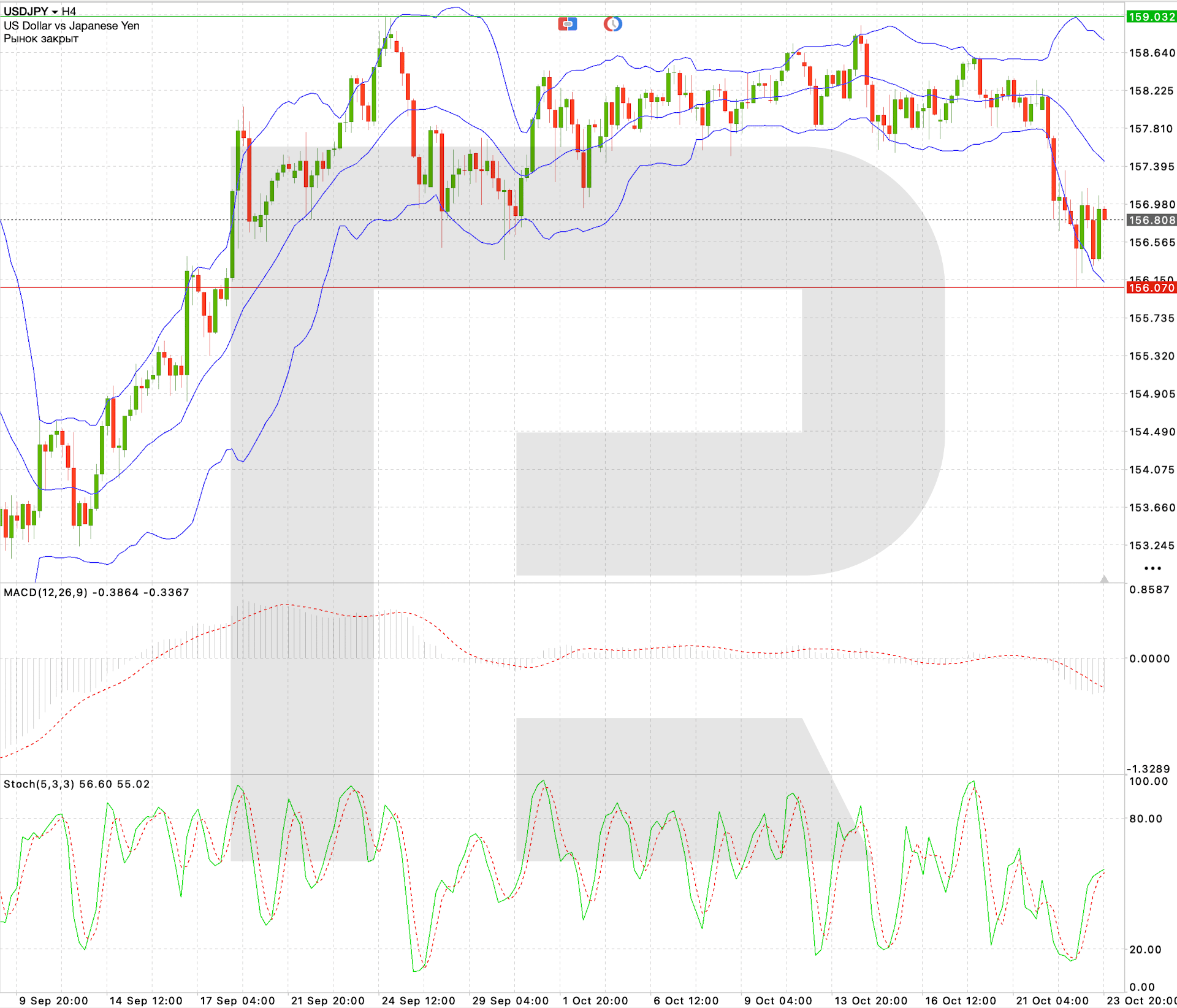
USDJPY trading scenario for today
A breakout below the local support level, followed by consolidation below 156.55, would create conditions for opening short positions and signal renewed selling pressure.
Risk factors
The main risk to the bearish USDJPY scenario is a potential recovery in US Treasury yields, which would once again make the dollar more attractive. A more cautious tone from the Bank of Japan at its 30 October meeting or reduced expectations of a December rate hike could also support the pair. Consolidation above 157.40 would increase the likelihood of an upward correction and weaken the case for a move towards 156.07.
The USDJPY forecast for 26 October 2026 indicates continued bearish momentum, with a potential downside target at 156.07 and additional confirmation should the price break below 156.55.
Editors’ picks


EURUSD forecast 2026–2027: technical analysis, price levels & predictions
The EURUSD outlook for 2026 and 2027: key levels on the daily chart, three trading scenarios and the policy gap between the Fed and the ECB that drives the pair.

Gold (XAUUSD) forecast 2026: technical analysis, price levels & predictions
Where gold could trade in 2026: key levels, three trading scenarios with entry triggers and the forecasts from J.P. Morgan, Deutsche Bank and Goldman Sachs.
Ang mga pagtataya na ipinakita sa seksyong ito ay nagpapakita lamang ng pribadong opinyon ng may-akda at hindi dapat ituring bilang gabay para sa pagtetrade. Walang pananagutan ang RoboForex para sa mga resulta ng pagtetrade batay sa mga rekomendasyon sa pagtetrade na inilarawan sa mga analytical review na ito.