
Weekly technical analysis and forecast (11–15 May 2026)
In this weekly technical analysis, we review key chart patterns and levels for EUSUSD, USDJPY, GBPUSD, AUDUSD, USDCAD, gold (XAUUSD), and Brent oil to forecast developments for the upcoming week (11–15 May 2026)
Major technical levels to watch this week
- EURUSD: Support: 1.1700, 1.1620. Resistance: 1.1850, 1.1880
- USDJPY: Support: 154.40, 152.20. Resistance: 157.70, 161.40
- GBPUSD: Support: 1.3495, 1.3388. Resistance: 1.3655, 1.3869
- AUDUSD: Support: 0.7179, 0.7100. Resistance: 0.7272, 0.7343
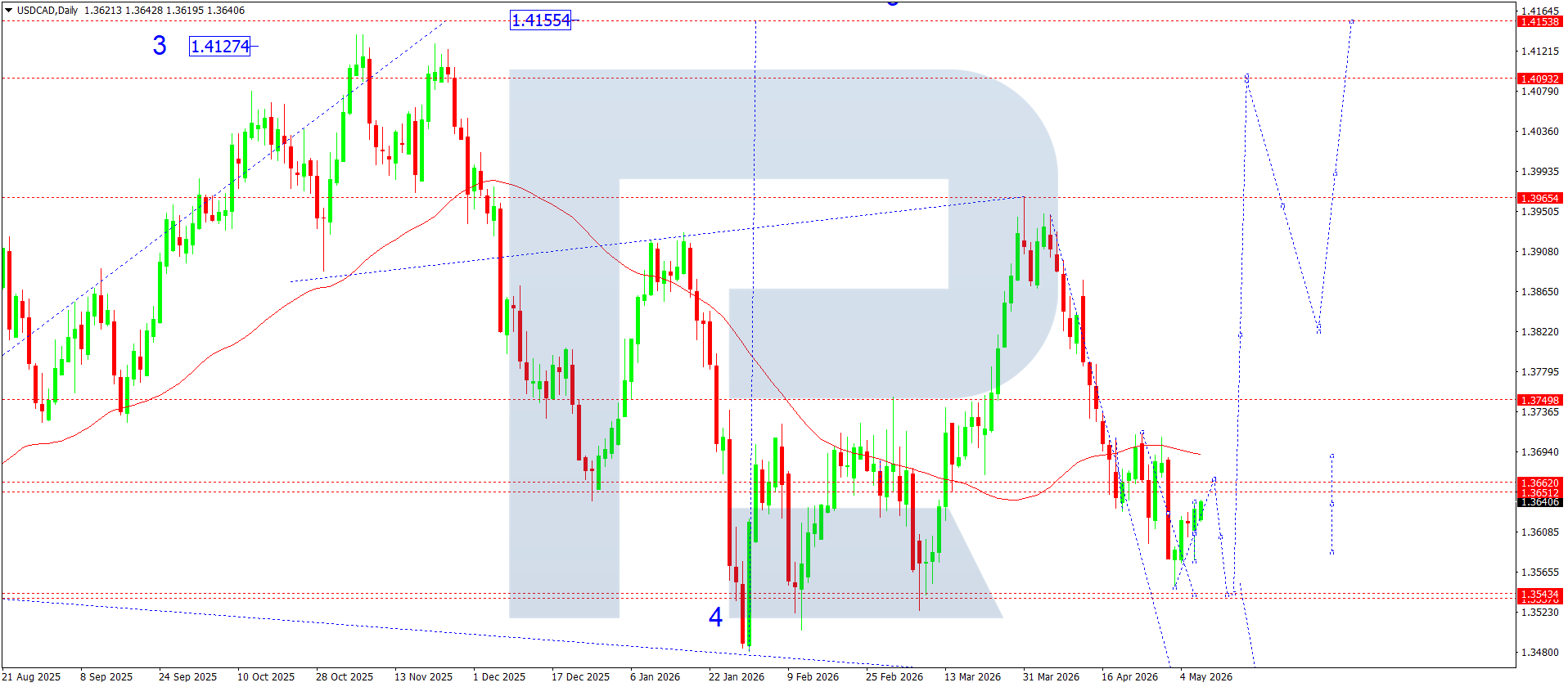
- USDCAD: Support: 1.3535, 1.3480. Resistance: 1.3662, 1.3749
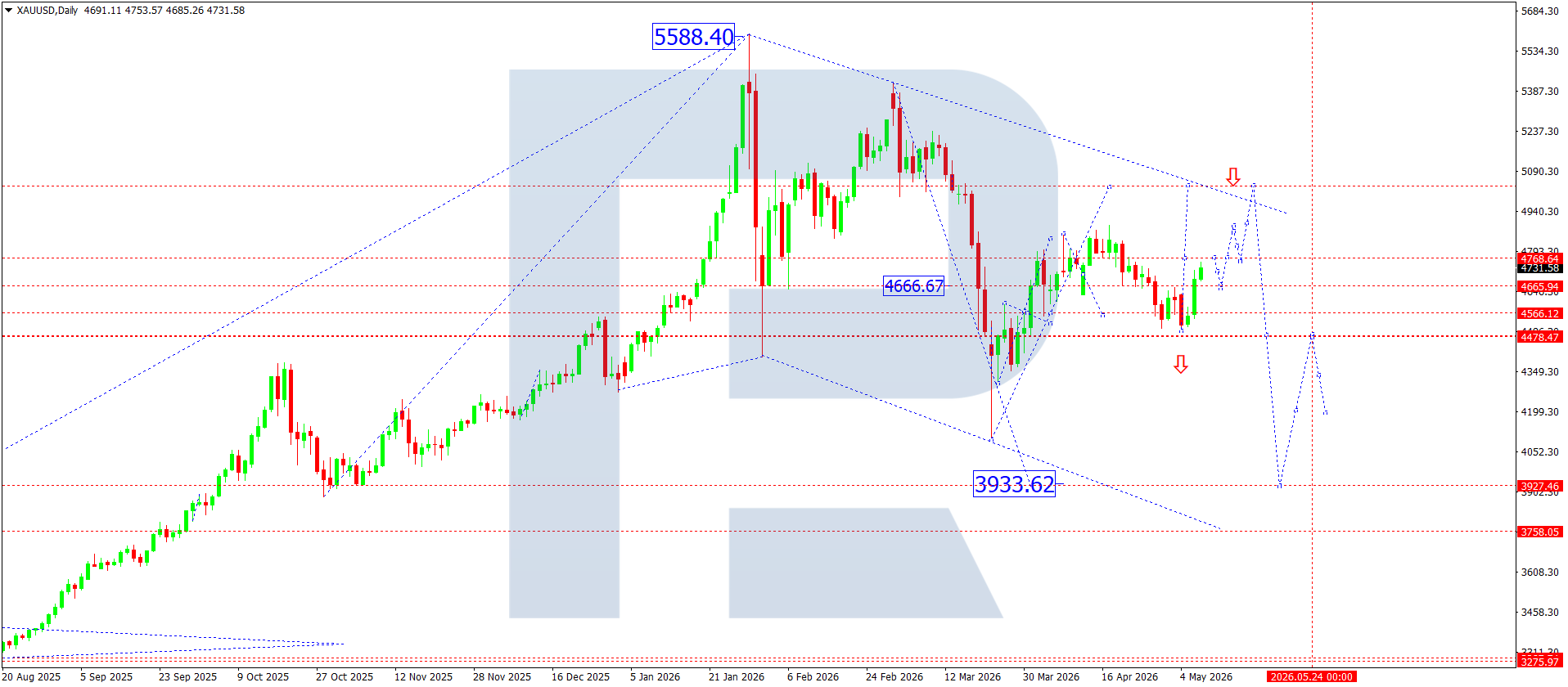
- Gold: Support: 4,523, 4,444. Resistance: 4,758, 5,000
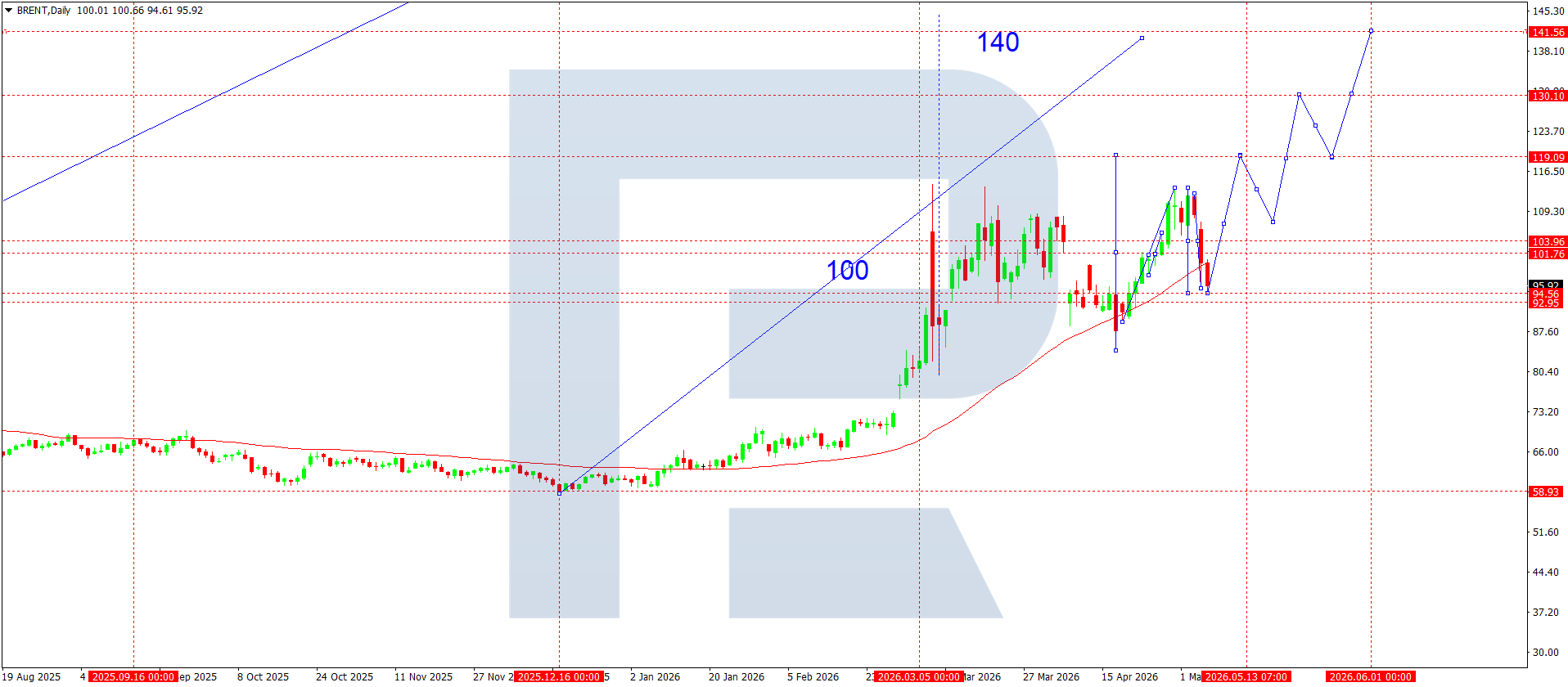
- Brent: Support: 94.60, 88.00. Resistance: 107.90, 118.50
EURUSD forecast
The EURUSD pair ended the week near 1.1770, maintaining elevated volatility amid shifting interest rate expectations in the US and the eurozone. The main market driver remains the divergence in the monetary policy outlooks of the US Federal Reserve and the European Central Bank. Recent comments from ECB representatives have strengthened expectations that the regulator may shift to more hawkish rhetoric as early as June due to accelerating eurozone inflation and rising energy prices. At the same time, the Fed maintains a cautious stance, assessing the impact of geopolitical risks and the condition of the US labour market.
Additional support for the euro comes from lower demand for the dollar as a safe-haven asset following reports of partial de-escalation around the Middle East. At the same time, investors continue to closely monitor inflation data in Germany and Spain, where price pressure remains persistent. The market is gradually pricing in the probability of further ECB rate hikes during 2026, which limits downside potential for the European currency.
EURUSD technical analysis
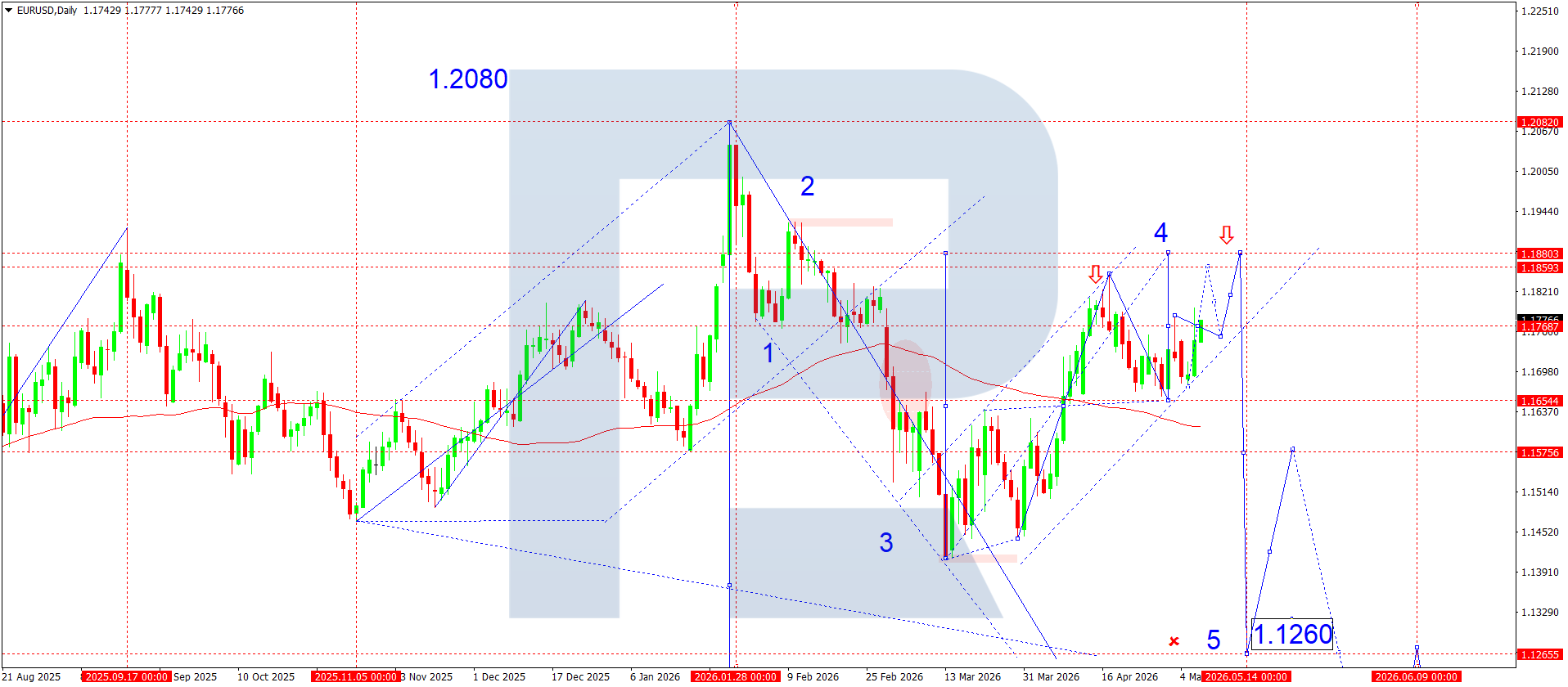
From a technical perspective, EURUSD continues to form an upward structure after the March reversal from the 1.1390 zone. On the daily chart, movement remains within an ascending channel, while the current correction is viewed as an intermediate fourth wave before an attempt to form a fifth upward wave. The key resistance remains the 1.1850–1.1880 area, where active selling and profit-taking were previously observed.
The price is holding above the midline of the long-term ascending channel and above dynamic support near 1.1650, which keeps the advantage with buyers. If the price confidently consolidates above 1.1770, the market may gain upward momentum towards 1.1850 and then towards the main target at 1.1880, marked as the upper boundary of the senior impulse. However, the 1.1880 zone remains critically important: a false breakout may trigger growth to 1.1920.
An alternative scenario suggests that the current upward wave will end near 1.1850, followed by a reversal downwards. In this case, the market may move towards 1.1700 and then towards the strategic target at 1.1620, which is marked as the potential completion area of a larger corrective model.
EURUSD forecast scenarios
Bullish scenario: a confident breakout above 1.1770 will open the way to 1.1850 and then to 1.1880.
Bearish scenario: a downward rebound from the 1.1770 zone may lead to a decline first to 1.1700 and then to 1.1620.
USDJPY forecast
Over the coming week, USDJPY dynamics will continue to be shaped by the monetary policy of the Fed and the Bank of Japan, as well as ongoing currency interventions by the Japanese authorities. The main market theme remains the sharp weakening of the yen, which brought the pair close to the 160.00 zone again at the end of last week. According to market participants, Japan’s Ministry of Finance has already conducted several interventions in an attempt to halt the dollar’s rise. High US bond yields and continued demand for the dollar as a safe-haven asset add further pressure on the yen.
Investors are also closely watching the energy market and the geopolitical situation in the Middle East. Higher oil prices increase pressure on the Japanese economy, which depends on energy imports. This worsens Japan’s trade balance and negatively affects the yen. At the same time, Fed representatives continue to maintain cautious rhetoric, citing persistent US inflation and the need to keep rates high for longer than the market expects. Meanwhile, the Bank of Japan is not yet showing readiness for aggressive policy tightening, which preserves a significant yield gap between the US and Japan.
USDJPY technical analysis
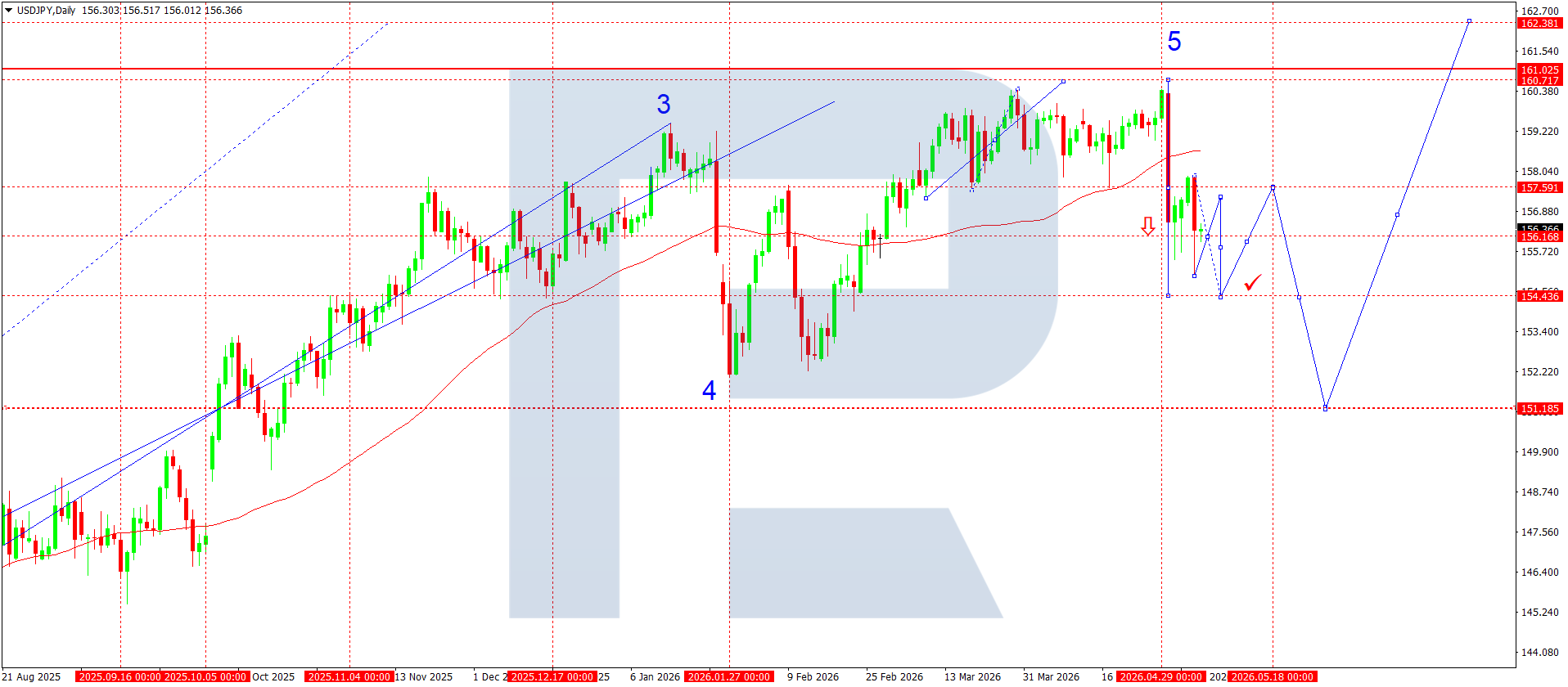
From a technical perspective, USDJPY remains in a long-term uptrend. On the daily chart, the formation of an Elliott corrective wave is nearing completion. The price is holding above the long-term average at 156.60, although the upward impulse has noticeably weakened. The nearest resistance zone is located around 157.60–158.00. Consolidation above this range may return buyers to a retest of 160.70 and then to the main target at 161.40.
At the same time, the chart structure indicates a high probability of a deep correction after wave 5 is completed. The chart shows a scenario of decline first towards 154.40, where important intermediate support and a local reversal point are located. If sellers manage to consolidate below this level, pressure on the market will increase, opening the way to 151.18, the key medium-term correction target. Another risk factor for the dollar remains the probability of new currency interventions by the Japanese authorities if the pair returns above 161.40.
USDJPY forecast scenarios
Bullish scenario: growth above 157.59 and consolidation above 158.00 may return the market to 161.70, followed by movement into the 162.30 area.
Bearish scenario: a breakout of 154.40 will increase pressure on the pair and may lead to a decline towards 152.20.
GBPUSD forecast
The British pound is ending the week near local highs against the US dollar, although the fundamental backdrop remains mixed. Market participants are focused mainly on the policies of the Federal Reserve and the Bank of England, as well as the geopolitical situation in the Middle East. The Fed kept the interest rate unchanged, while regulator representatives continue to signal high inflation risks amid high energy prices and a resilient US labour market. Several major investment banks have already revised their expectations for a Fed rate cut towards later dates.
For the UK, rising government bond yields and persistent inflation risks remain additional pressure factors. The Bank of England has also adopted a cautious stance, pointing to uncertainty around future price dynamics and the impact of external factors on the British economy. Despite this, the latest UK retail sales data came in stronger than expected, partially supporting demand for sterling.
GBPUSD technical analysis
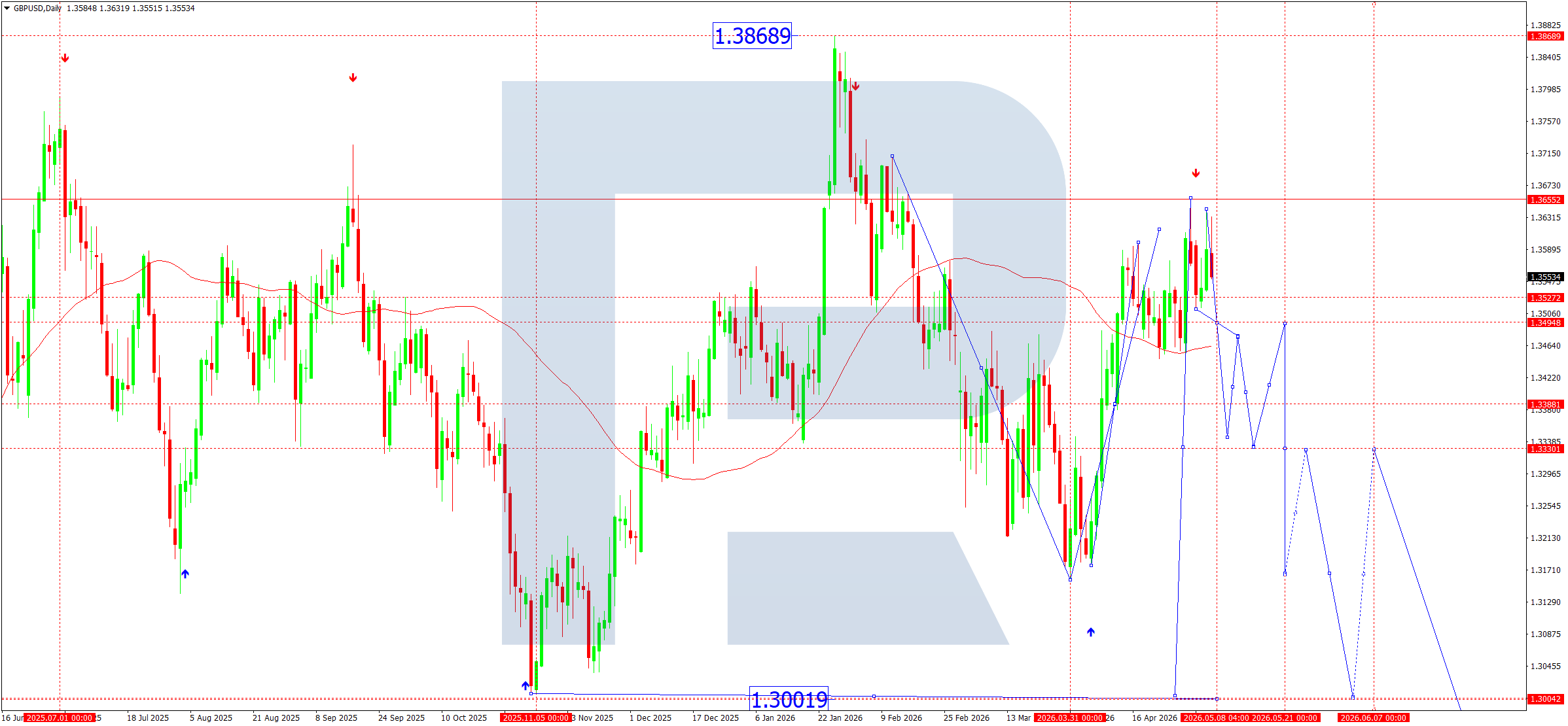
From a technical perspective, GBPUSD continues to trade in a wide range after the impulsive rise from the 1.3170 area. On the daily chart, the upward structure remains intact, but a strong resistance zone is forming around 1.3600–1.3655. This is where active selling previously occurred, as confirmed by current volatility and slowing growth.
The price is holding above the balance midline, preserving the potential for continued upside. At the same time, the chart shows the formation of a corrective wave after the local test of 1.3655. The nearest support is the 1.3495–1.3527 area. As long as the market holds above this zone, buyers retain control over the medium-term trend.
A decline below 1.3495 may increase pressure on sterling and open the way towards 1.3388 and then 1.3330. If current levels hold, the market may retest resistance at 1.3655. Consolidation above this level will open the potential for movement towards 1.3869, the main target of the upward impulse on the daily timeframe.
Another risk factor for GBPUSD remains US dollar dynamics. If US Treasury yields continue to rise, this may limit the British currency’s strengthening potential.
GBPUSD forecast scenarios
Bearish scenario (main): a decline below 1.3495 with a target at 1.3388 and then 1.3330.
Bullish scenario (alternative): if the 1.3655 level is broken, growth towards 1.3750 and then into the 1.3869 area is possible.
AUDUSD forecast
The Australian dollar is ending the week near local highs, maintaining a steady upward momentum against the US dollar. The main driver remains the divergence in monetary policy expectations between the Reserve Bank of Australia and the Federal Reserve. Recent comments from RBA representatives confirmed the regulator’s hawkish stance on inflation, which remains above target. The market continues to price in high rates in Australia for longer than expected, supporting demand for AUD.
Additional support for the Australian currency comes from recovering risk appetite in global markets and stabilisation in the Chinese economy, which is closely linked to Australian commodity exports. At the same time, the US dollar is gradually losing part of its safe-haven demand despite ongoing geopolitical tension in the Middle East. Investors are also closely watching US inflation and labour market data, as any signs of a slowdown in the US economy may increase pressure on the USD.
AUDUSD technical analysis
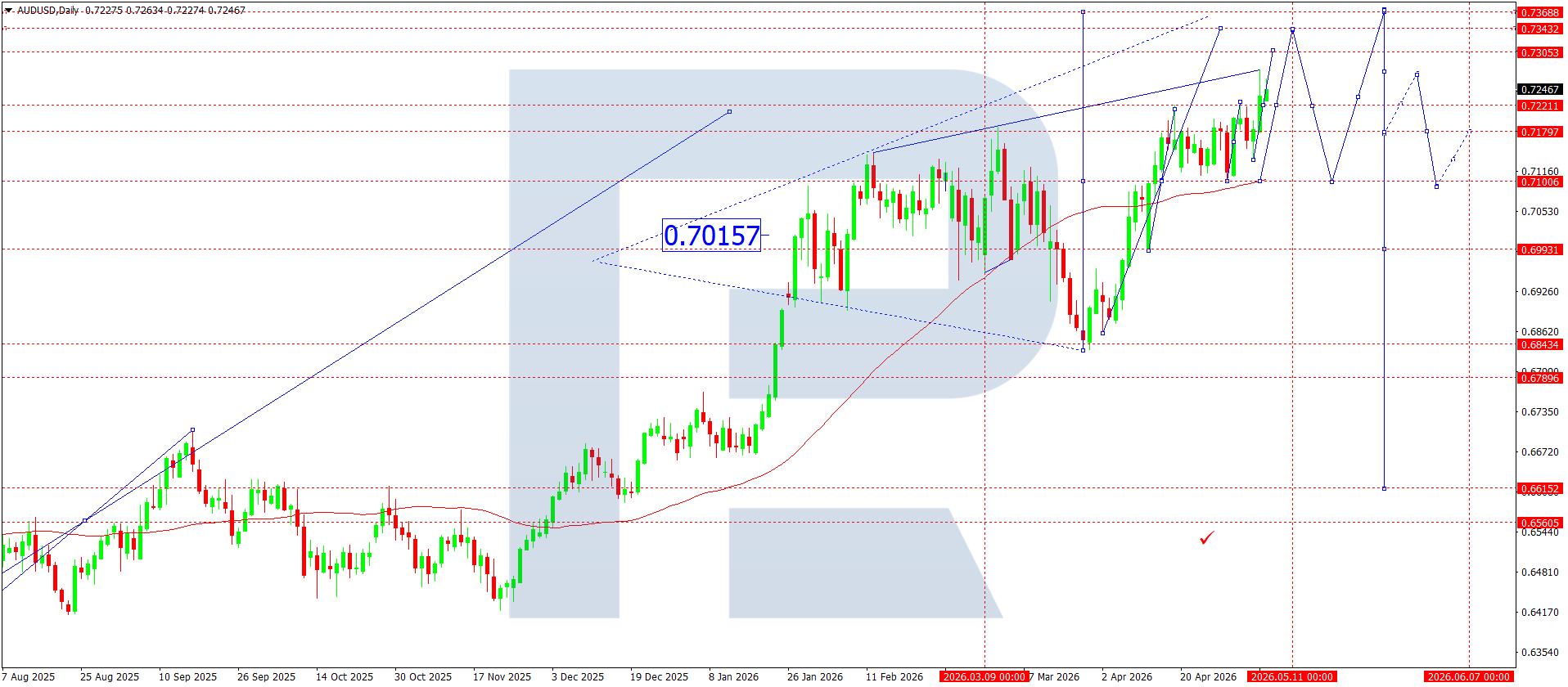
From a technical perspective, AUDUSD continues to develop an upward structure on the daily chart after a confident breakout of the 0.6993–0.7015 zone. The market consolidated above the midline of the long-term ascending channel, while the price is holding above key support at 0.7100, preserving buyer control. The current wave structure points to the development of an upward impulse with an attempt to form a new growth phase towards the upper boundary of the channel.
The chart shows a series of higher lows, confirming the stability of the medium-term bullish trend. In the coming days, the key resistance is the 0.7272 area. Consolidation above this level will open potential for movement to 0.7305 and then to 0.7343. If the upward impulse strengthens, the market may test the strategic target near 0.7368.
At the same time, the 0.7179–0.7160 zone remains important short-term trend support. As long as the price holds above this area, the scenario of continued growth remains the priority. Only a move below 0.7100 would be the first signal of weakening in the upward structure and may lead to a deeper correction towards 0.6993.
AUDUSD forecast scenarios
Bearish scenario (baseline): a decline below 0.7179 will increase pressure on the pair and open the potential for a correction towards 0.7100 and 0.6993.
Bullish scenario (alternative): consolidation above 0.7272 will allow buyers to continue growth towards 0.7343–0.7368.
USDCAD forecast
Over the coming week, USDCAD dynamics will continue to be shaped by the Federal Reserve’s monetary policy, expectations regarding the Bank of Canada’s next steps, and oil market behaviour. The latest US macroeconomic data were moderately strong: the labour market remains resilient, while inflation pressure remains above target. This supports the US dollar and reduces the probability of rapid Fed policy easing. At the same time, the Canadian dollar is receiving support from high oil prices, as geopolitical tensions in the Middle East keep Brent near local highs.
Another factor is expectations of possible Bank of Canada tightening in the second half of the year. The market is gradually pricing in the probability of a rate hike as early as summer if inflation in Canada continues to accelerate. At the same time, risks of a slowdown in the North American economy and weaker external demand persist, limiting the Canadian dollar’s strengthening potential.
USDCAD technical analysis
From a technical perspective, the pair retains a medium-term downward structure after the March reversal from the 1.3965 area. On the daily chart, the price remains below the moving average, which runs near 1.3690–1.3700 and continues to act as dynamic resistance. After the sharp decline in April, the market formed a local consolidation range between 1.3535 and 1.3662.
The current movement structure points to the formation of a corrective phase after the impulsive decline. Buyers have repeatedly held support at 1.3535, confirming demand in the lower part of the range. However, each subsequent rise remains capped by the 1.3662–1.3749 area, where strong seller resistance is concentrated. As long as the price trades below 1.3749, the downward scenario remains the priority.
The chart also shows a descending channel from the March highs. The attempt to break upwards has not yet been confirmed by volumes. If the market consolidates above 1.3662, corrective growth towards 1.3749 and then 1.3965 is possible. However, if price returns below 1.3600, pressure on the pair will increase, and the main downside target will again be 1.3535. A breakout below this level will open the way towards 1.3480 and then to the medium-term target at 1.3400.
USDCAD forecast scenarios
Bullish (baseline): growth from current levels with a breakout of 1.3662 and movement towards 1.3749.
Bearish (alternative): if price consolidates below 1.3535, the decline may continue towards 1.3480.
XAUUSD forecast
Gold is ending the first week of May in a phase of elevated volatility after a deep correction from the January all-time high at 5,588. The market continues to be driven primarily by expectations regarding the US Federal Reserve’s (Fed) next steps, US bond yield dynamics, and geopolitical tension in the Middle East. The Fed kept the interest rate unchanged, but the regulator’s rhetoric remains hawkish, limiting gold’s short-term recovery potential. At the same time, persistently high demand from global central banks and concerns about the resilience of the world economy continue to support the long-term uptrend in precious metals.
Another supportive factor is the rise in geopolitical risks and tension around the Strait of Hormuz, which increases inflation expectations through higher oil prices. Investors continue to use gold as a safe-haven asset despite high real rates in the US. The market is also closely watching US inflation data and the state of the US labour market, as these indicators will shape expectations regarding the timing of possible Fed policy easing in the second half of the year.
XAUUSD technical analysis
From a technical perspective, XAUUSD continues to trade within a medium-term corrective structure after forming the 5,588 peak. On the daily chart, the downwards channel remains in place, while prices remain below the key resistance zone of 4,758–4,760, confirming seller dominance in the medium term. An important pivot point runs through the 4,666 area, around which the market is forming local consolidation. As long as gold remains below this range, pressure on buyers persists.
The nearest support is located in the 4,523–4,490 zone. A breakout below this area will open the way for a decline towards 4,444 and then to the strategic target at 3,933, which remains the main target of the downward wave structure. Local attempts to rise still look like corrective impulses within a bearish trend. To restore a sustainable upward move, buyers need to consolidate above 4,760, which would allow prices to return to the 4,950–5,000 range. However, the current market structure still points to a dominant scenario of gradual decline.
XAUUSD forecast scenarios
Bearish (baseline): a decline below 4,523 with continuation towards 4,444 and then into the 3,933 area.
Bullish (alternative): if the market consolidates above 4,760, growth towards 4,950 and then 5,000 is possible.
Brent forecast
The oil market is ending the first week of May amid elevated volatility. The main driver for Brent remains the geopolitical factor around the Middle East and the situation in the Strait of Hormuz, through which a significant share of global oil exports passes. Despite statements about partial supply stabilisation, the market continues to price in the risk of new disruptions. Oil also receives support from expectations that OPEC+ production restrictions will remain in place, as well as concerns about lower exports from Iran. At the same time, pressure on prices continues to come from concerns about slowing global economic growth and weak demand from China. Investors are also closely assessing the Fed rhetoric, as tight monetary policy limits the pace of recovery in industrial demand for commodity assets. The market remains focused on US oil inventory data, dollar dynamics, and developments around oil transportation in the Persian Gulf.
Brent technical analysis
From a technical perspective, Brent continues to form a medium-term upward structure after a strong impulse from the 58.90 area. On the daily chart, prices are holding above the key 94.60–96.00 support zone, keeping the bullish scenario relevant. Within the current structure, the market is consolidating in an expanding triangle, with the upper boundary in the 107.90–111.40 area. Consolidation above this zone will open the way to a new impulsive wave, with an intermediate target at 118.50.
According to the wave structure, the current correction may be viewed as a local liquidity-building phase before the continuation of the global uptrend. The main medium-term target on the chart remains in the 135.90–141.50 area. Another positive factor for buyers is the steady holding of prices above the moving average, which continues to turn upwards. As long as Brent remains above 94.60, the market structure retains signs of firm bullish control.
However, it is necessary to consider that a breakout below 94.60 support could increase pressure on prices and lead to a deeper correction towards 88.00 and 84.30. This scenario may materialise if geopolitical tensions decline or global economic expectations deteriorate.
Brent forecast scenarios
Bullish scenario (main): if Brent consolidates above 107.90, continued growth towards 118.50 is likely, with further potential movement towards the 135.90–141.50 area.
Bearish scenario (alternative): if the market breaks below 94.60, a decline towards 88.00 and then into the 84.30 area is possible.
Editors’ picks

EURUSD 2026-2027 forecast: key market trends and future predictions
This article provides the EURUSD forecast for 2026 and 2027 and highlights the main factors determining the direction of the pair’s movements. We will apply technical analysis, take into account the opinions of leading experts, large banks, and financial institutions, and study AI-based forecasts. This comprehensive insight into EURUSD predictions should help investors and traders make informed decisions.

Gold (XAUUSD) forecast 2026 and beyond: expert insights, price predictions, and analysis
Dive deep into the Gold (XAUUSD) price outlook for 2026 and beyond, combining technical analysis, expert forecasts, and key macroeconomic factors. It explains the drivers behind gold’s recent surge, explores potential scenarios including a move toward 4,500 to 5,000 USD per ounce, and highlights why the metal remains a strong hedge during global uncertainty.
Forecasts presented in this section only reflect the author’s private opinion and should not be considered as guidance for trading. RoboForex bears no responsibility for trading results based on trading recommendations described in these analytical reviews.