
DE 40 shifts into a downtrend during the correction
The DE 40 resumed its decline after reaching a new all-time high. The index may continue to fall amid a negative fundamental backdrop. Discover more in our analysis for 7 September 2026.
DE 40 forecast: key takeaways
- The DE 40 index has continued to decline since the end of last week
- The CPI rose by 0.2% in August, while the market expected a 0.3% increase, compared to a 0.8% rise in July
- DE 40 forecast for 7 September 2026: 25,800 or 26,630
DE 40 fundamental analysis
The DE 40 index entered a downtrend after a correction reversed the previous trend. The German index may move into a short-term sideways channel.
Germany’s consumer inflation data for August 2026 provides a mixed but moderately positive signal for the DE 40 index. Monthly price growth was weaker than expected and slowed significantly compared to the previous period. This is typically a positive factor for the stock market, as it reduces concerns about the need for the ECB to maintain tighter monetary policy for longer.
The DE 40 outlook is cautiously negative.
DE 40 technical analysis
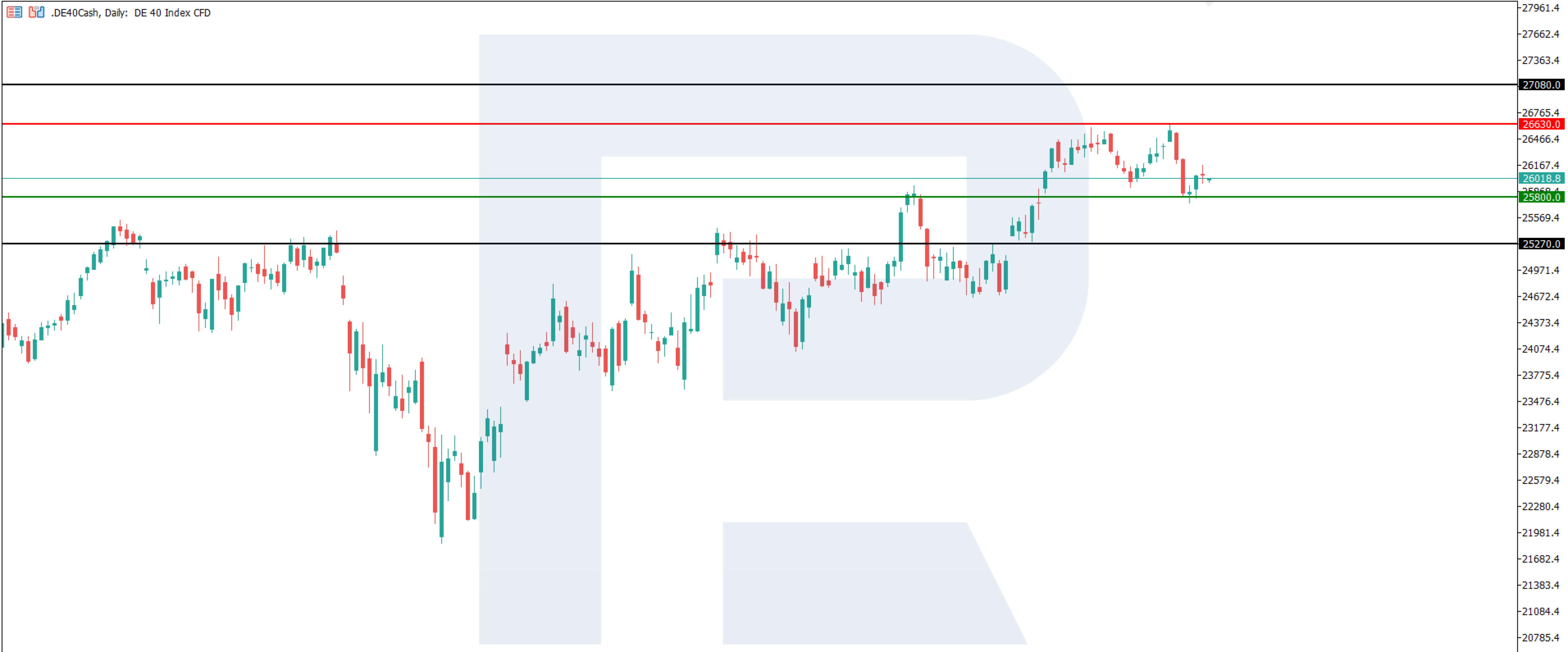
The DE 40 D1 chart shows a downtrend. Following a minor correction at the end of last week, the decline is highly likely to continue. However, downward momentum is weakening, so quotes may enter a sideways channel.
The nearest resistance level is located at 26,630; a breakout would open the way towards 27,080. The support level lies at 25,800, and if this level is broken, the price could fall to 25,270. As long as the DE 40 holds above support, a sideways trend remains possible. A trend reversal could only be considered after a decisive breakout above the resistance level.
The baseline scenario remains a continued decline, but with limited targets.
DE 40 trading scenario for today
Trading scenario (Sell Stop)
A consolidation below the 25,800 support level would confirm continued downward momentum and create conditions for a further decline in the DE 40.
- Current price: 26,019
- Entry level: 25,770
- Take profit: 25,270
- Stop loss: 25,870
- Risk-to-reward ratio: approximately 1:5
The trade idea is valid until 8:00 AM (server time, UTC+3) on 14 September 2026.
Risk factors
The main risk factors for the DE 40 upside scenario remain persistently elevated inflation in the eurozone and a tighter-than-expected ECB stance, which could lead to higher bond yields and reduce the appeal of stocks. A further rise in energy prices could add to pressure, as it increases costs for German industrial and chemical companies while also sustaining inflation. The weakness of Germany’s domestic economy also remains a negative factor.
Summary
The DE 40 index corrected before resuming its decline. Germany’s inflation data provide a mildly positive backdrop but have not yet been reflected in quotes. The DE 40 forecast for today, 7 September 2026, does not rule out sideways movement between the current resistance and support levels. However, a further decline towards 25,270 is more likely.
Editors’ picks
 EURUSD forecast 2026–2027: technical analysis, price levels & predictions
EURUSD has recovered from the July lows and is trading near 1.1545 — back in bullish territory. The pair has reclaimed EMA65 on the daily, formed a bullish EMA crossover on H4, and the US-eurozone GDP gap has narrowed sharply (US 1.5% vs eurozone 1.0%). Goldman Sachs and Deutsche Bank both now target 1.2500 by year-end. A confirmed close above 1.1700 opens the path to 1.1805. We break down the key levels, three trading scenarios, and what the unprecedented 9-3 FOMC dissent vote means for EURUSD.
 Gold (XAUUSD) forecast 2026: technical analysis, price levels & predictions
Gold has reversed its downtrend and is trading near 4,360 USD, back above both EMA65 and EMA200. ETF flows turned positive in July with 3 billion USD of net inflows, and central banks bought 288.9 tonnes in Q2 — up 62% year-on-year. A breakout above 4,500 USD opens the path to 4,855 USD and the 5,597 USD all-time high. We break down the key levels, three trading scenarios with entry triggers, and what J.P. Morgan, Deutsche Bank and Goldman Sachs are forecasting for gold in 2026.
Forecasts presented in this section only reflect the author’s private opinion and should not be considered as guidance for trading. RoboForex bears no responsibility for trading results based on trading recommendations described in these analytical reviews.