
The influence of fundamental data on the dynamics of financial instruments is studied by a special type of analysis – fundamental analysis, an integral part of any trader training program. Fundamental analysis is applied to regularly published macroeconomic indices of certain countries and the world economy on the whole as well as to political events, relevant for the financial world.
All posts
18 min
Where to place a stop loss and take profit, how far the stop should go, how to size the trade from it and when a trailing stop helps.

21 min
How the MACD line, signal line and histogram are calculated, which settings fit each timeframe and five ways to trade the indicator.

6 min
Day trading or intraday is short-term transaction on stock exchanges performed during the same trading session without roll-overs. This way of trading is quite peculiar, because this approach requires traders to consider all incoming information, such as news, statistics, external factors, and a lot of other events.

22 min
Read the Ichimoku cloud at a glance: the five lines, the 9, 26 and 52 settings, the Kumo twist and the signals worth trading.
24 min
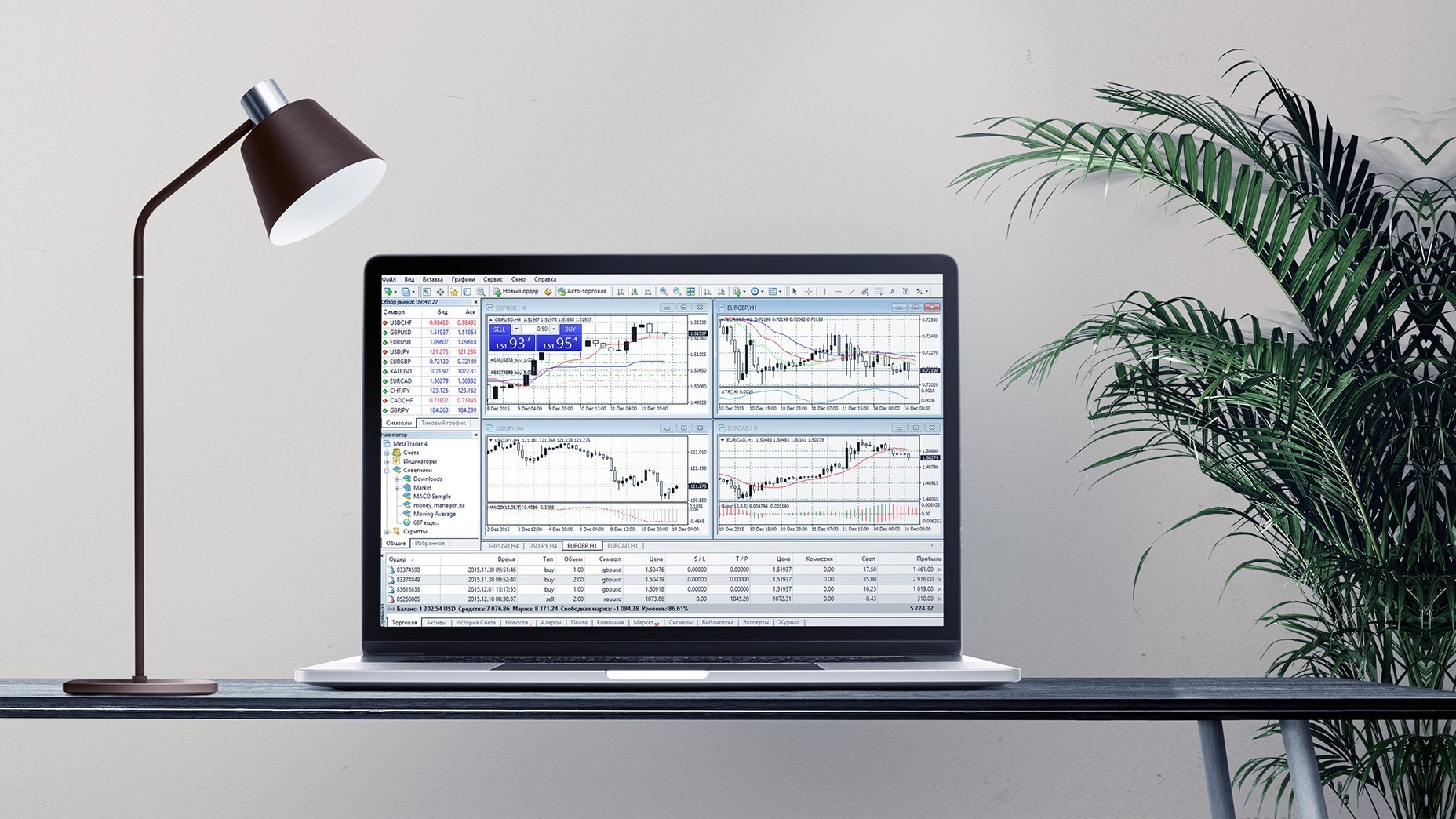
Install MT4, log in with a demo account, set up charts, place market and pending orders, and run Expert Advisors on a VPS.

4 min
Leverage means the ratio between the money you own and that borrowed from the broker. Different brokers offer different leverage sizes, which also depend on the market you are trading.

7 min
To trade with leverage, one must understand what it is and what we need it for. Leverage is a ratio of borrowed money to your own funds. It is also called trading leverage or financial leverage. To better understand what leverage is, study an example below.

6 min
We hope that this post will be interesting and useful to both beginners of the Forex market, who’d like to invest minimum money, and experienced managers, who invest large amounts of funds in diversified investment portfolios.

4 min
Are there any beginners, who haven’t asked themselves a question what a CFD is and how it is different from a real asset? Let’s go deeper in these terms and try to determine which one of them is more interesting and easier-to-use for both beginners of stock exchange markets and experienced investors. What is CFD? […]

4 min
In very simple words, liquidity indicates an asset’s ability to be sold in a short period of time at the price that is close or equal to the requested price. If we dig into the matter, we’ll find out that liquidity means an opportunity to convert an asset into its monetary equivalent. An asset may […]

4 min
An investment portfolio is a set of financial instruments. The purpose of acquiring such instruments is of course making profit in the future. Options, stocks, futures, metals, real estate, currencies, and many other assets – all of them can be considered as financial instruments.

4 min
There are a lot of discussions about trading within the boundlessness of the Internet, both in conventional businesses and state-financed organizations. People say and write a lot of different things. More often than not, they are sure that trading can’t be regarded as a primary source of income.

4 min
Who in the world of trading hasn’t heard of scalping? Probably, you may know it as pipsing, but all traders surely heard a lot of different things about it, some of them tried it in practice, others are just going to, that’s why I guess it would be interesting to go into details of such thing as scalping.

4 min
Every beginner in trading asks themselves the same question: “Exactly what kind of a trading terminal should I choose for trading?” There are a lot of different trading platforms that have both similar features and essential differences. Among these differences are such nuances as installation on PCs or mobile devices, availability of a terminal in a web browser without installing any additional software components, opportunities to use a terminal for free or on a paid basis.