

As soon as they get a little free money, beginners open another position and, when it comes to the crunch, lose all their orders and entire deposit. To avoid such situations, people created and developed some specific rules to manage their capital and risks.
All posts

3 min
Forex is the largest market across the globe that accounts nearly 90% of all capital markets. Its yearly turnover is ten times bigger than the overall world's GDP.
3 min
When it comes to margin, people who are not knowledgeable in trading usually think it's the difference between the buying and the selling price. While this is true for most other cases, in trading, margin means a collateral you've got to pay in order to open your position.
4 min
Most traders I have known want to absolutely conquer the market. Some succeed, but only every now and then, failing to turn this conquer into a permanent win. The reasons are many, from insufficient skills or experience all the way to the lack of the 'holy grail', with the 'not enough money' reason in between. Well, a good set of excuses. These reasons, however, are somewhat true, as all traders are different and use their trading potential differently.

2 min
Hedging risks is an essential ability for both new and advanced investors. Risk hedging is used when a trading system no longer works, and you've got to secure your capital against the volatile market conditions.
3 min
In fact, fundamental analysis does not have any secrets as such. There are, however, a few rules one should stick to in order to keep their assumptions and conclusions logical.

3 min
After doing some demo trading and conquering the virtual market, every trader starts sooner or later thinking about opening a real account and depositing their hard-earned money.

4 min
Professionals of currency and stock exchange markets have two completely different ways to analyze assets: fundamental and technical.
4 min
On financial markets, no matter when, while working there or just getting to know them, investors will surely face such things as financial instruments. What are they? We’ll paint it in details. Financial instruments Financial instruments imply a wide range of terms and definitions. It’s very easy to see how numerous they are: they include […]
5 min
A trading system implies a method or a scope of rules, which allows traders to understand in a very short period of time what is happening on the market at the moment and assess whether there are chances to open a position.

4 min
A broker is a term not only for financial markets: brokers provide their services in many different fields, but the general principle of their operations is similar.

3 min
Let’s consider the etymology of the word “trading”. “Trading” is derived from English “to trade”. Thus, we may come to the understanding that trading is some kind of activity, which is related to buying or selling something.
5 min
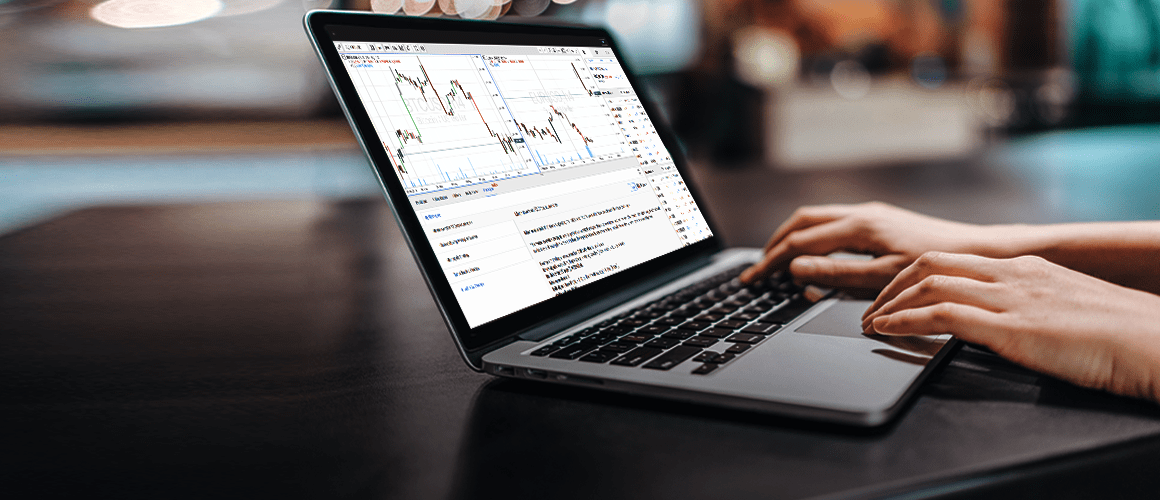
R StocksTrader combines cutting-edge technologies and a classic design taken to a completely new level. No more unnecessary software, patches, and updates – get access to all global financial markets via a web terminal in a familiar web browser.

2 min
The financial market consists of several segments, such as a securities market, a currency market, and so on.