
US Tech forecast: the index enters a downtrend
The US Tech index has fallen 12% from its all-time high and continues to decline. The US Tech forecast for next week is negative.
US Tech forecast: key takeaways
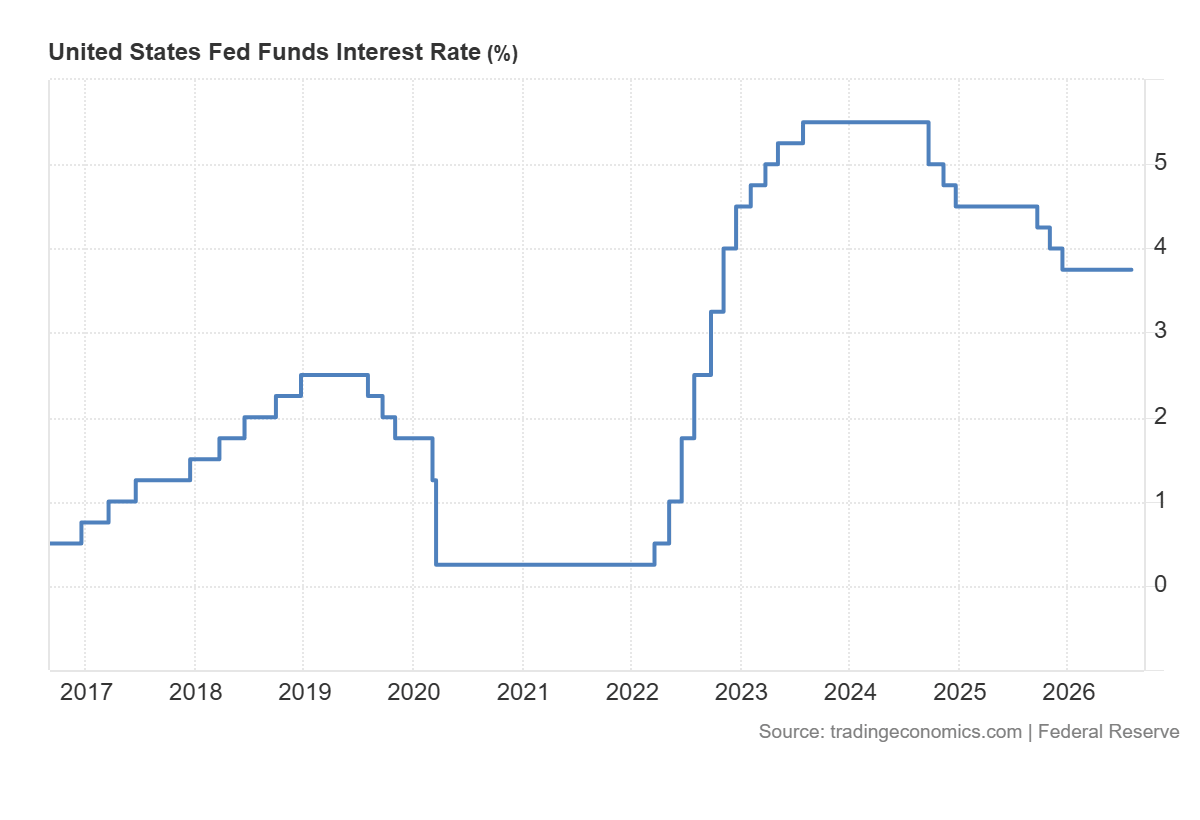
- Recent data: the US Federal Reserve kept the interest rate at 3.75%
- Market impact: the current data is negative for the technology sector
US Tech fundamental analysis
The Federal Reserve’s decision to hold interest rates steady within the 3.50–3.75% range is moderately favourable for the US Tech index, as the regulator did not raise borrowing costs further. However, the accompanying statements by the Fed chairman significantly weaken the positive effect of keeping the rate unchanged. The regulator made it clear that the current decision does not mark the end of the period of elevated interest rates and that further action will depend on new inflation data.
This is particularly important for the US Tech index. A significant share of its market capitalisation consists of companies whose valuations depend on expectations of high future profits. When government bond yields rise, investors begin to demand higher potential returns from stocks as well. As a result, the future earnings of technology companies are valued less highly in current terms.
US Tech technical analysis
The decision has a mixed impact on the US stock market overall. On the upside, the Federal Reserve did not increase pressure on the economy with an immediate rate hike. This reduces the short-term risk of a decline in business activity, increased debt servicing costs, and worsening labour market conditions. At the same time, the Fed effectively warned that the fight against inflation is not yet complete.
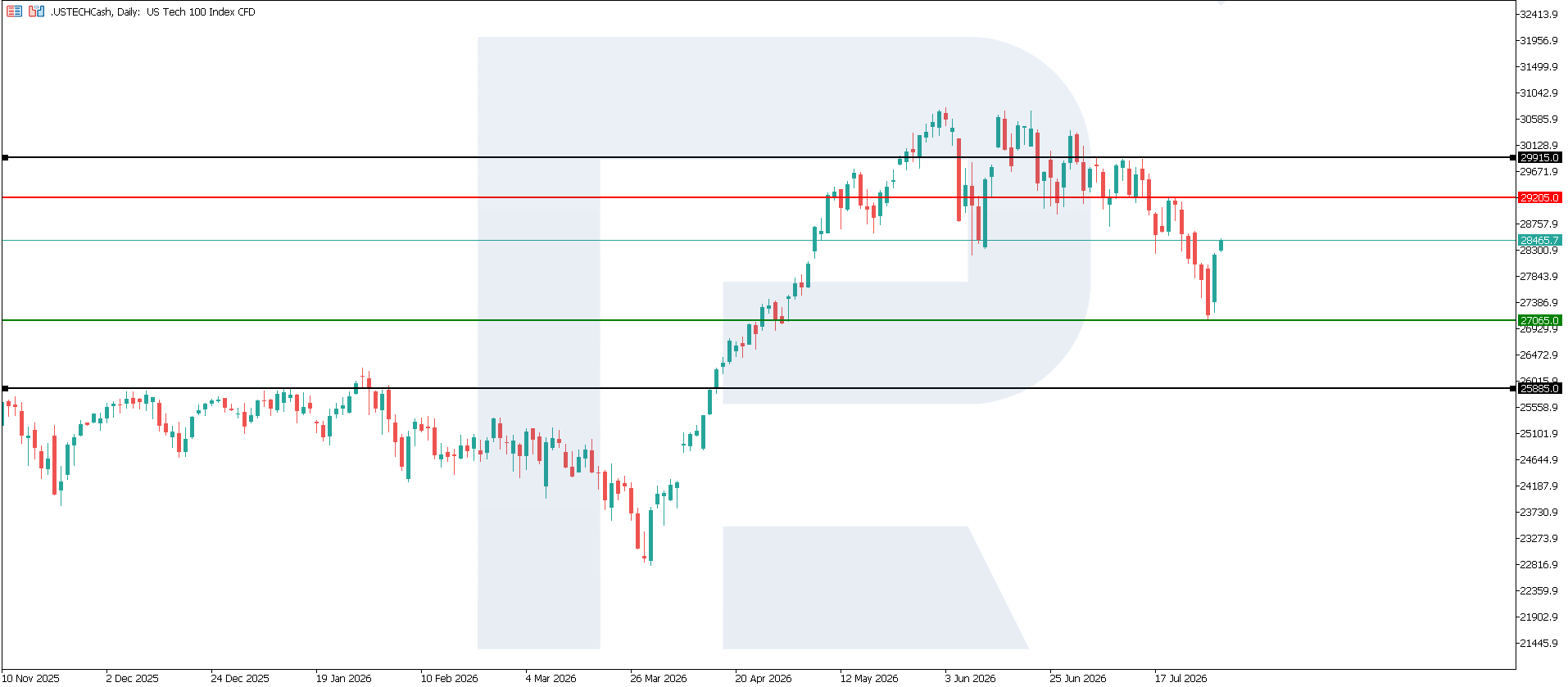
The US Tech index has entered a downtrend, with the nearest resistance level at 29,205.0 and the main support at 27,065.0. The current downward correction may develop into a medium-term movement. However, if buying activity remains insufficient, the index may continue to trade sideways. If the decline continues, the next target could be 25,885.0.
The US Tech price forecast outlines the following scenarios:
- Pessimistic US Tech scenario: a breakout below the 27,065.0 support level could send the index down to 25,885.0
- Optimistic US Tech scenario: a breakout above the 29,205.0 resistance level could drive the index up to 29,915.0
Summary
In the near term, the impact of the Fed’s decision on the US Tech index should be assessed as mixed, but with a moderately negative bias. Keeping the rate unchanged eliminated the risk of immediate tightening. However, the Federal Reserve chairman’s comments, three votes in favour of a rate hike, and rising market bond yields prevent the decision from being viewed as entirely favourable. The main source of pressure on the technology index is not the current interest rate level itself, but the risk that the cost of capital will remain high for longer than expected or continue to rise. The nearest downside target could be 25,885.0.
Editors’ picks
 EURUSD forecast 2026–2027: technical analysis, price levels & predictions
EURUSD has pulled back from the 2026 high of 1.1915 and is now trading near 1.1450 — below both EMA65 and EMA200 — with the active scenario shifting from bullish to bearish. The ECB raised rates to 2.40%, but the Fed holds at 3.75%, and US inflation (3.5%) continues to outpace the eurozone (2.8%). A confirmed break below 1.1280 opens the next downward wave toward 1.1080. We break down the key levels, three trading scenarios with entry triggers, and what Deutsche Bank, Morgan Stanley and UBS are forecasting for EURUSD in 2026.
 Gold (XAUUSD) forecast 2026: predictions based on fundamental and technical analysis
Gold has corrected over 25% from its all-time high of 5,597 USD and is now trading near 4,100 USD — testing a critical support zone. Is this the bottom, or will the downtrend continue? We break down the key levels (support 3,920 USD, breakout trigger 4,500 USD), three trading scenarios with entry levels, and what J.P. Morgan, Goldman Sachs and Deutsche Bank are forecasting for gold in 2026.
Forecasts presented in this section only reflect the author’s private opinion and should not be considered as guidance for trading. RoboForex bears no responsibility for trading results based on trading recommendations described in these analytical reviews.