Market Week Ahead (August 17-21): FOMC Meeting Minutes Test the Strength of the Dollar

Another August week passed relatively calmly after the series of strong moves at the start of the month. Tension in the Middle East made itself felt again, though everything paused by the end of the week, which reduced the geopolitical premium in oil prices. At the same time investors kept assessing the condition of the American economy after fresh signals from the labour market and the July inflation data.
The yen remains a separate factor for the currency market. Following the joint action by Japan and the United States at the end of July, USD/JPY fell sharply from levels above 163 and now consolidates around 159. The market is trying to understand how durable the strengthening of the Japanese currency will prove and where the level sits that could prompt new steps from the authorities. This week the main event is the FOMC meeting minutes from the July session. Investors will also receive a large block of statistics from Japan, economic data from China and UK inflation figures.
In Brief
- China industrial production and retail sales (Monday, August 17): the retail component decides whether AUD/USD can hold above the top of its summer range.
- UK inflation (Wednesday, August 19): an acceleration to 3.0% would limit the room the Bank of England has for further easing and support the pound.
- FOMC meeting minutes (Wednesday, August 19): the defining release of the week; the balance of risks between inflation and employment sets the tone for the dollar.
- Japan trade balance (Thursday, August 20): shows how far external demand supports the recent strength of the yen.
- Japan inflation, UK retail sales and preliminary PMI (Friday, August 21): the closing test of whether the week's currency moves have fundamental backing.
Wednesday carries the weight of the week. The Bank of England and the Federal Reserve are assessed within hours of each other, so the pound and the dollar both reprice against fresh information about how each regulator reads its own inflation picture.
The Japanese block runs across the whole week and works as one story. GDP on Monday, trade figures on Thursday and CPI on Friday together answer whether the yen can hold its gains on macro data alone once the effect of the intervention fades.
Key Events of the Week
| Date | Event | Instruments | Importance |
|---|---|---|---|
| Monday, Aug 17 | China Industrial Production and Retail Sales | AUD/USD | ●●● High |
| Monday, Aug 17 | Japan GDP, Q2 preliminary estimate | USD/JPY, JP 225 | ●● Medium |
| Wednesday, Aug 19 | UK Consumer Price Index | GBP/USD | ●●● High |
| Wednesday, Aug 19 | FOMC Meeting Minutes | EUR/USD | ●●● High |
| Thursday, Aug 20 | Japan Trade Balance, July | USD/JPY, JP 225 | ●● Medium |
| Friday, Aug 21 | Japan Inflation, UK Retail Sales and preliminary PMI | USD/JPY, GBP/USD | ●● Medium |
Instant Access to Global Markets with RoboForex MobileTrader
17
Aug
Industrial Production Forecast
+5.0% y/y
Previous
+5.3% y/y
Retail Sales Forecast
+1.5% y/y
Previous
+1.0% y/y
Why It Matters
China remains one of the main sources of external demand for Australia, so figures on industry and consumption can noticeably move the Australian dollar. We expect a modest slowdown in industrial production alongside a recovery in retail sales. That combination would show whether the Chinese economy is gradually managing to rebalance growth toward domestic demand.
Market Reaction
Strong industrial and retail data would support expectations of steady growth in the Chinese economy and demand for the Australian dollar. Weak statistics would again widen concerns about domestic demand in China and return pressure on AUD.
Market Sentiment
Sentiment toward the Chinese economy stays cautious. The industrial sector shows resilience, while consumer activity lags noticeably behind. That makes signs of recovery in retail demand the deciding element of this release, with the production figure playing a supporting role. Simultaneous improvement in both components would be a considerably stronger signal for AUD than a good result in industry alone. On the chart, AUD/USD has risen to 0.7083 and is testing the upper edge of its July and August range again. Price sits near the upper Bollinger band, while MACD is returning to positive territory and keeps the advantage with buyers. A close above 0.7090 opens the way toward 0.7120, while weak Chinese data could return the pair to 0.7040.
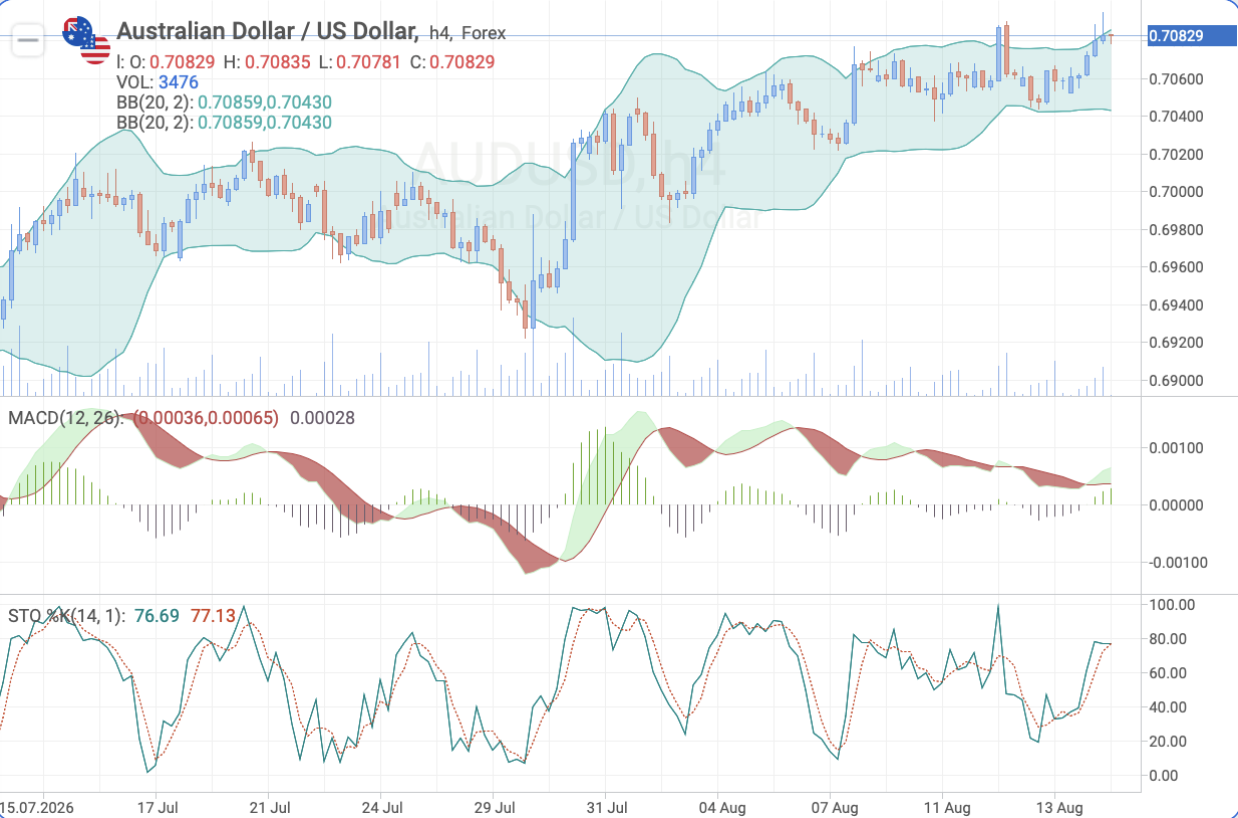
Key Levels — AUD/USD
| Level | Value |
|---|---|
| Resistance | 0.7090 / 0.7120 |
| Support | 0.7040 / 0.7000 |
| Target | 0.7120 |
19
Aug
CPI Forecast
+3.0% y/y
Previous
+2.6% y/y
Why It Matters
Inflation remains the main constraint on further easing by the Bank of England. The expected acceleration in CPI from 2.6% to 3.0% could widen the list of arguments in favour of a more careful approach to rates. On Friday the picture is completed by July retail sales and the preliminary PMI readings, which show how well the economy is coping with the high cost of borrowing.
Market Reaction
Inflation above 3% would strengthen expectations of a firmer position from the Bank of England and support the pound. A weak CPI would erode the interest rate support for the British currency, especially if Friday's statistics also point to deteriorating demand.
Market Sentiment
The pound approaches the CPI release in a strong position, so part of the positive expectations is already reflected in the price. An acceleration in inflation would support GBP on its own, though continuation of the advance requires confirmation that the economy keeps its balance and resilience. A combination of high inflation with weak sales and PMI would instead leave the Bank of England with an uncomfortable choice between price pressure and a slowing economy. On the chart, GBP/USD trades around 1.3530 and stays near the upper edge of the range of recent weeks. MACD is turning up again, while Stochastic sits in the upper part of its range, so local consolidation is possible before the advance continues. A close above 1.3550 confirms the move toward 1.3600, and a drop below 1.3470 would worsen the short-term picture.
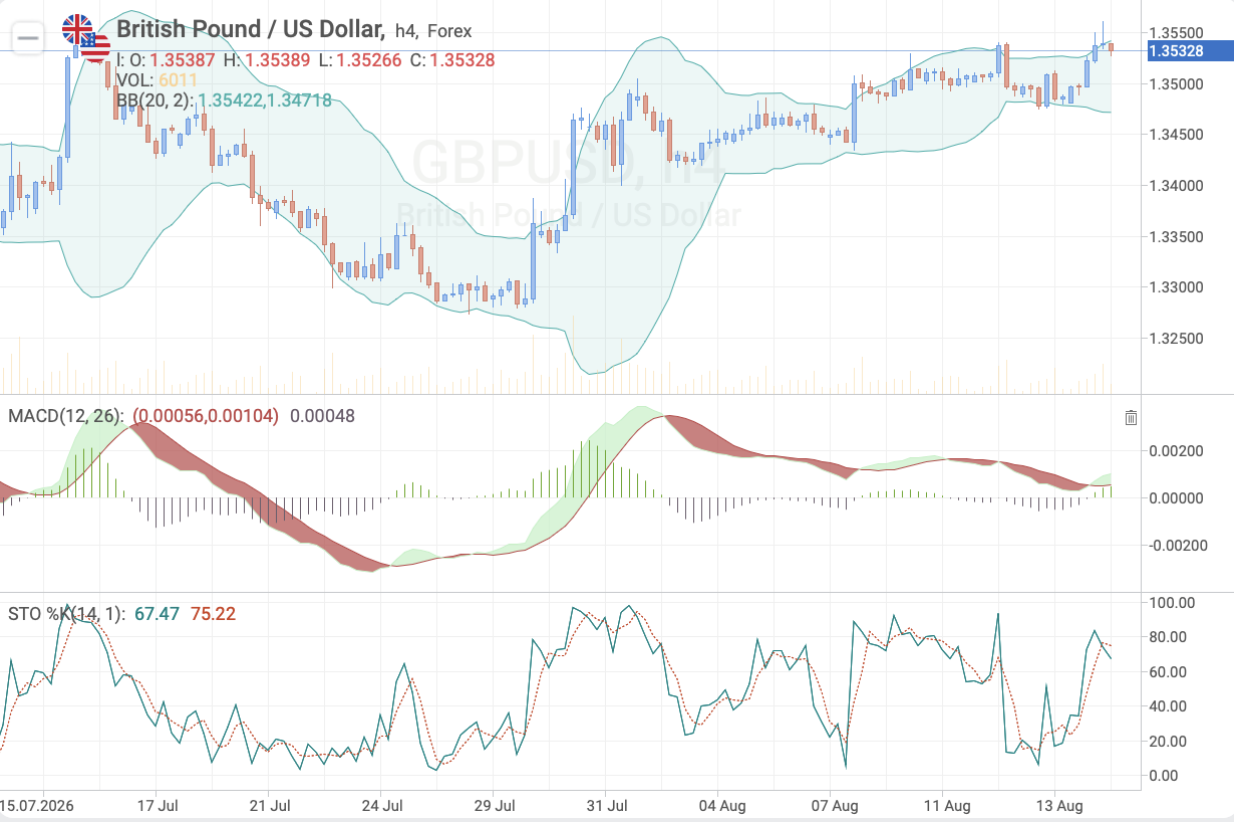
Key Levels — GBP/USD
| Level | Value |
|---|---|
| Resistance | 1.3550 / 1.3600 |
| Support | 1.3470 / 1.3420 |
| Target | 1.3600 |
19
Aug
Document
July FOMC Minutes
Current Fed Funds Rate
Unchanged in July
Why It Matters
The FOMC meeting minutes from the July session are the main event of the week for the dollar. After the latest labour market and inflation data, the key point is how widely concerns about price pressure are shared inside the committee and what conditions the regulator considers necessary for the next change in the rate. We pay particular attention to the assessment of the balance of risks between inflation and employment. If most participants still see inflation risks as dominant, expectations of an extended period of high rates will remain in place.
Market Reaction
A firm tone in the minutes would support the dollar and US bond yields, limiting the advance in EUR/USD. A softer discussion inside the FOMC would widen expectations of policy easing and create conditions for a fresh decline in the dollar.
Market Sentiment
Positioning ahead of the release is finely balanced. Recent data handed the market arguments for a more careful Fed and for expectations of further easing at the same time, so the minutes can shift that balance even without any new rate decision. The central question is how seriously officials treat the risk of inflation accelerating again. A document that reveals a noticeable split inside the committee would raise the sensitivity of the dollar to every macro release that follows. On the chart, EUR/USD trades around 1.1570 after another approach to local highs. MACD has turned higher again, while Stochastic has moved close to overbought territory, which makes resistance at 1.1580 the key level for further movement. Soft minutes could push the pair through that level and open the way toward 1.1620, while a firm signal returns support at 1.1510 into focus.
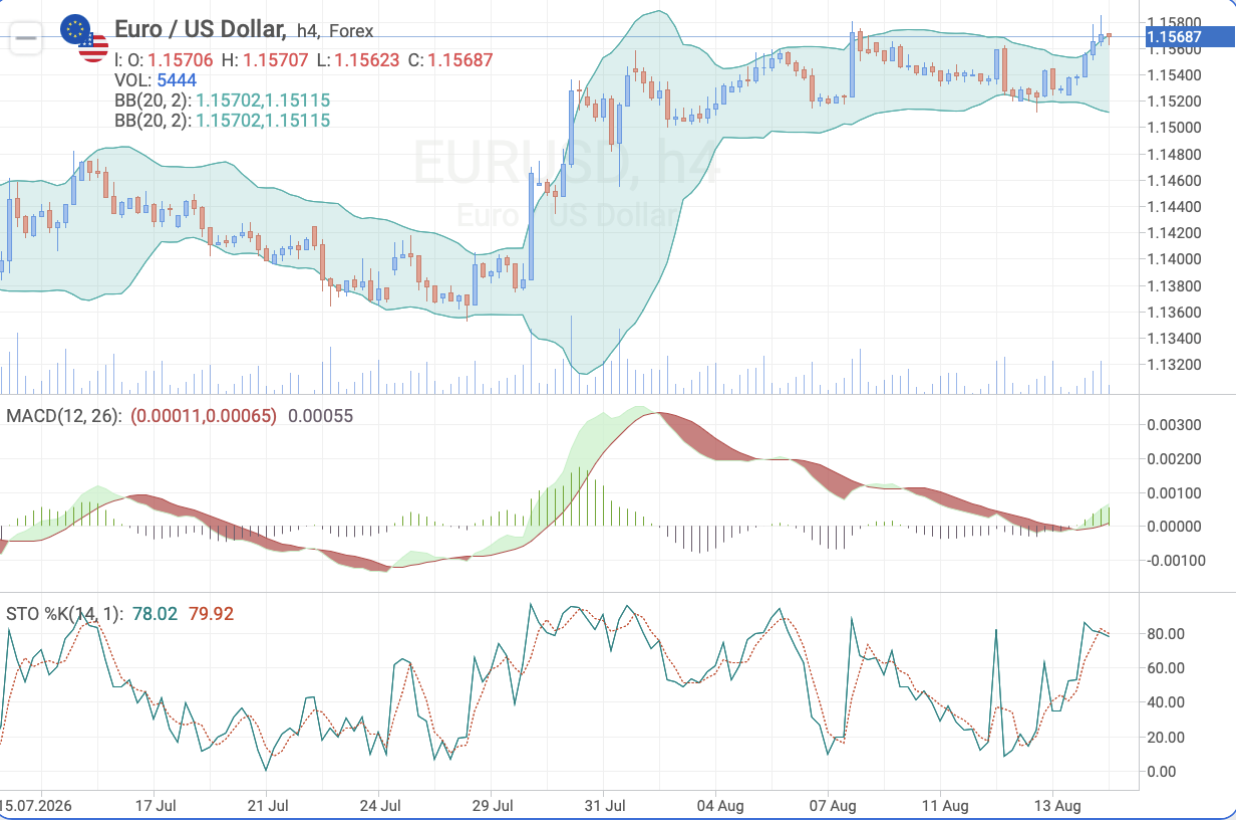
Key Levels — EUR/USD
| Level | Value |
|---|---|
| Resistance | 1.1580 / 1.1620 |
| Support | 1.1510 / 1.1470 |
| Target | 1.1620 |
17-21
Aug
GDP Q2 Forecast
+0.4% q/q
Previous
+0.5% q/q
Trade Balance July Forecast
-500 bln JPY
Previous
-406.9 bln JPY
Inflation July Forecast
+1.7% y/y
Previous
+1.7% y/y
Why It Matters
After the sharp strengthening of the yen, market attention moves from intervention toward the fundamental reasons for further movement in the currency. GDP on Monday shows the condition of the economy in the second quarter, trade data on Thursday covers the influence of external demand and imports, and Friday's CPI becomes the main reference point for assessing future Bank of Japan policy. Following the recent collapse in USD/JPY, the deciding question is whether the data can justify a stronger yen without additional support from the authorities.
Market Reaction
Strong GDP and higher inflation would reinforce the arguments in favour of firmer Bank of Japan policy and help USD/JPY continue lower. Weak statistics would put the fundamental durability of the yen's strength in question and create conditions for the pair to recover.
Market Sentiment
After the sharp move at the end of July, the market is in no hurry to return to its previous bets against the yen. The effect of the intervention is gradually giving way to macroeconomics: to lock in the stronger currency, Japan needs data confirming the durability of growth and inflation. Failing that, the 160 area could again become the main test for USD/JPY and a sensitive level for the Japanese authorities at the same time. On the chart, USD/JPY has stabilised around 159.30 after the sharp fall from levels above 163. The Bollinger bands have narrowed noticeably and MACD sits practically at the zero mark, which shows that the impulse following the intervention is exhausted and the pair has moved into consolidation. A drop below 158.80 returns 157.80 into focus, while a close above the 159.60 to 160.00 area would be the first serious signal of a dollar recovery.
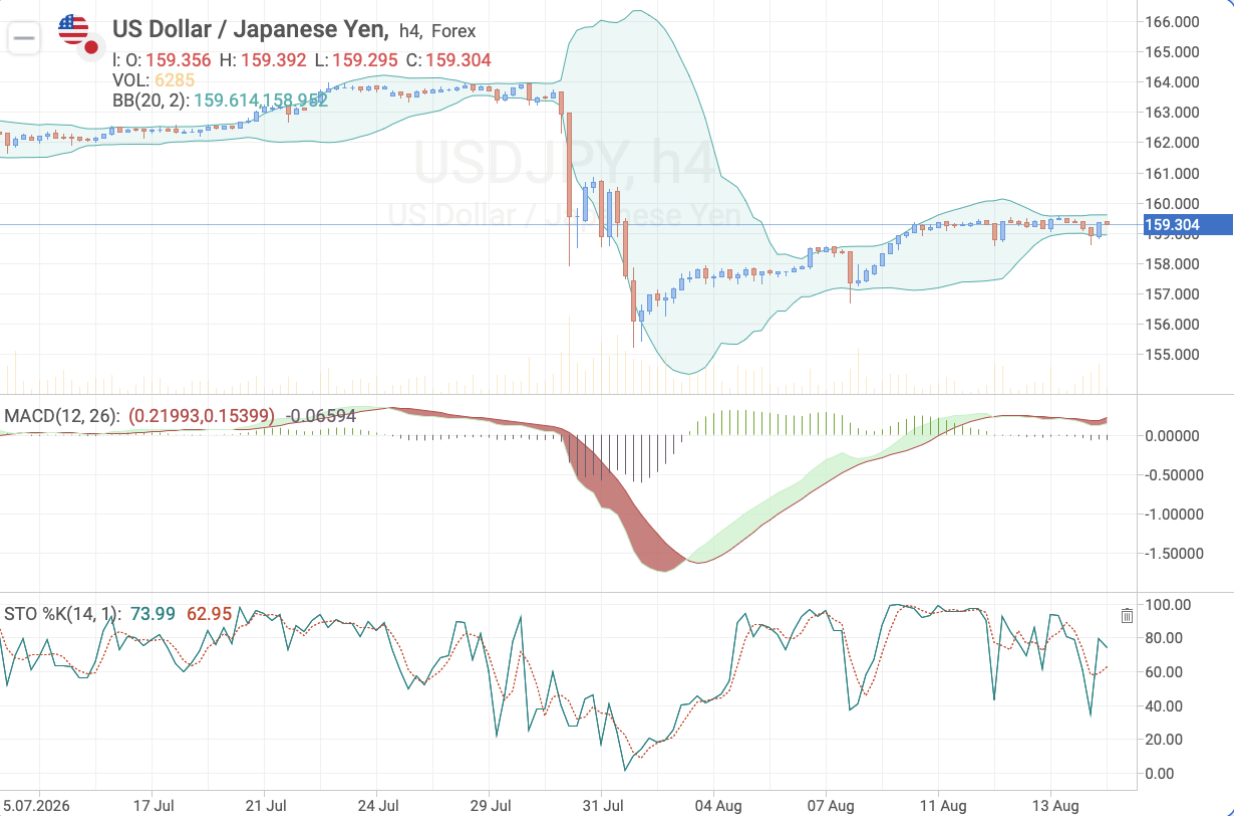
Key Levels — USD/JPY
| Level | Value |
|---|---|
| Resistance | 159.60 / 160.00 |
| Support | 158.80 / 157.80 |
| Target | 157.80 |
Track the forecasts and the actual figures for each event: the gap between consensus and the released number is what determines how sharply prices move. Learn more about how to read the economic calendar and trade the news.
Conclusion
Wednesday decides the week. UK inflation sets the near-term path for the pound, and the FOMC meeting minutes then show how much of the market's confidence in future Fed easing rests on solid ground. A document with visible disagreement inside the committee would keep EUR/USD pinned below 1.1580 and raise the reaction to every American release through the rest of August.
Japan supplies the second storyline. GDP, trade figures and CPI arrive across the week and together determine whether the yen can hold its post-intervention gains on macro data alone. A move by USD/JPY back above 160 would mark the point where the July action starts losing its effect, so that level deserves attention through Friday.
Any information provided in articles on this website is based solely on the personal opinions of the authors. These articles should not be construed as trading recommendations or a call to action. The authors and RoboForex accept no responsibility for the results of any trades made on the basis of these recommendations and reviews. Past performance is not indicative of future results. Trading stocks and CFDs involves a high risk of capital loss.