Market Week Ahead (September 14 – 18): Fed Rate Decision Leads a Week of Three Central Banks
September's busiest week puts three of the world's largest central banks on the calendar at once. The Fed rate decision comes first on Wednesday, followed by the Bank of England on Thursday and the Bank of Japan on Friday, and together they will set expectations for interest rates, bond yields and the major currencies going into autumn.
Two releases fill in the picture around them. US retail sales on Wednesday show how durable the American consumer is, landing a few hours before the Fed. Chinese industrial production and retail sales on Tuesday give a read on the world's second economy and on global demand, which matters most to the Australian dollar and to industrial metals.
In Brief
- China Industrial Production and Retail Sales (Tuesday, September 15): output is seen at 5.0% and retail sales at 1.0%, with domestic demand the number to watch.
- US Retail Sales (Wednesday, September 16): 0.4% month on month after 0.3%, the last major data point before the Fed.
- Fed Rate Decision (Wednesday, September 16): the Fed rate decision is expected to lift the rate from 3.75% to 4.00%, so the projections and Chair Kevin Warsh's comments carry the reaction.
- Bank of England Rate Decision (Thursday, September 17): a hold at 3.75% is the base case, with the statement and the committee vote in focus.
- Bank of Japan Rate Decision (Friday, September 18): a rise from 1.00% to 1.25% is expected, with USD/JPY already down sharply.
Where the Market Stands Going Into the Week
Two of this week's three central banks are expected to raise rates and one to hold. The Fed is seen lifting its rate from 3.75% to 4.00% on Wednesday, and because that move is close to fully priced, the reaction will come from the updated economic projections and from what Chair Kevin Warsh says about how much tightening is left. The Bank of Japan is expected to follow on Friday with a rise from 1.00% to 1.25%, while the Bank of England is expected to keep its rate at 3.75% on Thursday.
That combination puts USD/JPY in an unusual spot. A Fed rise supports the dollar and a Bank of Japan rise supports the yen, and both arrive within three days of each other. The pair has already dropped sharply from around 160 in late August and trades near 154.50, so a good part of the yen's side of the story is in the price. Anything from the Fed that reads firmer than expected lands on a pair that has fallen a long way in a short time.
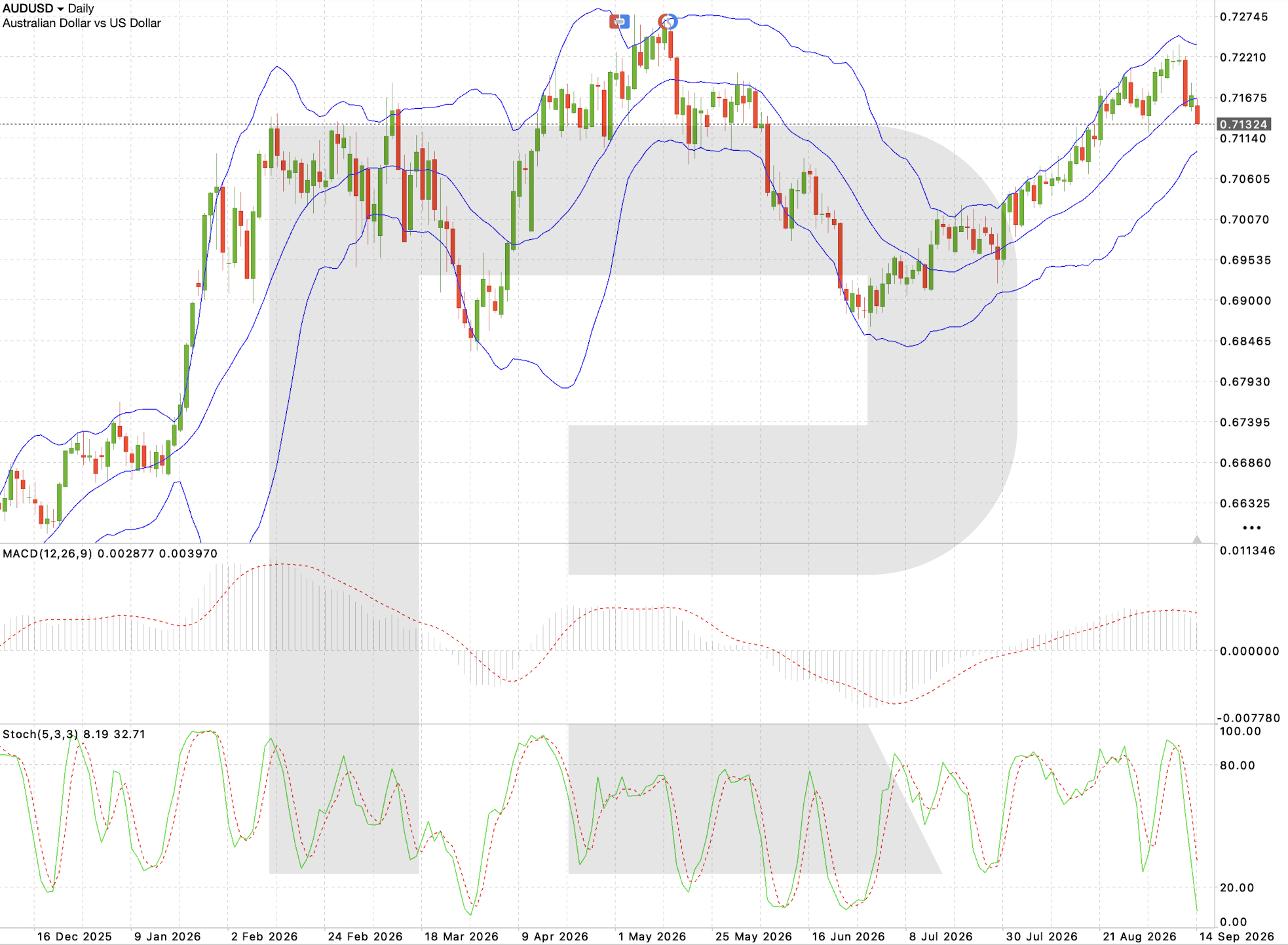
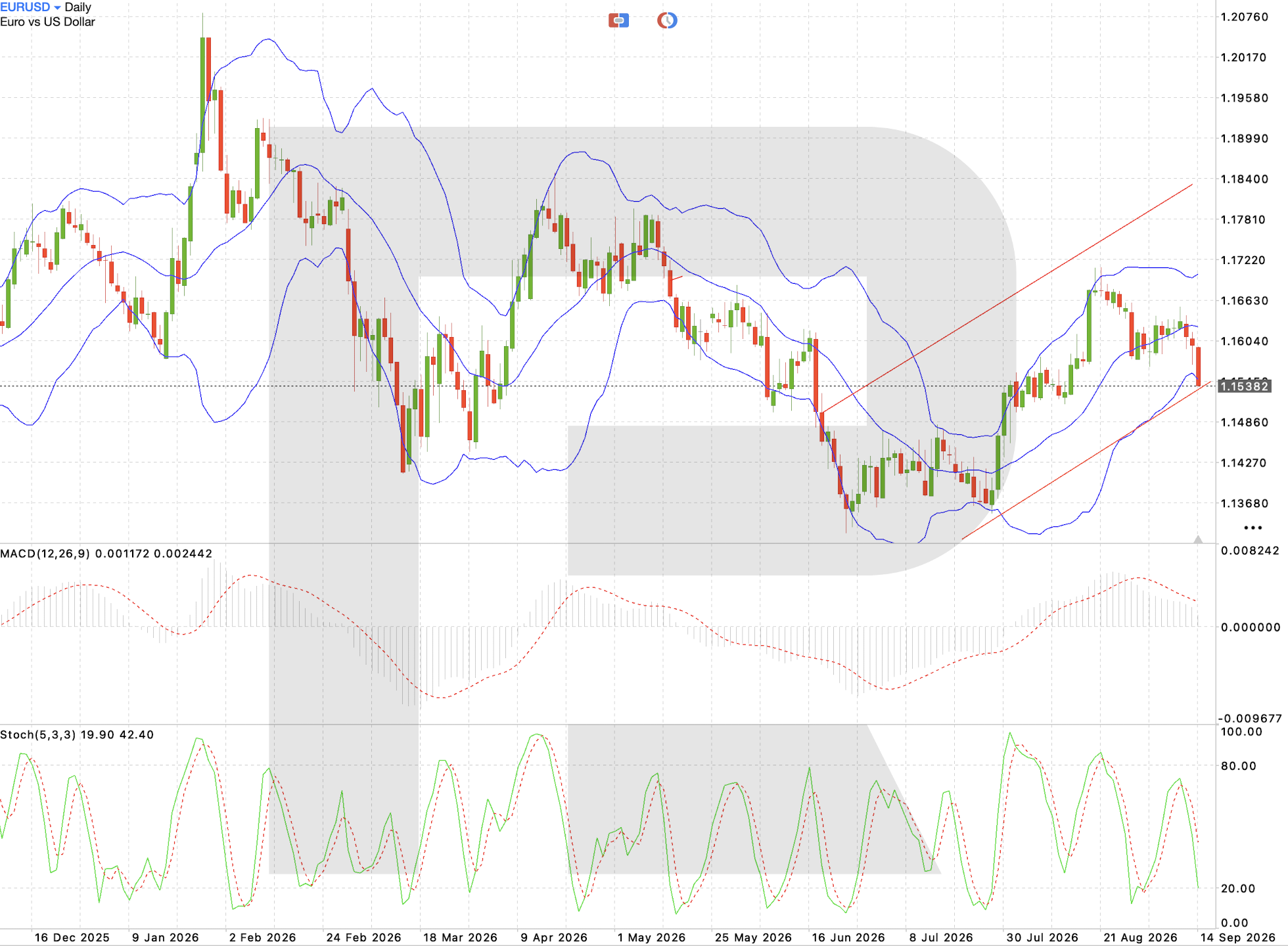
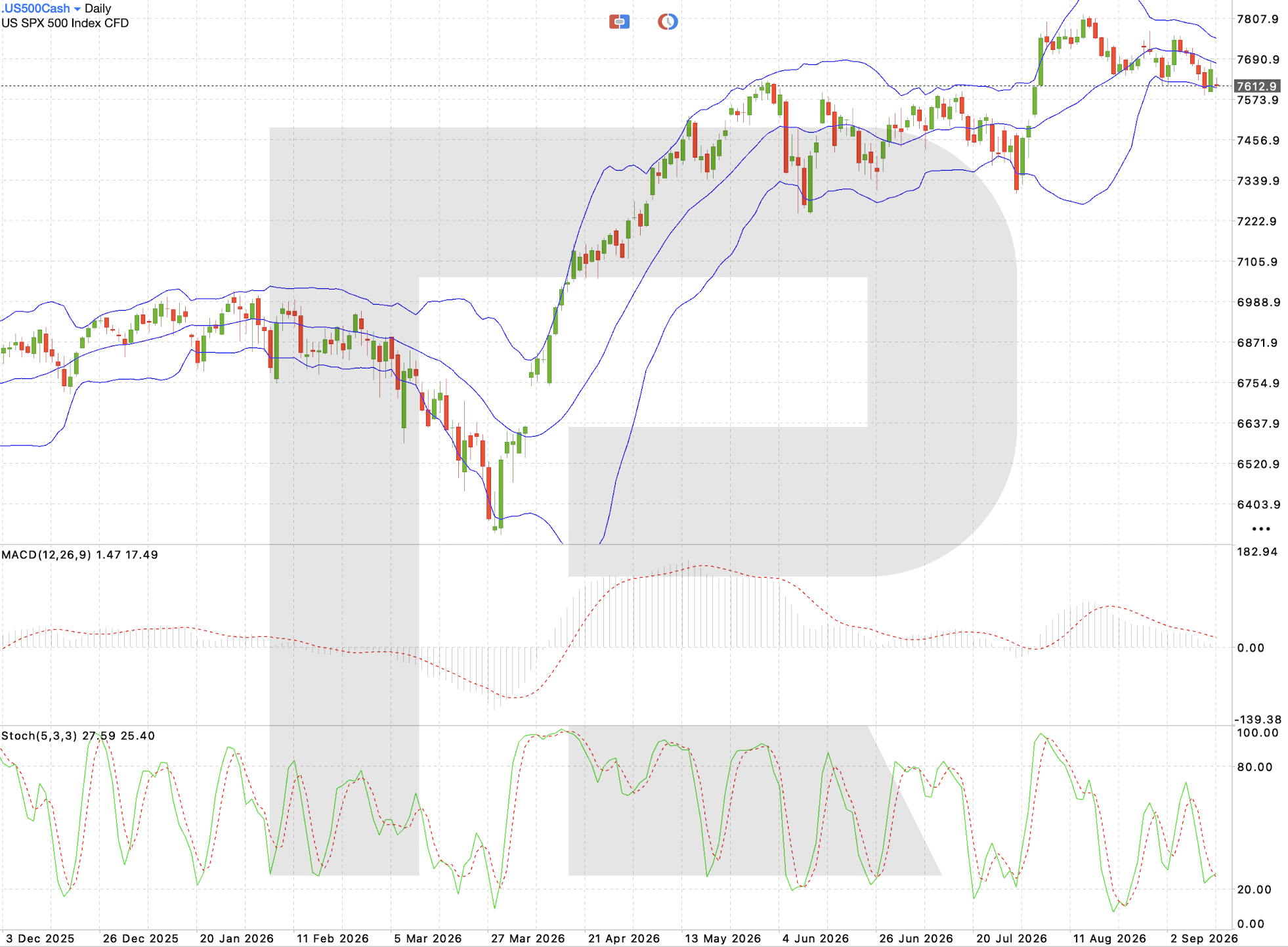
Elsewhere, sellers hold the short-term initiative. AUD/USD failed to hold above 0.7200 and has dropped below its middle Bollinger band, EUR/USD is breaking the lower boundary of the channel it has held since July, and GBP/USD has slipped below its middle band while staying inside its longer-term rising channel. The US 500 sits near 7613 after a moderate correction from its all-time highs. The week's decisions will show whether these moves turn into trends or fade as corrections.
Key Events of the Week
| Date | Event | Instruments | Importance |
|---|---|---|---|
| Tue, Sep 15 | China Industrial Production + Retail Sales | AUD/USD, Iron Ore, Copper | ●● Medium |
| Wed, Sep 16 | US Retail Sales | EUR/USD, USD Index, US Treasuries | ●● Medium |
| Wed, Sep 16 | Fed Rate Decision | US 500, USD Index, US Treasuries | ●●● High |
| Thu, Sep 17 | Bank of England Rate Decision | GBP/USD, FTSE 100, UK gilts | ●●● High |
| Fri, Sep 18 | Bank of Japan Rate Decision | USD/JPY, Nikkei 225, Japanese government bonds | ●●● High |
Instant Access to Global Markets with RoboForex MobileTrader
15
Sep
Industrial Production, Forecast (y/y)
5.0%
Previous
4.5%
Retail Sales, Forecast (y/y)
1.0%
Previous
0.6%
Why It Matters
These figures are one of the main reference points for the Chinese economy after a run of mixed reports in recent months. Domestic demand is the number to watch, because it remains the weak link in the Chinese economy despite large-scale support measures from the authorities. Strong data would improve investor sentiment toward risk assets and support commodities and Asia-Pacific currencies. Weak figures would push markets to expect more stimulus from Beijing.
Market Reaction
Retail sales above 1.0% alongside firm industrial output would support AUD/USD and lift iron ore and copper. Another soft consumption figure would widen concerns about global demand and weigh on the Australian dollar and on risk assets more broadly.
Market Sentiment
Sentiment around the Chinese economy is slowly improving, though most market participants still expect only a moderate recovery. Any sign of domestic demand picking up could be a strong driver for commodity currencies, the Australian dollar first among them. On the chart, AUD/USD trades around 0.7132 after a failed attempt to hold above 0.7200. Price has dropped below the middle Bollinger band into the lower half of the range, which points to short-term selling pressure building. MACD stays above zero, but its histogram keeps shrinking as the upward impulse fades, and the stochastic has turned down sharply into oversold territory. A break below 0.7120 would open the way to 0.7035. A return above 0.7185 would signal demand recovering.
Key Levels and Trade Parameters — AUD/USD
| Parameter | Value |
|---|---|
| Resistance | 0.7185 / 0.7200 |
| Support | 0.7120 / 0.7035 |
| Entry, Sell Stop | 0.7120 |
| Stop loss | 0.7185 |
| Take profit | 0.7035 |
| Risk to reward | 1:1.3 |
16
Sep
Retail Sales, August, Forecast (m/m)
+0.4%
Previous
+0.3%
Why It Matters
Retail sales remain one of the most important readings on the US economy, because consumer spending makes up about two-thirds of GDP. The August figure lands only a few hours before the Fed rate decision, which makes it the last major data point the market gets before the meeting. A stronger than expected result could lead the market to push back its expectations of Fed easing further down the line, and a weaker one would confirm a gradual cooling and build the case for softer policy later on.
Market Reaction
A beat would support the dollar and US Treasury yields and put pressure on EUR/USD going into the Fed. A miss would add to expectations of rate cuts once this tightening phase is over, weigh on the dollar and give the euro support.
Market Sentiment
After mixed labour market data, the state of consumer demand gets close attention this week. The base case is moderate sales growth that confirms the US economy is holding up without signs of overheating. On the chart, EUR/USD trades around 1.1538 and is breaking the lower boundary of the ascending channel that has held since July. Price has dropped below the middle Bollinger band toward the lower band, a sign of sellers pressing harder. MACD stays positive, though its histogram keeps falling as the bullish impulse fades, and the stochastic is heading down close to oversold territory. A hold below 1.1525 would confirm the break out of the channel and open the way to 1.1430. A return above 1.1605 would weaken the bearish scenario.
Key Levels and Trade Parameters — EUR/USD
| Parameter | Value |
|---|---|
| Resistance | 1.1605 |
| Support | 1.1525 / 1.1430 |
| Entry, Sell Stop | 1.1525 |
| Stop loss | 1.1605 |
| Take profit | 1.1430 |
| Risk to reward | 1:1.2 |
16
Sep
Fed Funds Rate, Forecast
4.00%
Previous
3.75%
Why It Matters
The Federal Reserve meeting is the main event of the week. Alongside the Fed rate decision itself, the market gets updated economic projections and comments from Fed leadership on inflation, the labour market and the path of monetary policy from here. With a rise to 4.00% close to fully priced, those projections and the tone of the press conference carry the reaction.
Market Reaction
Firm signals from Chair Kevin Warsh would strengthen the dollar, lift US Treasury yields and add pressure on the stock market. A hint that the tightening cycle is close to its end would bring appetite for risk assets back quickly and send the US 500 toward its highs.
Market Sentiment
The market is pricing another rate rise almost in full, so the main drivers are Warsh's tone and the committee's updated projections. On the chart, the US 500 trades around 7613 after a moderate correction from its all-time highs, with the long-term uptrend intact and the short-term impulse clearly weaker. Price sits on the lower Bollinger band, MACD stays positive while its histogram keeps shrinking, and the stochastic holds below 30, a sign of weak buying, though its lines have started to turn up. A hold above 7685 would signal the advance resuming toward 7810. A drop under 7580 would widen the odds of a deeper correction.
Key Levels and Trade Parameters — US 500
| Parameter | Value |
|---|---|
| Resistance | 7685 / 7810 |
| Support | 7580 |
| Entry, Buy Stop | 7685 |
| Stop loss | 7580 |
| Take profit | 7810 |
| Risk to reward | 1:1.2 |
17
Sep
Bank Rate, Forecast
3.75%
Previous
3.75%
Why It Matters
With inflation easing gradually, the Bank of England is moving toward a phase of looser policy, though persistent price pressure still keeps it from acting too fast. That makes any change in the statement, or in how the committee votes, worth close attention. Even with the rate left unchanged, the Bank's comments can move the pound sharply.
Market Reaction
Firm wording would support GBP/USD, lift UK government bond yields and reduce expectations of near-term easing. A signal that the easing cycle could speed up would put the pound under pressure, and the FTSE 100 would likely take that news better than the currency does.
Market Sentiment
The base case is a hold, with the focus on what the Bank signals for its next steps. On the chart, GBP/USD trades around 1.3483 and stays inside the long-term ascending channel that has held since the June low, despite the correction of recent days. Price sits below the middle Bollinger band, though the broader rising structure is intact. MACD stays above zero while its histogram keeps falling, a sign of the upward impulse weakening, and the stochastic points down in the lower half of its range without reaching oversold, so corrective pressure is still in place. A hold above 1.3560 would confirm the advance resuming toward 1.3720. A drop under 1.3470 would widen the risk of a deeper correction.
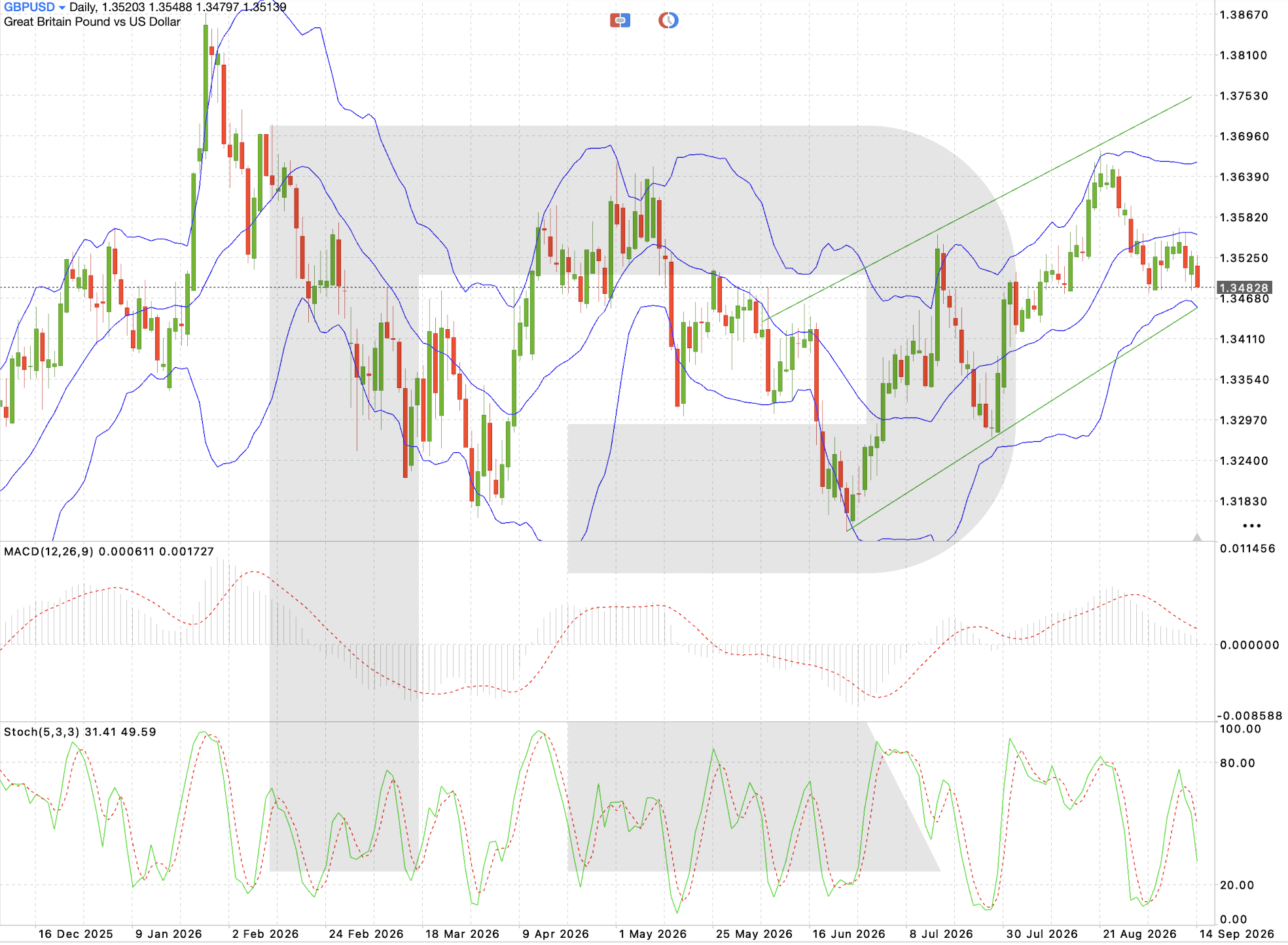
Key Levels and Trade Parameters — GBP/USD
| Parameter | Value |
|---|---|
| Resistance | 1.3560 / 1.3720 |
| Support | 1.3470 |
| Entry, Buy Stop | 1.3560 |
| Stop loss | 1.3470 |
| Take profit | 1.3720 |
| Risk to reward | 1:1.8 |
18
Sep
Policy Rate, Forecast
1.25%
Previous
1.00%
Why It Matters
After several steps of policy normalisation, attention is fully on the Bank of Japan's next moves. Any signal on the pace of rate rises could shift the currency market sharply and set off another round of carry trade unwinding. It remains one of the most important events for the global financial system, because a change in the cost of Japanese funding feeds straight into global capital flows.
Market Reaction
Confirmation that the Bank will keep tightening would strengthen the yen further, push USD/JPY lower and lift Japanese government bond yields. More cautious comments would bring short-term profit-taking in the yen and a bounce in the pair, which the Nikkei 225 would welcome.
Market Sentiment
The base case is another rate rise and a steady course toward normalisation. On the chart, USD/JPY trades around 154.50, still under pressure after the sharp drop of recent weeks. Price sits in the lower half of the Bollinger bands and well below the descending resistance line, which keeps the bearish trend in place. MACD stays deep in negative territory with its histogram still widening, a sign the downward impulse is strengthening. The stochastic has started to turn up out of oversold, pointing to the chance of a short-term technical bounce without yet confirming any change in the main trend. A hold below 152.70 would open the way to 149.80. A return above 154.80 would be the first sign of selling pressure easing.
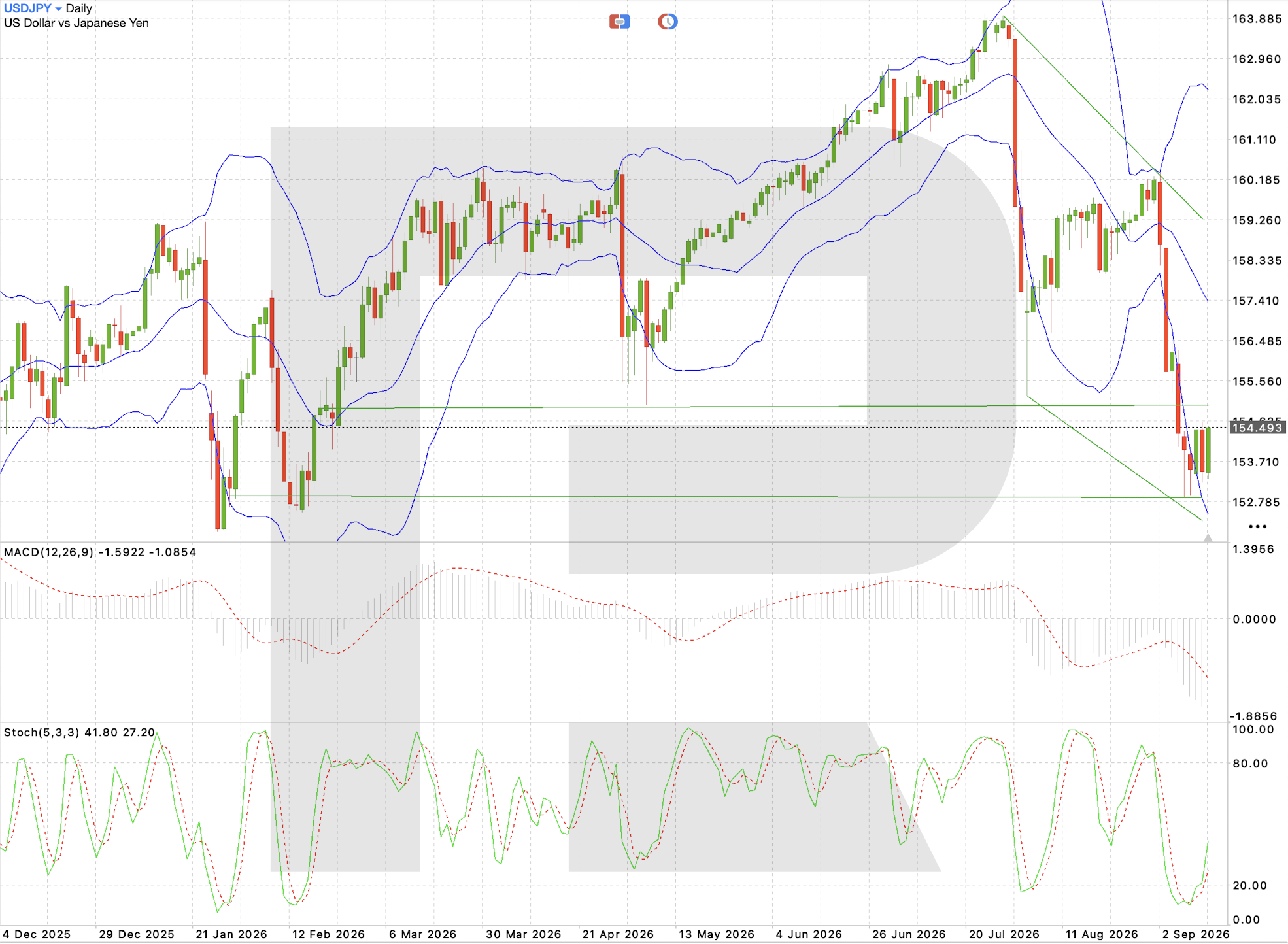
Key Levels and Trade Parameters — USD/JPY
| Parameter | Value |
|---|---|
| Resistance | 154.80 |
| Support | 152.70 / 149.80 |
| Entry, Sell Stop | 152.70 |
| Stop loss | 154.80 |
| Take profit | 149.80 |
| Risk to reward | 1:1.4 |
Track the forecast and the actual figures for each release, since the gap between consensus and the outcome is what tends to move prices the most. Learn more about how to read the economic calendar and trade the news.
Conclusion
The week turns on Wednesday. US retail sales arrive a few hours before the Fed rate decision, and with a rise to 4.00% close to fully priced, Chair Kevin Warsh and the new projections decide the reaction. A signal that tightening is nearly done lets the US 500 clear 7685 toward 7810. Firm guidance keeps the dollar strong and puts 7580 back in play.
The Bank of England and the Bank of Japan then set their own levels. A firm hold on Thursday gives GBP/USD the push it needs above 1.3560 toward 1.3720. A Bank of Japan rise on Friday that comes with a clear commitment to keep tightening sends USD/JPY through 152.70 toward 149.80, and weak Chinese data on Tuesday would take AUD/USD through 0.7120 toward 0.7035. On EUR/USD, a hold below 1.1525 confirms the break out of its July channel.
Any information provided in articles on this website is based solely on the personal opinions of the authors. These articles should not be construed as trading recommendations or a call to action. The authors and RoboForex accept no responsibility for the results of any trades made on the basis of these recommendations and reviews. Past performance is not indicative of future results. Trading stocks and CFDs involves a high risk of capital loss.