Paper Trading vs Live Trading: Why Demo Results Change on a Real Account
In paper trading vs live trading, the prices and the platform are the same, yet results on a real account usually come out worse than on demo. The difference sits in how orders are filled and, above all, in how you treat your own money. This guide shows where the gap comes from and how to close it in four steps.
TL;DR
- Demo account: learn the platform and check that your strategy's rules hold up, at zero cost.
- Cent account: your first real trades at the size you plan, with every result 100 times smaller in dollar terms.
- Standard account: once your cent account trades follow the plan, with no moved stops or early exits, over the period you set in advance.
By the time a trader leaves the demo account, the timeframe, the instruments, the position size, the analysis tools and the entry and exit levels are already chosen. Technically, everything is ready for real money. The one part a demo account cannot train is how you react when the balance on the screen is your own.
Is Paper Trading the Same as Real Trading?
Paper trading, also called demo trading, means placing trades with virtual money at real market prices. It matches real trading on quotes, platform and order types, and it differs on three points: how orders are filled, what a loss costs you and what you do next. The table compares the two on the points that move your results.
| What you compare | Demo account | Real account |
|---|---|---|
| Money at risk | A virtual balance you can top up or start again at any time | Your own deposit. A loss stays on the account |
| Prices and platform | Market quotes in MetaTrader 4 or MetaTrader 5 | The same quotes and the same platform |
| Order execution | Orders are not sent to the market, so fills tend to be smooth, news releases included | A market order fills at the best price available when it reaches the market. In fast markets that price can differ from the one on screen |
| Stop Loss and Take Profit | Losses feel abstract, so stops and targets stay where you set them | Fear pulls stops further away, impatience closes profitable trades early |
| Goals | No withdrawals, so no income target and no deadline | A withdrawal plan or a purchase sets the pace and the pressure |
| Position size | Easy to trade sizes you would never use with your own money | Limited by the deposit you actually have |
| What it trains | Platform skills and the rules of a strategy | Discipline when every result is real |
Why Do Demo Results Drop on a Real Account?
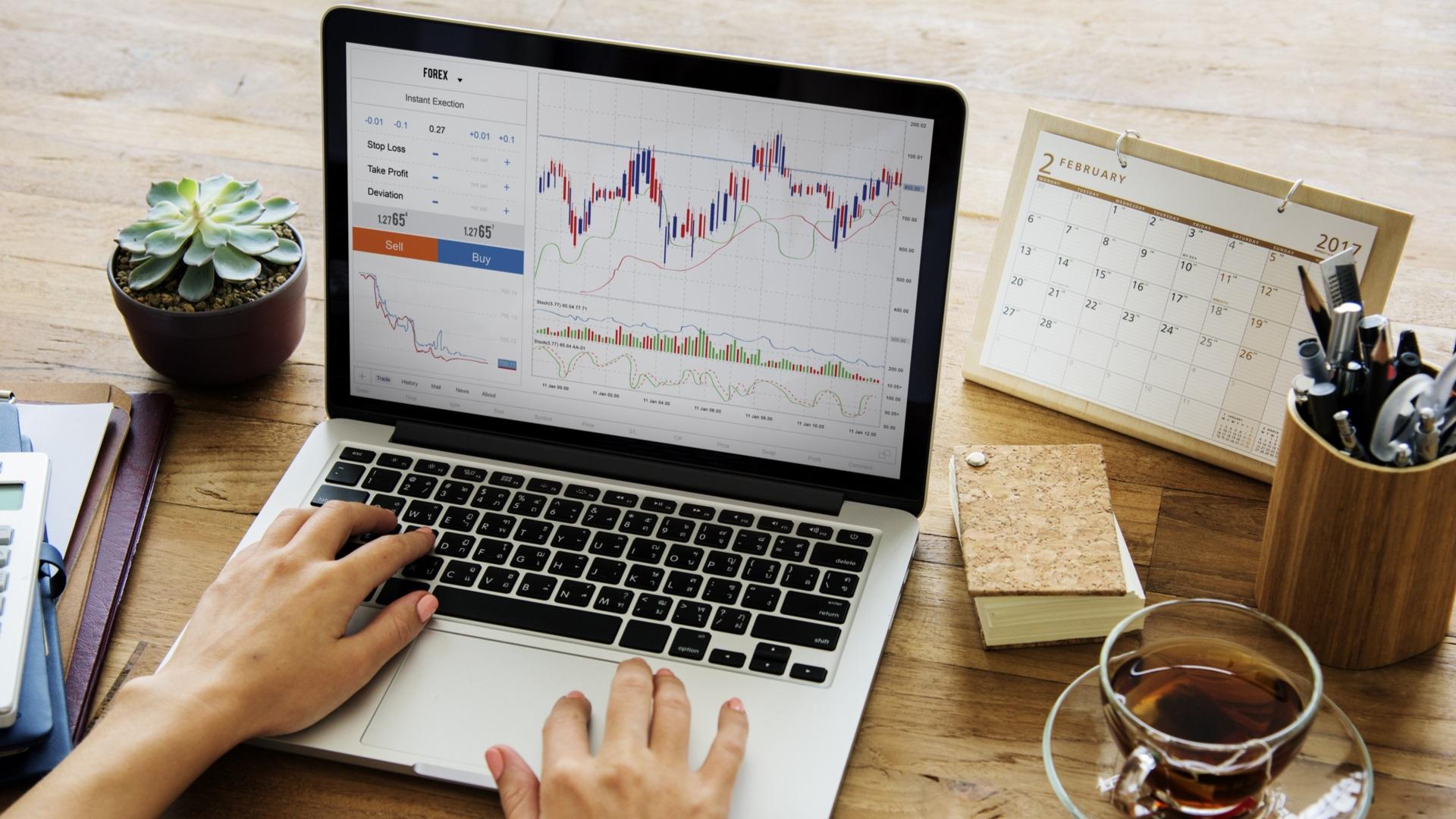
Demo results drop on a real account for four reasons: the reset button makes losses feel free, a plan is easier to follow when nothing is at stake, a demo account has no withdrawal goal, and real orders meet real liquidity. Each has a simple counter that you can start using on your demo account today.
The Reset Button Makes Losses Feel Free
A trader treats a demo account lightly because a new one with a fresh balance is a few clicks away. Failures on the old account always have an explanation, and the most popular one is that the price reversed while the trader was away from the computer.
Some traders open a new demo account after every loss so that the record starts with a profitable trade. On a real account that option does not exist, and a loss stays in the history and in the balance.
What to do: treat your demo balance as final. Trade one account, never reset it, and record every loss in your trading journal with its reason.
Your Plan Is Easier to Follow When Nothing Is at Stake
A trading plan is easiest to follow on a demo account. Taking a planned Stop Loss costs nothing when the money is virtual, and waiting for a Take Profit is easy when nobody is thinking about what the open profit could buy. There is no fear of another loss, so there is no reason to cut the position size halfway through or close a trade on impulse.
With real money the same trade feels different. The stop moves further away "to give the price room", and a profitable trade gets closed long before the target because the open profit already looks like a new phone.
What to do: set Stop Loss and Take Profit in the order window when you open the trade, and after each closed trade check one thing in your journal: did you change either level while the trade was open?
A Demo Account Has No Withdrawals, So It Has No Real Goal
On a demo account the trader works inside the system without thinking about how much to earn per day, per month or per year, or how much of it to withdraw. The balance grows nicely and nothing else matters. Then comes the first deposit of real money, and its size sets the strategy.
Larger deposit
Goal: a steady income
The trader plans to withdraw a set profit each month or quarter and use it for everyday needs. There is no ambition to double the deposit in 80 days, so risks are measured and losses stay moderate.
Small deposit
Goal: fast growth
The trader wants to double or triple the account, or to earn for a specific purchase, and to match the results seen on demo. Trading turns aggressive, the risk per trade grows, and the goal can become ambitious enough to cost the whole deposit.
What to do: write down a monthly goal in percent that your demo statistics actually support, and size every trade to that goal, whatever the deposit.
Real Orders Meet Real Liquidity
Execution is the part of the gap that is easiest to measure. On a real account a market order is filled at the best price available at the moment it reaches the market. When prices move fast, for example in the seconds after a major economic release, that price can differ from the one you saw when you pressed Buy. The difference is called slippage.
Here is how it adds up. A pip is the smallest standard price step of a currency pair, 0.0001 for EUR/USD. You buy 0.1 lot of EUR/USD at 1.0850 on screen right after a release and get filled at 1.0853. That is 3 pips of slippage, and with a pip worth 1 USD on 0.1 lot, the trade starts 3 USD further from its target than on demo.
What to do: for your first real trades, compare the fill price in the trade history with the price you saw. Check the economic calendar before you trade, and decide in your plan whether you open market orders in the minutes around releases that move your instrument.
Trade on the Go With RoboForex MobileTrader
Demo and real accounts in one app on Android and iOS, with charts, orders and your trade history.
Four Emotions That Shape Real-Money Trading and How to Manage Them
Once real money is on the account, decisions start to follow emotions, and a trader on demo simply does not feel these forces. The four below come up most often, and each has a rule that keeps it in check.

1
Greed
How it shows upThe monthly target is reached, yet the trader keeps going to make the sum bigger or rounder, or to earn enough for both living and trading.
RuleOnce the target for the period is reached, stop opening new trades until the next period begins.
2
Jumping to a bigger goal
How it shows upAfter a few profitable weeks, caution fades and the trader starts to feel like a professional. The goal jumps from a bike to a car before the bike is paid for.
RuleSet goals in sequence. Raise the next one only after the current one is reached and withdrawn.
3
Reinvesting every profit
How it shows upReinvesting grows the working capital and the trade size, which is useful. Put the whole profit back in, though, and one losing series takes back everything earned.
RuleReinvest a fixed part of the profit, for example half, and withdraw the rest.
4
Making up for a slow month
How it shows upAfter a flat or losing month, the trader plans to work two or three times harder in the next one to catch up with the plan.
RuleKeep the same risk per trade. The calculator below shows what catching up in one month really takes.
Greed and fear are covered in more depth in our guides on how to beat greed in forex and how to conquer fear in trading.
How Much Gain Does a Drawdown Need? Try the Calculator
A drawdown is the fall of an account from its highest point. Getting back takes a larger gain than the loss itself, because the gain is earned on a smaller balance. A 20% loss needs a 25% gain, and a 50% loss needs 100%.
| Drawdown | Gain needed to recover |
|---|---|
| 10% | 11.1% |
| 20% | 25.0% |
| 30% | 42.9% |
| 50% | 100.0% |
If the calculator shows several months, that is the realistic pace of recovery, and keeping your usual risk per trade is what keeps a 20% drawdown from growing into one that needs 100%.
How to Move From a Demo Account to a Real One in Four Steps
The transition from demo to real trading takes psychological adjustment, and the easiest way to get it is to raise the stakes gradually. Each step below keeps the strategy the same and changes only how much is at risk.
- Demo at your real sizeThe deposit and lot size you plan to use live
- Rules on paperEntry, exit, risk per trade, monthly goal
- Cent accountReal money and real execution, counted in cents
- Standard accountWhen the cent journal shows the plan was followed
Step 1: Trade the Demo Account at Your Real Size
Open the demo account with the balance you plan to deposit for real and trade the lot sizes that balance allows. A demo account with 100,000 USD of virtual money teaches you nothing about a 1,000 USD deposit.
Step 2: Write Down Your Rules
Put on paper what the strategy trades and when it enters and exits, the risk per trade in percent of the deposit, for example 1% to 2%, the monthly goal and the test period for the next step. Keep a journal of every trade with the reason for the entry and the exit.
Step 3: Repeat the Same Trades on a Cent Account
A cent account shows the balance in cents: a 10 USD deposit appears as 1,000 US cents, so every profit and loss is 100 times smaller in dollar terms while execution is real. Open it with the volume you plan for the main account. To rehearse a 1,000 USD plan, deposit 10 USD and trade the same lot sizes as on demo. Use MetaTrader 5 for this: its minimum order on ProCent is 0.01 lot, while MetaTrader 4 starts at 0.1 lot, which is too large to mirror a small plan.
| Parameter | ProCent account at RoboForex |
|---|---|
| Minimum deposit | 10 USD or 10 EUR |
| Balance shown in | Cents: 10 USD appears as 1,000 US cents |
| Platforms | MetaTrader 4, MetaTrader 5 |
| Instruments | 28 currency pairs, metals, cryptocurrencies |
| Execution | Market execution, spread from 1.3 pips |
| Minimum order | 0.1 lot on MT4, 0.01 lot on MT5 |
| Stop out | 30%: positions start closing when equity falls to 30% of the margin in use |
Step 4: Move to a Standard Account When the Results Match
Switch once the cent account has run for the period you set in step 2, for example one to three months, and its journal shows no moved stops and no early exits, with a monthly result in percent close to the one on demo. If the result is far worse, compare the two journals: the trades where you moved a stop or closed early show which part of the plan to work on before adding money. On the standard account, start with the same risk per trade and raise the size only after the next test period.
Make Your First Real Trades on a ProCent Account
From 10 USD or 10 EUR, on MetaTrader 4 and MetaTrader 5.
Are You Ready to Trade With Real Money?
You are ready to start with real money when you can tick all eight points below. Each unticked point is the next thing to practise on your demo account.
The list doubles as a plan: the points you leave unticked today are what your next weeks on the demo account are for.
Conclusion
Demo and real accounts trade the same prices on the same platform. The difference is execution and the weight of your own money, and both can be trained. Treat the demo balance as final, write the plan down, then trade it on a cent account at your planned size. When the cent account journal for the period you set shows no moved stops and no early exits, with a monthly result close to demo, move to a standard account with the same risk per trade.
FAQ
Is paper trading accurate to real trading?
Paper trading is accurate on prices, the platform and the rules of a strategy. It is less accurate on execution, since demo orders are not sent to the market, and on psychology, since a demo loss costs nothing. Expect real results to come out lower and use a cent account to measure the difference.
Why do I make money on a demo account and lose on a real one?
A common cause is behaviour: on a real account stops get moved, profitable trades get closed early and position sizes grow after a loss. Slippage on fast markets adds a smaller part. Compare your demo and real trade journals to see which of these it is.
How long should I trade on a demo account before going live?
Set a condition instead of a date: a period you choose in advance, for example one to three months, traded by written rules, with no resets and with results you can explain. Then repeat the same period on a cent account before moving to a standard one.
Is a cent account real money?
Yes. A cent account holds a real deposit with real execution, and only the unit changes: 10 USD appears as 1,000 US cents, so each result is a hundredth of the same trade on a standard account. At RoboForex the ProCent account opens from 10 USD or 10 EUR.
What is slippage in trading?
Slippage is the difference between the price you saw when you placed a market order and the price at which it was filled. It appears when prices move fast, for example right after a major economic release, and it can work in your favour or against you.
- How to Start Trading on a Demo Account?: how to open a demo account and what to practise on it first.
- What Is a Cent Account in Forex and Who Needs It?: how cent accounts work and who uses them besides beginners.
- How Should a Beginner Prepare a Trading Plan?: the four parts of a plan you can follow on demo and on a real account.
- Trader's Psychology: How to Conquer Fear?: where fear in trading comes from and how to work with it.
- How to Beat Greed in Forex?: the symptoms of greed and the ways traders keep it under control.
Any information provided in articles on this website is based solely on the personal opinions of the authors. These articles should not be construed as trading recommendations or a call to action. The authors and RoboForex accept no responsibility for the results of any trades made on the basis of these recommendations and reviews. Past performance is not indicative of future results. Trading stocks and CFDs involves a high risk of capital loss.