Market Week Ahead (August 11-14): US Inflation and the RBA Decision Set the Direction

Last week returned geopolitics to market pricing. Developments in the Middle East periodically added a risk premium to energy prices, although tension eased by Friday. Another headline event was the coordinated action by Japan and the United States in support of the yen, after which USD/JPY dropped sharply away from its 40-year high. At the same time, the US labour market delivered fresh signs of cooling: July Non-Farm Payrolls came in below expectations and earlier readings were revised down, which widened expectations for a softer Fed policy path.
Stocks kept climbing on that backdrop, the S&P 500 set new highs, and the dollar came under pressure. This week the main macro release is July inflation in the United States. Investors will also follow the Reserve Bank of Australia decision, UK GDP, US retail sales and the preliminary University of Michigan consumer sentiment index. Below we work through each release with the technical levels and the market sentiment that matter for the assets involved.
In Brief
- RBA interest rate decision (Tuesday, August 11): the rate is expected to stay at 4.35%, so the wording of the statement decides whether AUD/USD can extend toward 0.7100.
- US CPI (Wednesday, August 12): the defining release of the week; a softer core reading keeps the Fed easing path open and adds pressure on the dollar.
- UK GDP for Q2 (Thursday, August 13): a sharp slowdown would revive Bank of England easing expectations and stall the recent recovery in GBP/USD.
- US retail sales (Friday, August 14): the test of whether household spending is holding up while hiring slows.
- University of Michigan consumer sentiment (Friday, August 14): the inflation expectations component shapes how the market reads Wednesday's CPI.
Wednesday is the anchor of the week. After the soft jobs report, the market has already moved a long way toward pricing a milder Fed path, so the core inflation reading carries more weight than the headline figure. An upside surprise would force fast repricing across stocks, bonds and the dollar within minutes of the release.
Friday closes the week with the American consumer in focus. Retail sales and the preliminary Michigan index together show whether spending and household confidence are following the labour market lower, and that combination determines how investors interpret the weak payrolls data from the start of August.
Key Events of the Week
| Date | Event | Instruments | Importance |
|---|---|---|---|
| Tue, Aug 11 | RBA Interest Rate Decision | AUD/USD, Australian bonds, ASX 200 | ●●● High |
| Wed, Aug 12 | US CPI and Core CPI | S&P 500, EUR/USD, US Treasuries | ●●● High |
| Thu, Aug 13 | UK GDP, Q2 preliminary estimate | GBP/USD, FTSE 100, UK gilts | ●● Medium |
| Fri, Aug 14 | US Retail Sales | S&P 500, EUR/USD, US Treasuries | ●● Medium |
| Fri, Aug 14 | Michigan Consumer Sentiment, preliminary | S&P 500, USD Index, Gold | ●● Medium |
Instant Access to Global Markets with RoboForex MobileTrader
Everything you need for successful trading in one app: currencies, metals, oil, stocks, indices.
11
Aug
Rate Forecast
4.35%
Previous
4.35%
Why It Matters
The RBA decision is the main event of the week for the Australian dollar. The cash rate is expected to stay at 4.35%, so the market reaction will depend on the wording of the statement and on how the regulator assesses inflation risks. The NAB business confidence index, released several hours earlier, adds context by showing how Australian companies see demand and cost pressure right now.
Market Reaction
A firm position from the RBA with emphasis on inflation risks would support the Australian dollar and allow AUD/USD to work toward new local highs. A softer tone from the regulator would widen expectations of a future rate cut and create conditions for a correction after the strong advance of recent weeks.
Market Sentiment
AUD/USD approaches the meeting in a strong position: the pair has climbed above 0.7060 and returned close to the upper edge of its current range. No change in the rate is expected, so the deciding factor becomes the balance between persistent inflation risks and the signs of a cooling economy. After the sizeable move in the Australian dollar, the market needs a sufficiently firm signal from the RBA for the advance to continue. On the chart, AUD/USD keeps clear upward momentum and trades near the upper Bollinger band. MACD is turning up again, while Stochastic has approached overbought territory. A close above 0.7075 opens the way toward 0.7100, and a softer RBA message would trigger a pullback to 0.7020.
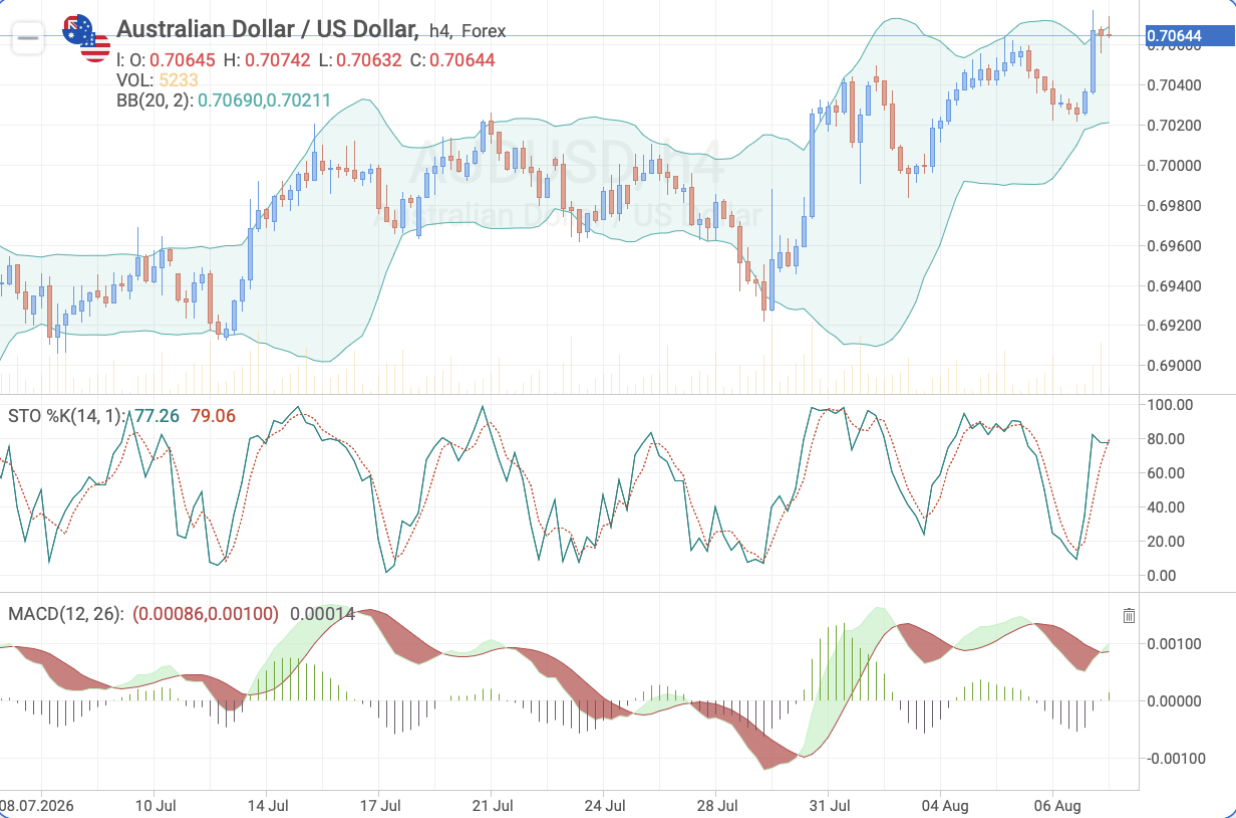
Key Levels — AUD/USD
| Level | Value |
|---|---|
| Resistance | 0.7075 / 0.7100 |
| Support | 0.7020 / 0.6980 |
| Target | 0.7100 |
12
Aug
CPI Forecast
3.4% y/y
Previous
3.5% y/y
Core CPI Forecast
2.5% y/y
Previous
2.6% y/y
Why It Matters
After the weak labour market data, July CPI becomes the main test for Fed policy expectations. The market will look for confirmation that price pressure keeps easing and gives the regulator room to soften policy. Core inflation carries the most weight in this release: it excludes volatile food and energy prices, so it shows how durable the underlying price pressure really is.
Market Reaction
Inflation below expectations would strengthen expectations of Fed rate cuts, support the stock market and add pressure on the dollar. A stronger CPI would cast doubt on quick policy easing, push Treasury yields higher and trigger a correction in US stocks.
Market Sentiment
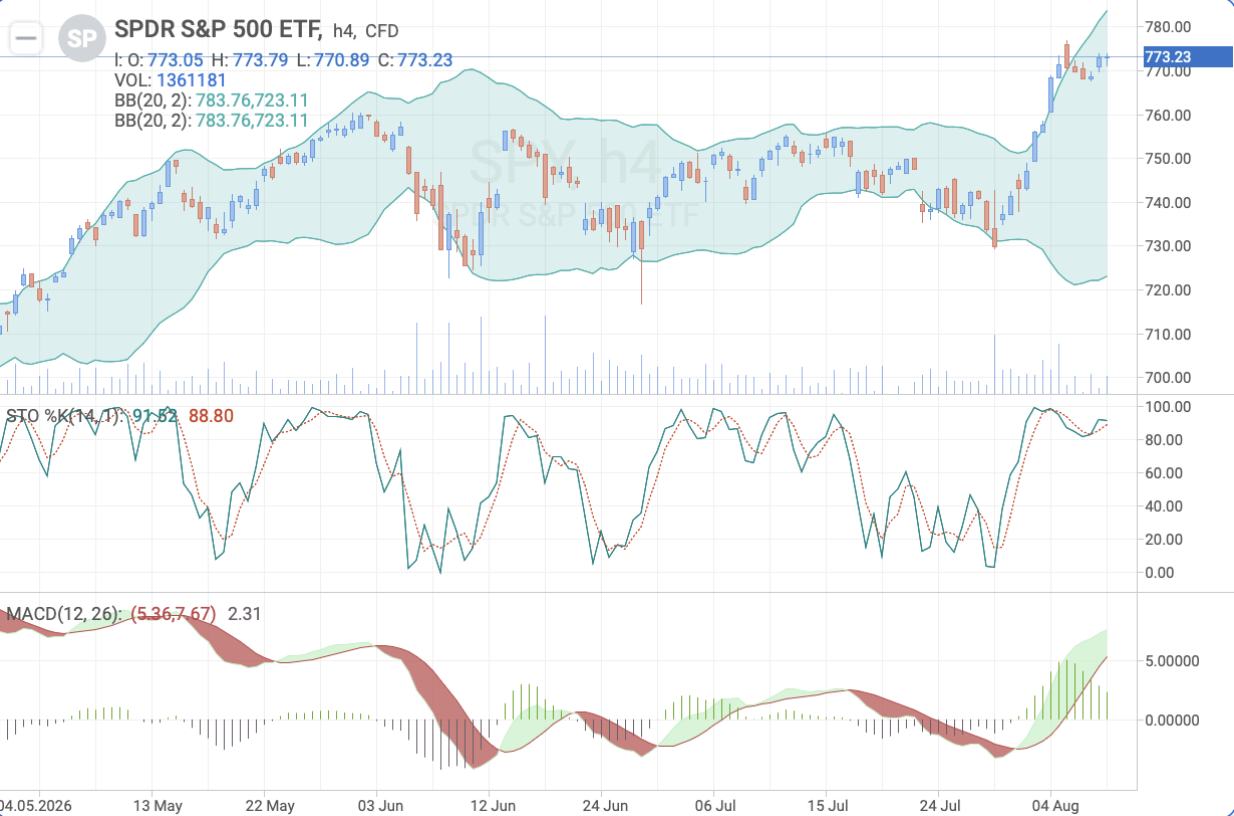
Positioning ahead of the release is tilted toward softer inflation. After the weak employment report, the balance of expectations shifted noticeably toward milder Fed policy, so market sensitivity to CPI will be especially high. At the same time the S&P 500 already sits at record highs and EUR/USD has risen sharply, which means part of the favourable scenario is priced in. Continuation of the move requires confirmation that inflation is slowing steadily, while an unexpected acceleration in CPI creates the risk of fast profit-taking. On the chart, the S&P 500 accelerated and settled above its previous local highs. MACD shows strong positive momentum, though Stochastic sits above 90 points and points to pronounced overbought conditions. Soft inflation would allow the index to continue toward the upper Bollinger band near 784 points, while a strong CPI raises the risk of a return to the 765-755 area.
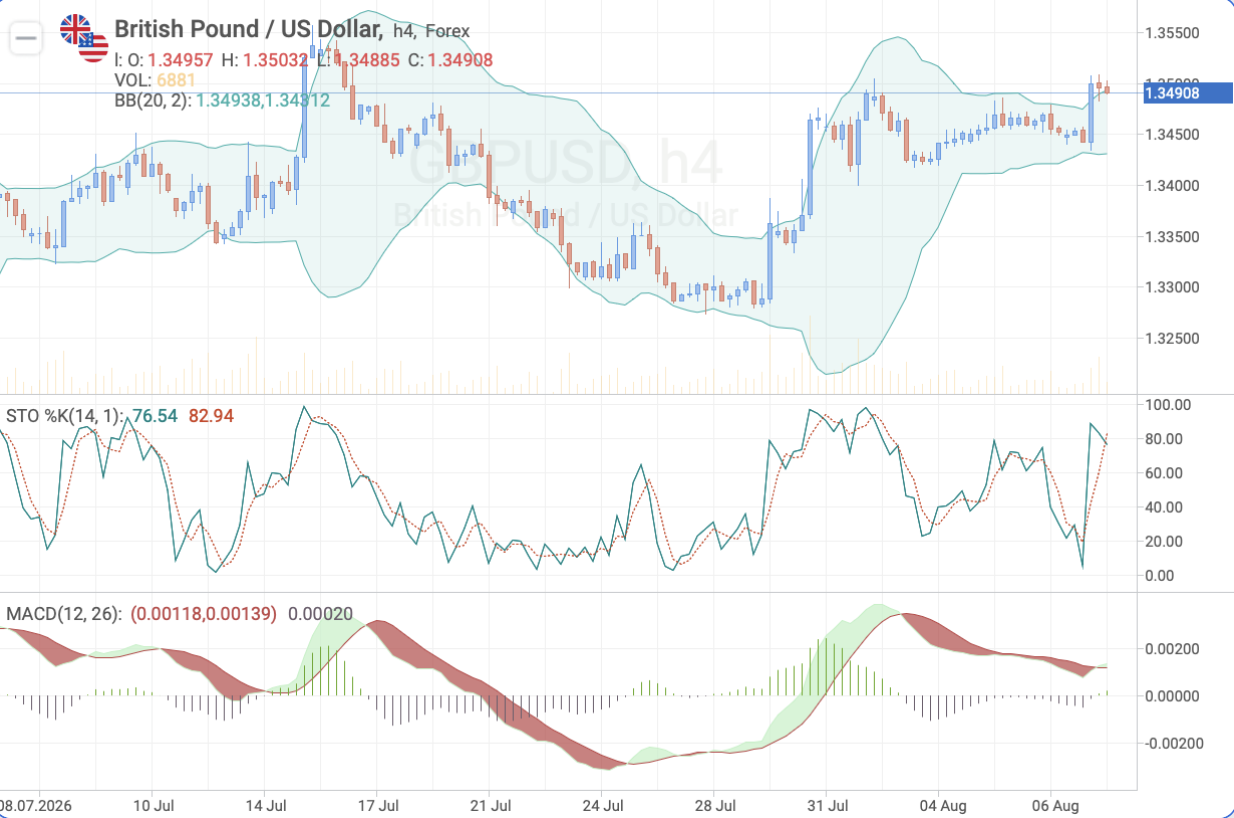
Key Levels — GBP/USD
| Level | Value |
|---|---|
| Resistance | 1.3520 / 1.3550 |
| Support | 1.3450 / 1.3400 |
| Target | 1.3550 |
14
Aug
Retail Sales Forecast
+0.5% m/m
Previous
+0.2% m/m
Michigan Sentiment Forecast
54.6
Previous
55.2
Why It Matters
After CPI, market attention moves from inflation to the condition of the American consumer. An acceleration in retail sales would show that domestic demand stays resilient even against the signs of a cooling labour market. The University of Michigan index completes the picture with an assessment of consumer sentiment and inflation expectations, and that expectations component feeds straight back into the Fed outlook.
Market Reaction
Strong sales combined with stable inflation expectations would confirm the resilience of the economy, although they may also limit expectations of quick Fed rate cuts. Weak figures would widen concerns about consumer demand and shift the way the market reads the soft labour data, giving more weight to the risk of slower economic growth.
Market Sentiment
Positioning into Friday is constructive with rising sensitivity to growth data. After the weak employment statistics, investors want to understand whether the cooling is spreading into the consumer sector. So far the stock market treats a softer labour market mainly as an argument in favour of easier Fed policy, and the recession angle carries little weight in pricing. A clear deterioration in retail sales and sentiment would change that balance and increase the sensitivity of the S&P 500 to evidence of a slowing economy. On the chart, EUR/USD holds near 1.1560 after the strong upward impulse at the end of July. MACD stays in positive territory, though the strength of the move is gradually fading, and Stochastic has stepped back from overbought levels. A decline in US inflation could give the pair fresh impulse for a break above 1.1580 and a move toward 1.1620. A return below 1.1500 would be the first signal that the current upward scenario is losing force.
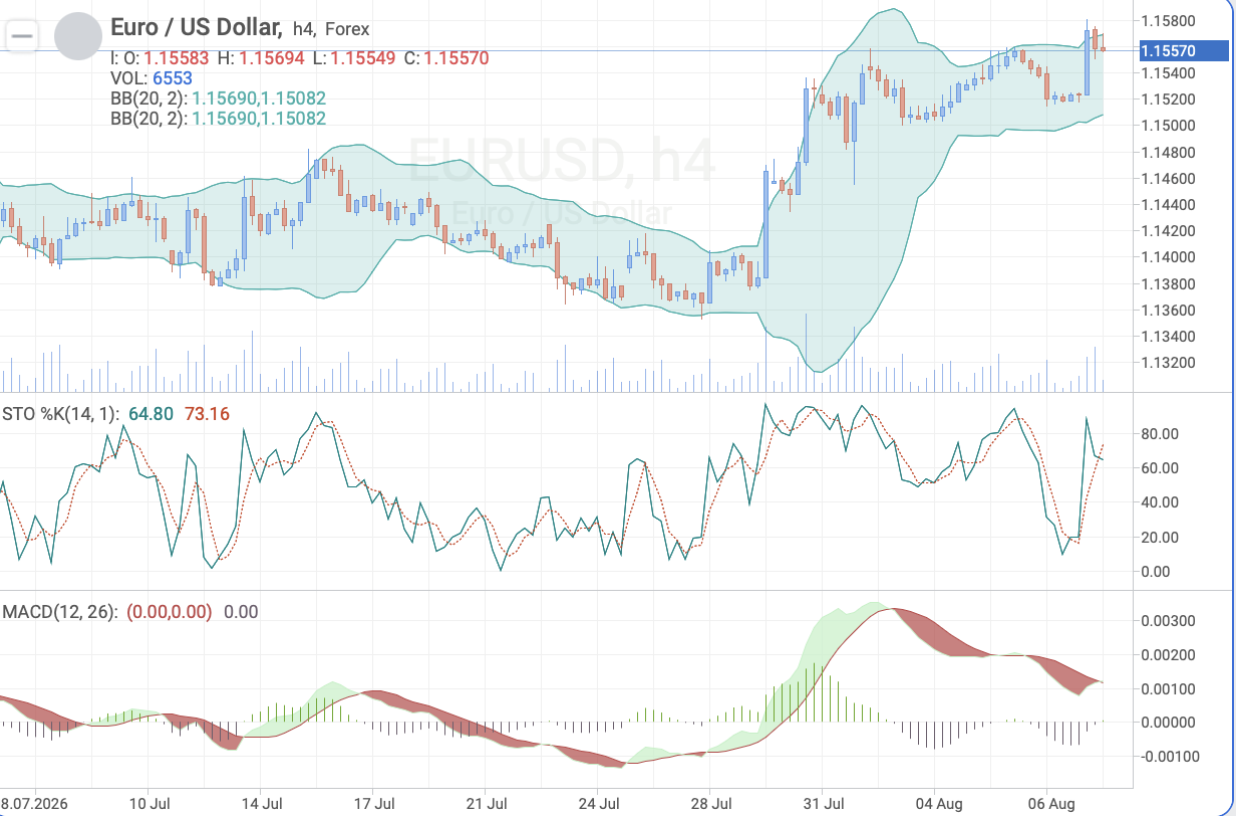
Key Levels — EUR/USD
| Level | Value |
|---|---|
| Resistance | 1.1580 / 1.1620 |
| Support | 1.1500 / 1.1450 |
| Target | 1.1620 |
Track the forecasts and the actual figures for each event: the gap between consensus and the released number is what determines how sharply prices move. Learn more about how to read the economic calendar and trade the news.
Conclusion
The week is built around Wednesday. The RBA sets the tone for the Australian dollar on Tuesday, and US July inflation then decides how far the market can run with the idea of earlier Fed rate cuts. A core reading at or below 2.5% keeps the current advance in stocks and in the major currency pairs intact.
Thursday and Friday move the focus to growth and demand. UK GDP shows how deep the British slowdown runs and what it means for the Bank of England, while US retail sales together with the Michigan index show whether the American consumer is following the labour market lower. A combination of softer inflation and resilient consumer data would be the friendliest outcome for stocks and for the currencies that gained ground against the dollar over the past weeks.
Any information provided in articles on this website is based solely on the personal opinions of the authors. These articles should not be construed as trading recommendations or a call to action. The authors and RoboForex accept no responsibility for the results of any trades made on the basis of these recommendations and reviews. Past performance is not indicative of future results. Trading stocks and CFDs involves a high risk of capital loss.