Market Week Ahead (August 3 – 7): Payrolls, China Trade and the Yen to Set the Dollar's Course

The final week of July delivered high volatility and a clear change of drivers. Markets priced in several factors at once: renewed tension in the Middle East, the start of the US corporate earnings season and firm rhetoric from the Federal Reserve, a combination that pushed stock indices into a correction. The currency market added a second source of movement. The Japanese yen strengthened sharply on the likelihood of official intervention, which amplified swings in USD/JPY and forced a broad reassessment of dollar positions.
The new week shifts attention to the global backdrop: trade data from China and the key readings from the US labour market, which will ultimately shape expectations for the Fed rate path. Below we work through the main releases, with the technical levels and market sentiment that matter for each asset.
In Brief
- US ISM Manufacturing PMI (Monday, August 3): the first read on how the US economy entered the third quarter.
- Japan and the intervention factor (all week): the main swing risk for the FX market and for USD/JPY in particular.
- China Trade Balance (Friday, August 7): a direct signal on global demand for commodities and commodity currencies.
- US Non-Farm Payrolls and Unemployment Rate (Friday, August 7): the defining release for the dollar, stocks and gold.
- Canada Unemployment Rate (Friday, August 7): the input that shapes Bank of Canada expectations and the direction of USD/CAD.
Friday carries an unusually heavy load. China trade data lands in the Asian session, the US labour report follows in the European morning, and Canadian employment figures are published at the same moment as the American numbers. Positions taken early in the week will be tested inside a few hours.
Running underneath all of it is the yen. The scale of the recent move suggests Japanese authorities have already acted or are close to acting, and that possibility now shapes how traders size positions across the entire currency market.
Key Events of the Week
| Date | Event | Instruments | Importance |
|---|---|---|---|
| Mon, Aug 3 | US ISM Manufacturing PMI | S&P 500, USD Index, US Treasuries | ●● Medium |
| All week | Japan: currency intervention watch | USD/JPY, USD Index, Gold | ●●● High |
| Fri, Aug 7 | China Trade Balance | AUD/USD, commodities, Asian stock markets | ●● Medium |
| Fri, Aug 7 | US Non-Farm Payrolls + Unemployment Rate | EUR/USD, S&P 500, Gold, US Treasuries | ●●● High |
| Fri, Aug 7 | Canada Unemployment Rate | USD/CAD, Oil, Canadian bonds | ●● Medium |
Instant Access to Global Markets with RoboForex MobileTrader
Everything you need for successful trading in one app: currencies, metals, oil, stocks, indices.
3
Aug
Forecast
53.0
Previous
53.3
Why It Matters
The ISM Manufacturing PMI shows the condition of the US industrial sector and sets the tone for growth expectations across the week. The index is built from surveys of purchasing managers, and the 50 mark separates expansion from contraction. Readings above it mean factories are still receiving orders and raising output. Arriving on the first day of a week that closes with payrolls, this release gives the earliest read on how the US economy entered the third quarter.
Market Reaction
Instruments to watch: S&P 500, USD Index, US Treasury yields. A strong reading would support the dollar and push yields higher. A softer number would widen expectations of an economic slowdown, weigh on the dollar and give stocks room to advance on rate-cut hopes.
Market Sentiment
Sentiment on the US economy has turned cautious. After the mixed signals coming out of the labour market, investors have become far more responsive to every macro release, and even a moderate deviation from consensus can shift the expected path of the Fed rate. A firm PMI would confirm that the economy is holding up and return attention to inflation risks. A weak print would strengthen the cooling scenario and add pressure on the dollar. On the chart, the S&P 500 remains inside its range. MACD is stabilising and the stochastic is climbing out of oversold territory, so strong data would open the way toward the upper boundary of the range.
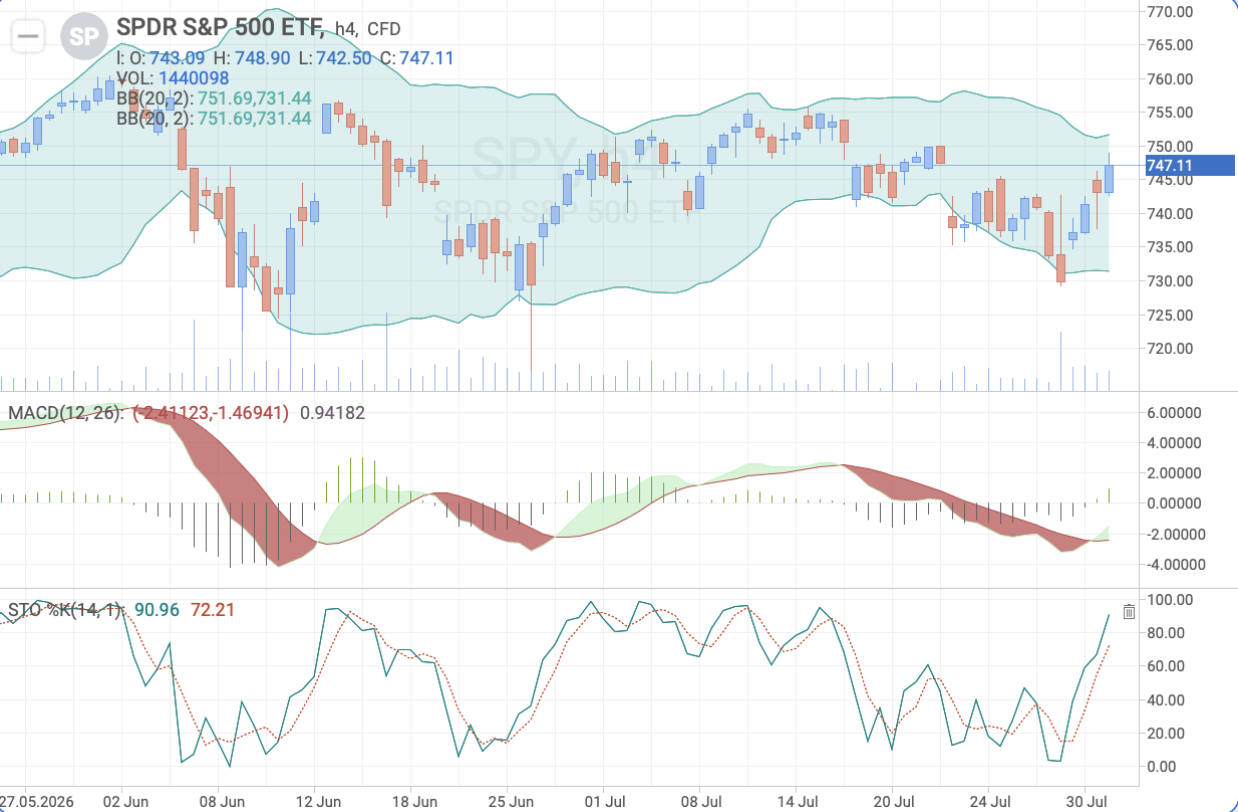
Key Levels: S&P 500
| Level | Value |
|---|---|
| Resistance | 750.00 / 755.00 |
| Support | 735.00 / 730.00 |
| Target | 755.00 |
ALL
Week
Why It Matters
The sharp strengthening of the yen points to probable currency intervention by the Japanese authorities, meaning direct purchases of yen by the Ministry of Finance to defend the exchange rate. This is a key factor for the whole FX market. Intervention moves USD/JPY within minutes, and because the pair is widely used to fund positions in other currencies, the shock spreads quickly to the rest of the majors.
Market Reaction
Instruments to watch: USD/JPY, the broader FX market, global risk appetite. Confirmed action from Tokyo would drive a fast decline in USD/JPY and lift demand for defensive assets. A calm week without intervention would let the pair stabilise and rebuild part of the lost ground.
Market Sentiment
Positioning around the yen is defensive. The intervention factor remains the main risk for the currency market, and participants increasingly price in the probability of repeat action from the authorities. That expectation caps rallies in USD/JPY and makes every move sharper than usual. The result is an asymmetry that traders should plan around: upside in the pair is limited, while corrections can be fast and deep. On the chart, USD/JPY has already corrected sharply and MACD shows strong bearish momentum. A close below 157.00 would confirm the move lower and open the road toward 155.00.
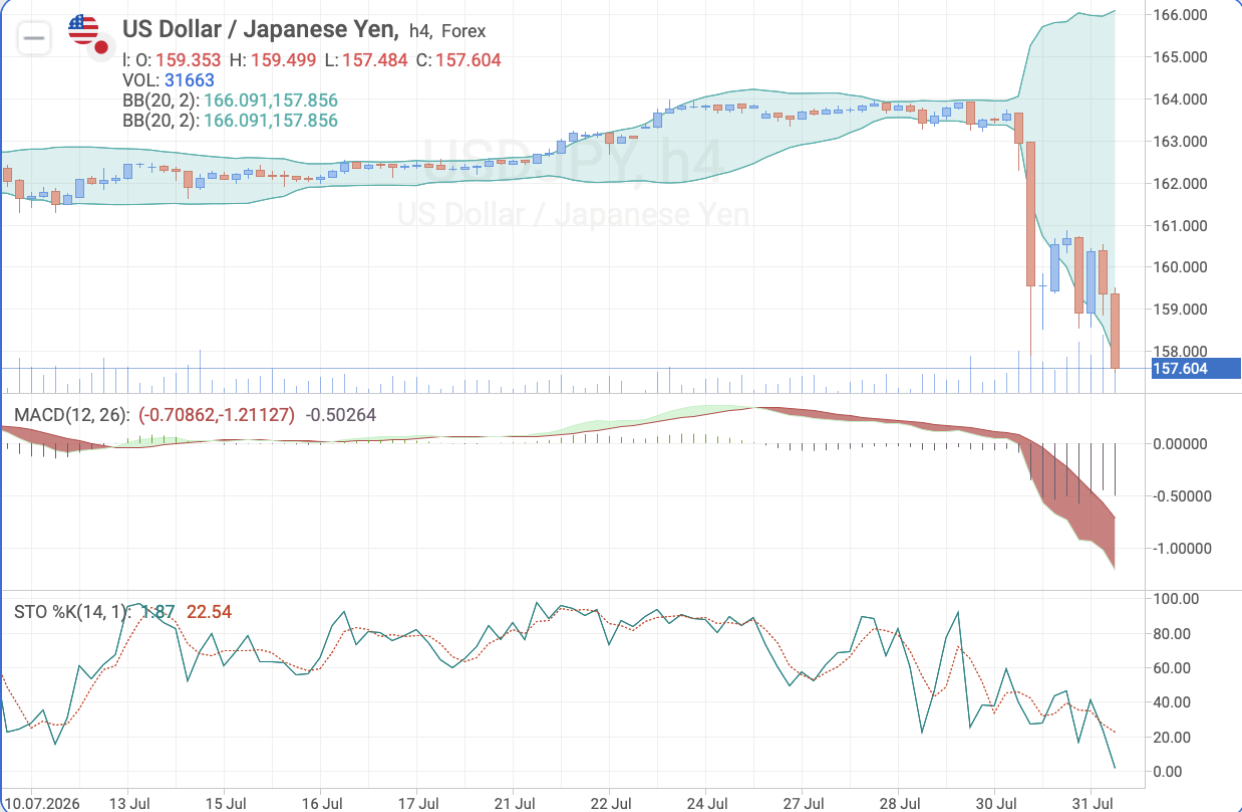
Key Levels: USD/JPY
| Level | Value |
|---|---|
| Resistance | 160.00 / 162.00 |
| Support | 157.00 / 155.00 |
| Target | 155.00 |
7
Aug
Why It Matters
China remains a key driver of global demand, and its export and import figures work as an early signal on the health of the world economy. Exports show how much the rest of the world is buying from Chinese factories, while imports show how much raw material China itself is consuming. For Australia, the largest supplier of iron ore to Chinese industry, the import line is the number that matters most, which is why AUD/USD reacts first.
Market Reaction
Instruments to watch: AUD/USD, commodities, Asian stock markets. Strong data would support risk appetite across the board. Weak figures would increase pressure on commodity currencies and pull industrial metals lower with them.
Market Sentiment
Consensus on the Australian dollar is cautiously positive. Investors continue to look for signs of stabilisation in the Chinese economy after a run of mixed releases. Solid foreign trade numbers can support global risk appetite for a while, though weak domestic demand inside China remains the main constraint on any recovery. Market reaction may therefore prove short-lived if the data fails to confirm a durable trend. On the chart, AUD/USD has broken out of its range to the upside. MACD momentum is accelerating, while the stochastic sits in overbought territory, which leaves room for a corrective pullback before the next leg higher.
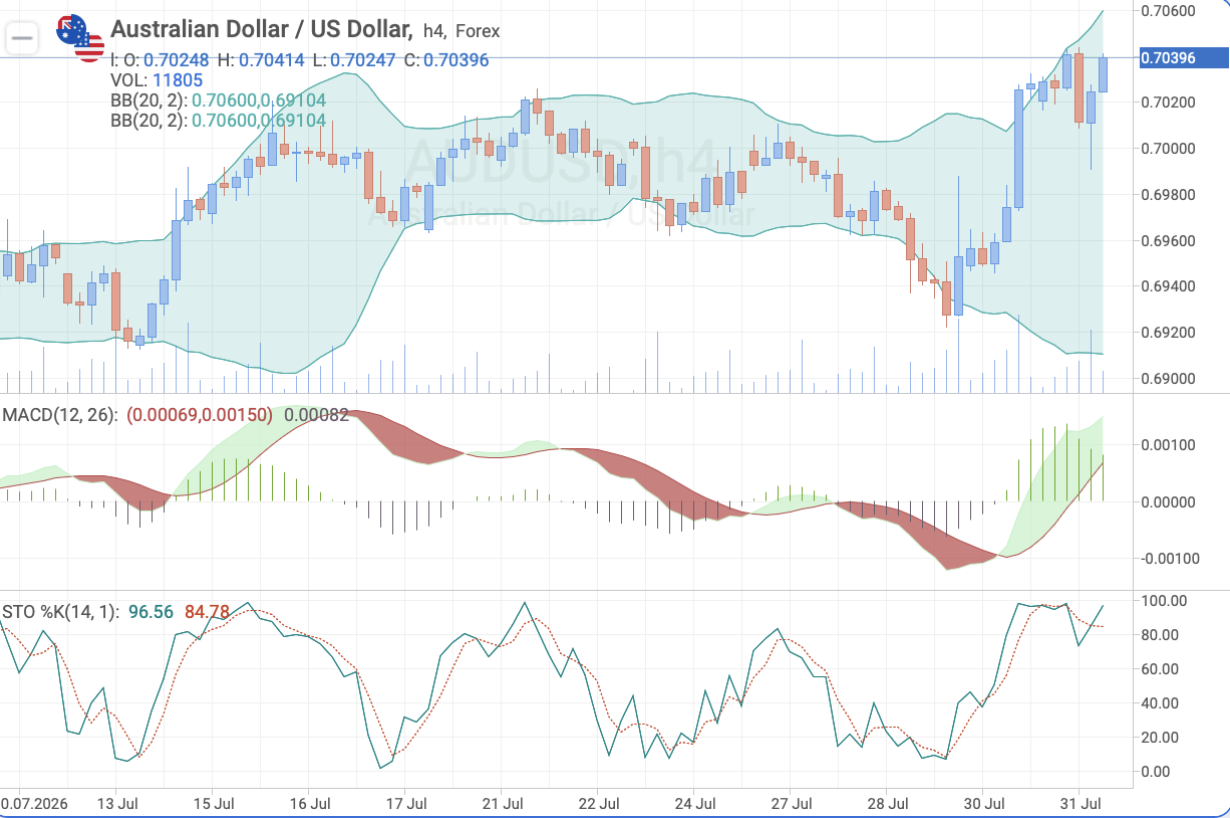
Key Levels: AUD/USD
| Level | Value |
|---|---|
| Resistance | 0.7060 / 0.7100 |
| Support | 0.6980 / 0.6920 |
| Target | 0.7100 |
7
Aug
Forecast
+79K
Previous
+57K
Why It Matters
Non-Farm Payrolls is the main US labour market report and the single release that shapes expectations for the Fed rate more than any other. The figure counts how many jobs the economy added outside agriculture over the month. When hiring stays strong, the Fed has room to keep rates high; when it slows, the case for cuts strengthens. With the previous reading at just 57K, the market comes into this release already alert to the possibility that employment growth is losing pace.
Market Reaction
Instruments to watch: EUR/USD, S&P 500, gold, US Treasury yields. A strong report would strengthen the dollar and weigh on EUR/USD and gold. A weak number would support risk assets, lift gold and give the euro room to advance against the dollar.
Market Sentiment
Dollar sentiment ahead of the release is nervous. After the underwhelming previous report, the market reacts sharply to every labour market signal, and any deviation from the 79K forecast can quickly reprice the Fed path. Weak data would push investors to price in faster policy easing, while a strong report would bring the case for rates staying high for longer back into play. EUR/USD enters the release with the dollar already softening, so the euro has the more favourable technical setup of the two currencies. The reaction on Friday will show whether the pair can build on that position or hands the initiative back to the dollar.
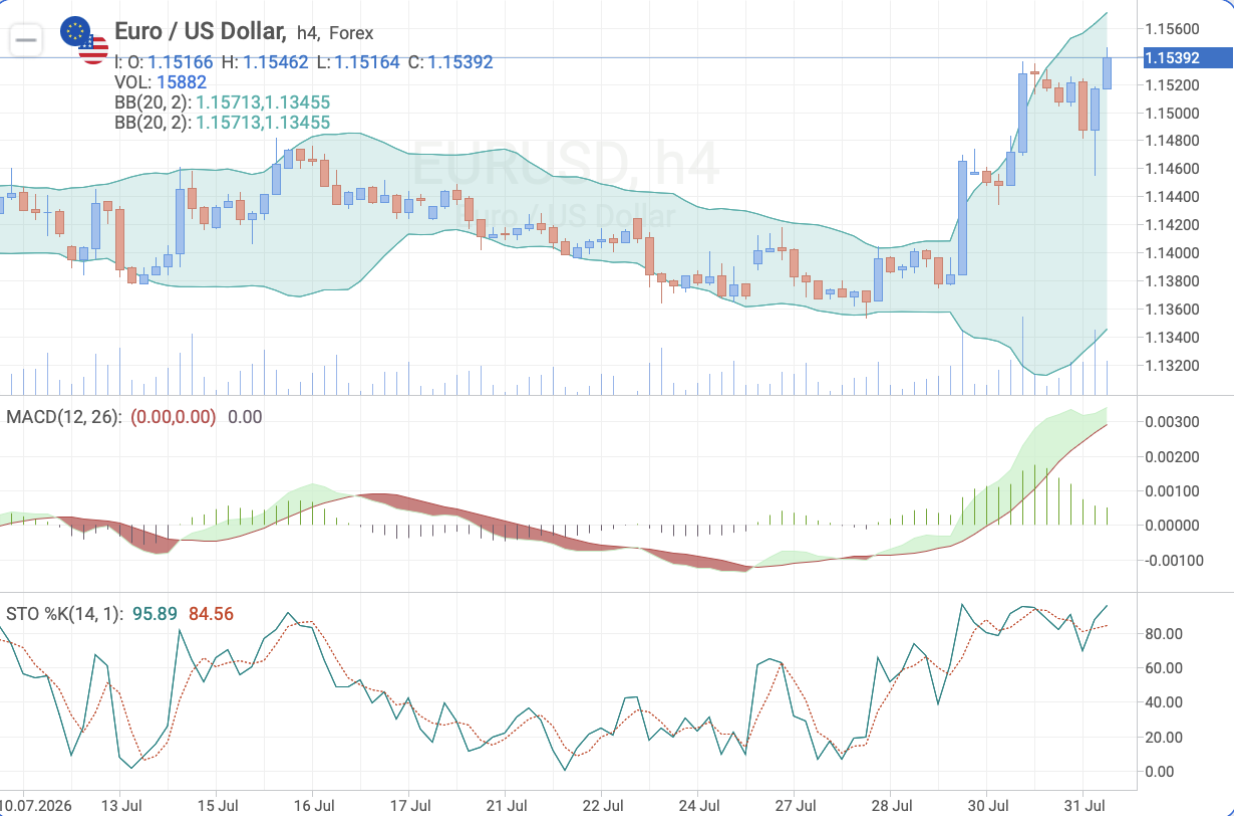
Key Levels: EUR/USD
| Level | Value |
|---|---|
| Resistance | 1.1550 / 1.1600 |
| Support | 1.1480 / 1.1440 |
| Target | 1.1600 |
7
Aug
Forecast
6.5%
Previous
6.5%
Why It Matters
The Canadian labour market feeds directly into Bank of Canada policy and the direction of CAD. Employment is one of the two mandates the central bank watches, so a rising unemployment rate strengthens the argument for lower rates and a weaker currency. The release lands at the same moment as US payrolls, which makes USD/CAD the most active pair of the session: both sides of the quote get new information simultaneously.
Market Reaction
Instruments to watch: USD/CAD, oil, Canadian bond yields. A rise in unemployment would put pressure on the Canadian dollar. A decline would support CAD and reinforce the current downward move in USD/CAD.
Market Sentiment
Positioning on the Canadian dollar is moderately constructive. Canadian statistics carry extra weight while the currency market stays unsettled, and with global demand still soft, any sign of deterioration in employment would widen the pressure on CAD. Steady data could stabilise the currency for a time even if the dollar firms broadly. On the chart, USD/CAD remains under pressure and MACD sits in negative territory. A close below 1.4000 would reinforce the downward move and bring 1.3920 into play.
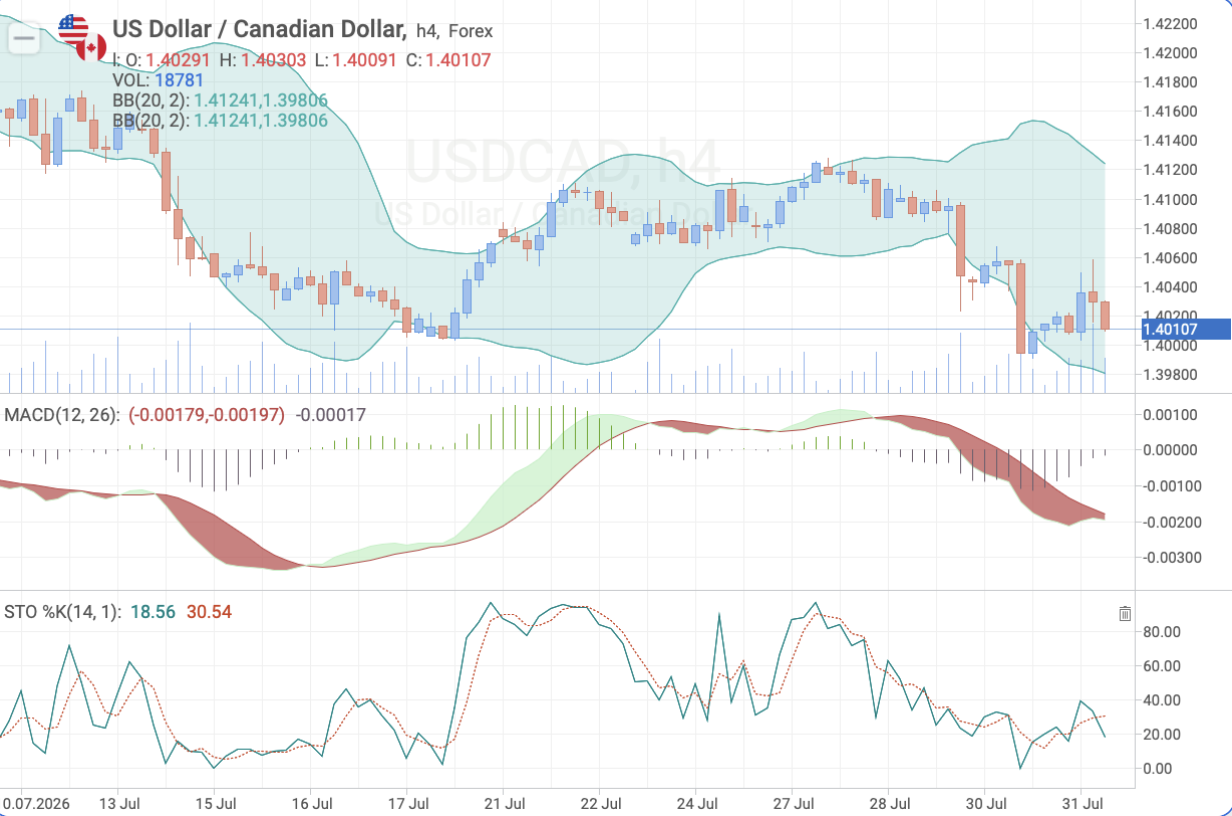
Key Levels: USD/CAD
| Level | Value |
|---|---|
| Resistance | 1.4100 / 1.4150 |
| Support | 1.3980 / 1.3920 |
| Target | 1.3920 |
Track the forecast and the actual figure for every event, because the gap between consensus and the released number is what determines how sharply prices move. Learn more about how to read the economic calendar and trade the news.
Conclusion
The week opens quietly with Monday's ISM Manufacturing PMI and closes with three releases stacked into a single Friday session. China trade data sets the tone in Asia, US payrolls follow in the European morning, and Canadian employment figures arrive alongside them. Friday is the day that decides the dollar's direction into the second week of August.
The yen deserves separate attention throughout. While the risk of intervention stays on the table, USD/JPY offers limited upside and quick corrections, and that dynamic shapes positioning across the whole FX market. A soft payrolls print combined with steady Chinese trade figures would give commodity currencies and stock indices a clear window to extend their recovery, and the levels above show exactly where to look for confirmation.
Any information provided in articles on this website is based solely on the personal opinions of the authors. These articles should not be construed as trading recommendations or a call to action. The authors and RoboForex accept no responsibility for the results of any trades made on the basis of these recommendations and reviews. Past performance is not indicative of future results. Trading stocks and CFDs involves a high risk of capital loss.