
ISM Services PMI and Japan consumer confidence on Monday, FOMC minutes on Wednesday and Canada's jobs report on Friday. What each release could mean for US 30, EUR/USD, USD/JPY and USD/CAD.
All posts

15 min
The RBA rate decision on Tuesday, US Core PCE on Wednesday, Japan's Tankan on Thursday and Non-Farm Payrolls on Friday. What each release could mean for AUD/USD, EUR/USD, USD/JPY and the US 500.
17 min
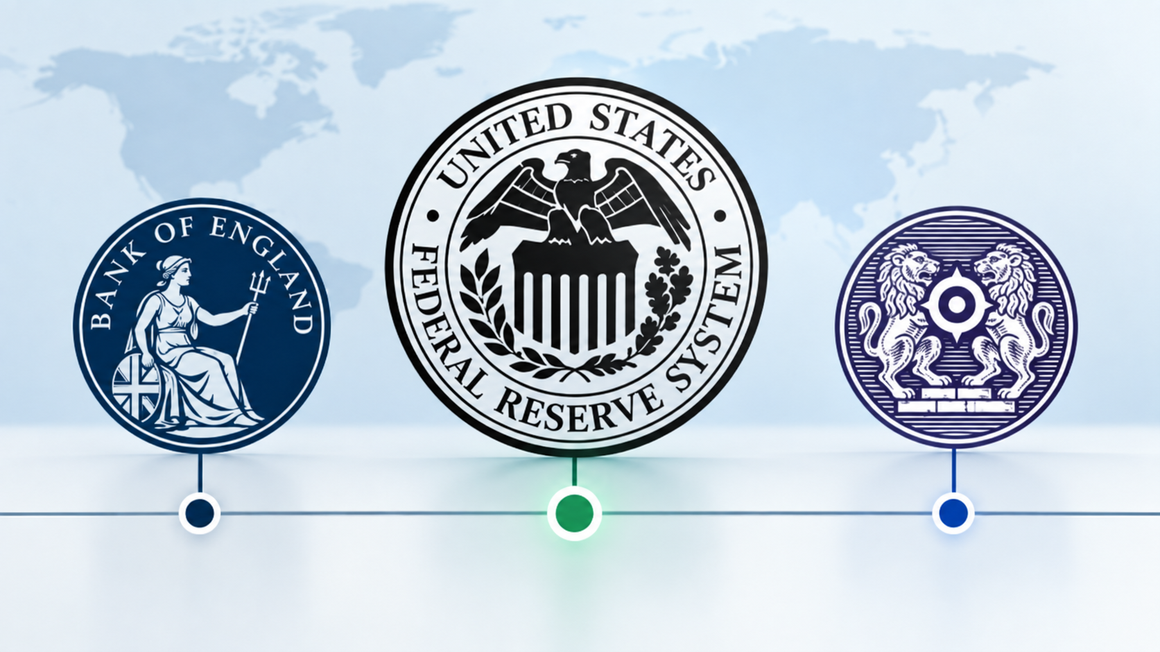
September's busiest week puts three of the world's largest central banks on the calendar at once. The Fed rate decision comes first on Wednesday, followed by the Bank of England on Thursday and the Bank of Japan on Friday, and together they will set expectations for interest rates, bond yields and the major currencies going into autumn.

16 min
The dollar's direction this week comes down to one release. Core PCE, the inflation gauge the Fed watches most closely, arrives on Wednesday alongside the second estimate of Q2 GDP. Economists expect the monthly figure to accelerate to 0.3% after June's reading of just 0.1%, and that gap is what markets will trade.

15 min
The final week of July delivered high volatility and a clear change of drivers. Markets priced in several factors at once: renewed tension in the Middle East, the start of the US corporate earnings season and firm rhetoric from the Federal Reserve, a combination that pushed stock indices into a correction. The currency market added a second source of movement. The Japanese yen strengthened sharply on the likelihood of official intervention, which amplified swings in USD/JPY and forced a broad reassessment of dollar positions.

12 min
Oil prices climbed last week as tensions around the Middle East intensified, with renewed friction near the Strait of Hormuz adding an extra risk premium to commodity markets and lifting volatility across global assets. At the same time, the start of the US corporate earnings season put pressure on stock indices, as investors began locking in profits after the second-quarter rally. The US dollar has held steady through this backdrop, and major currency pairs remain confined to familiar ranges. The week ahead brings the Federal Reserve's rate decision, a fresh batch of Japanese data, the Bank of England's meeting and a heavy block of US macro releases, giving traders plenty to react to across FX, stocks and bonds.

13 min
Last week showed that markets are gradually moving past individual geopolitical headlines. Despite another exchange of strikes in the Middle East and nerves around the Strait of Hormuz, the oil sector spent most of the week in a narrow range. Investors are increasingly weighing the actual probability of supply disruption rather than the statements themselves, and that probability remains low for now.

9 min
Read the latest foreign currency trading forecast for 2024. Find out how the EUR/USD, GBP/USD, USD/JPY, and other currency pairs could change in 2024.

9 min
Get the USD/JPY forecast for 2023 and the longer term. Explore technical and fundamental analyses of the USD/JPY rate. Understand the reasons behind the changes in the USD/JPY rate. Check out the live USD/JPY chart from Tradingview.

7 min
USD/JPY Analysis for 2023. We will talk about the key factors affecting the movements of the USD/JPY pair under current conditions and analyse whether to expect the quotes to stop growing this year.