Nvidia CEO Return or Outside Hire: Three Scenarios for NVDA
Talk of an Nvidia CEO return met resistance on 16 November, when three people told Reuters that the board is not considering bringing back co-founder Jensen Huang. Investors and a petition still ask for it, Treasury Secretary Scott Bessent wants an outside CEO, and Nvidia reports quarterly results on 17 November with CFO Colette Kress as interim CEO. This article lays out three leadership scenarios for NVDA, with the odds a prediction market gives each one, how stocks moved after similar CEO changes and the levels RoboForex analysts watch.
TL;DR
- The board has set no timeline for the search; on Kalshi, traders give 43% to a permanent CEO named before 1 February 2027.
- In five past CEO changes, a returning CEO lifted the stock 6% to 8% on the first session and most of the gain was gone within a month, while abrupt exits cost 2% to 8%.
- NVDA closed 34.7% below its October high on 16 November, and options price a move of about 8.9% by the 18 November expiry.
Last updated: 17 November 2026
Market figures run to the 16 November close and Kalshi odds to about 07:45 UTC on 17 November. Odds and past cases describe what traders and stocks did, and they do not predict the outcome.
Follow Stock Markets in RoboForex MobileTrader
Quotes, charts and orders in one app, on your phone or in Telegram.
What Is Happening With the Nvidia CEO Search?
On 12 November Nvidia said Huang had stepped down as president, CEO and director, effective immediately. Kress, the chief financial officer, became interim CEO and keeps the CFO job until a successor is named, so one person holds both jobs through the report. Harvey C. Jones became the first board chair in the company's history. The board looks for a permanent CEO among internal and external candidates, and the company announcement gives no timeline.
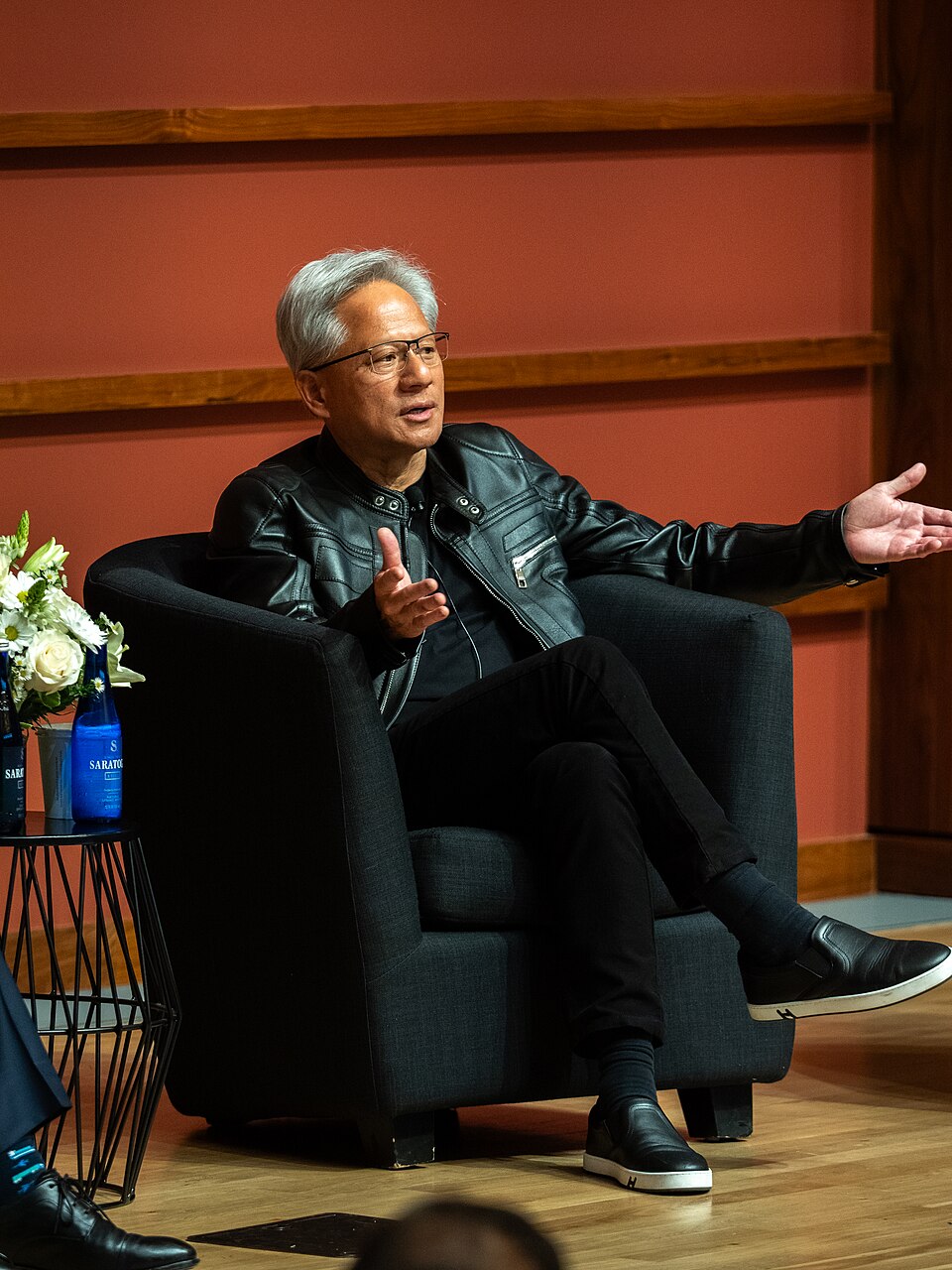
By 15 November the board was choosing a search firm and had not formally negotiated with any candidate, Fortune reported. An independent investigation into Huang's conduct is still under way. On 16 November three people told Reuters that the board is not weighing a return. "The Nvidia board is not considering bringing Jensen back," one of them said. No statement from Huang or Nvidia on a return has been published in the reports cited here.
Outside the boardroom, three groups have made public requests since the change.
| Who | What they asked | Source |
|---|---|---|
| Altimeter (Brad Gerstner) and Atreides (Gavin Baker) | Consider all options, including a return (14 November), and do not rush to replace Huang | CNBC, Reuters |
| "Stand with Jensen" petition | Bring Huang back; more than 180,200 signatures, with employee and shareholder status self-reported and unverified | Reuters |
| Treasury Secretary Scott Bessent | A sharp shake-up and a CEO from outside, tied to export compliance (15 November) | CNBC, Fortune |
Where NVDA Stands Before the Report
NVDA fell 4.12% on 16 November to 156.14 USD, its fifth lower close in six sessions, according to stockanalysis.com, and Nvidia has lost about 800 billion USD of market value since the news broke, according to Reuters. The close is 34.7% below the 6 October closing high of 239.24 USD and 10.1% below 173.73 USD, the last close before the CEO change, by our calculation. Nvidia reports at about 1:20 PM Pacific time on 17 November (21:20 UTC) with the call at 22:00 UTC, so 18 November is the first session after the results.
NVDA closes, 6 to 16 November, bars to scale from zero
6 Oct high
239.24
6 Nov
186.64
9 Nov
178.67
10 Nov
168.89
11 Nov
173.73
12 Nov
166.19
13 Nov
162.85
16 Nov
156.14
Closing prices in USD. Source: stockanalysis.com; CNBC for the 6 October close.
What Markets Price Before the Report
Kalshi Odds on the Next CEO
On Kalshi, a prediction market, traders buy contracts that pay out if an event happens, so a price of 0.19 USD reads as a 19% probability. The prices below are from about 07:45 UTC on 17 November and can move within hours.
Arm's Rene Haas leads Kalshi odds for Nvidia's next CEO at 19%
Probability implied by Kalshi prices, %. Names listed by Fortune plus Huang; every other name is at 7% or lower
- 1Rene Haas, CEO of Arm19%
- 2Ian Buck, Nvidia112%
- 3Jensen Huang212%
- 4Colette Kress, Nvidia8%
- 5Lisa Su, CEO of AMD3%
- Buck and Kress, both already at Nvidia, together reach 20%, one point above Haas.
- Three people told Reuters on 16 November that the board is not considering Huang's return.
Permanent CEO named before
| 1 December 2026 | 4% |
| 16 December 2026 | 12% |
| 1 February 2027 | 43% |
How it is calculated: a Kalshi contract pays 1 USD if the event happens, so a price of 0.19 USD reads as a 19% probability.
Source: Kalshi. Data as of 17 November 2026, about 07:45 UTC.roboforex.com/blog
Traders expect a long interim. By our arithmetic they give 57% to no permanent CEO before February, and no name has more than one chance in five. Haas leads the field, and the two insiders, Buck and Kress, together reach 20%.
The Move Options Price for the Report
RoboForex analysts, using Stocknear data at the 16 November close, put the move options price at about 8.9%, or 13.92 USD, by the 18 November expiry, a range of 142.22 to 170.06 USD. Options imply bigger swings than NVDA has shown over the past month, with implied volatility of 63.6% a year against 46.0% realised. The analysts mark two levels where the chart and options positions point to the same price.
| Level, USD | On the chart | In options |
|---|---|---|
| 170 | Former support from several lows in late 2025 and early 2026, resistance since the break lower | The strike with the most call options, and the top of the expected range |
| 150 | The low reached after the sharp fall | The strike with the most put options |
Source: RoboForex analysts; daily chart; options data from SquawkFlow and GEX Metrix at the 16 November close, for the 18 and 20 November expiries.
While 150 USD holds, the analysts see room for a recovery toward 160 to 165 USD and a test of 170 USD. A break below 150 USD brings 145 USD into focus, and a hold above 170 USD moves attention to 175 USD.
How Stocks Moved After Past CEO Changes
We looked at five US-listed companies where a long-serving CEO left abruptly or a former CEO came back. The table compares the last close before the news with the first session after it and with the close about one month later, next to the S&P 500 over the same days. Five cases are a small sample, so the table shows what happened and gives no average for NVDA.
| Case | What happened | First session | About one month later | S&P 500, same windows |
|---|---|---|---|---|
| Starbucks, January 2008 | Howard Schultz returned as CEO on 7 January, replacing Jim Donald | +8.1% (opened +9.8%) | +0.9% | -1.8% and -5.6% |
| Disney, November 2022 | The board removed Bob Chapek and reinstated Bob Iger on 20 November | +6.3% (opened +9.1%) | -5.3% | -0.4% and -2.2% |
| HP, August 2010 | Mark Hurd resigned on 6 August; CFO Cathie Lesjak became interim CEO | -8.0% | -16.2% | +0.5% and -1.6% |
| Intel, June 2018 | Brian Krzanich resigned on 21 June; CFO Bob Swan became interim CEO | -2.4% | -2.9% | -0.6% and +1.2% |
| McDonald's, November 2019 | The board removed Steve Easterbrook and named Chris Kempczinski, president of McDonald's USA, as successor | -2.7% | +0.2% | +0.4% and +1.5% |
Closes from Yahoo Finance, event dates from Wikipedia, our calculation. One month: to the close on 7 February 2008, 21 December 2022, 9 September 2010, 20 July 2018 and 4 December 2019.
Both returns opened 9% to 10% higher and closed below the open, and within a month most of the first-session gain was gone: Disney stood 10.9% below its first-session close and Starbucks 6.6% below it. The abrupt exits cost 2.4% to 8.0% on the first session. McDonald's named its new CEO at once and was back above its pre-news price within a month.
HP and Intel each had a CFO as interim CEO, the setup Nvidia has now, and they ended differently. HP named an outsider, Leo Apotheker, on 30 September 2010, 55 days after Hurd left, and its stock fell 3.1% in the next session. Intel kept Swan as interim CEO for 224 days, made him permanent on 31 January 2019, and the stock slipped 0.9% that day. Intel's first reaction also appears in our analysis of why Nvidia stock is down. NVDA closed 4.34% lower on its first session after the change, 12 November, between Intel's and HP's first-session moves.
Three Leadership Scenarios for NVDA
Each scenario combines what has been reported, what Kalshi traders price and the closest past case. None has a date, because the board has published no timeline for the search or for the investigation.
| Scenario | What has to happen | Kalshi, 17 November | Closest past case | NVDA after the same first-session move |
|---|---|---|---|---|
| 1. Insiders keep control | Kress stays interim past the report, and later the board may make her or Buck permanent | 57% for no permanent CEO before 1 February; Buck 12%, Kress 8% | Intel: CFO interim for 224 days; -0.9% on the day he was made permanent | About 154.7 USD |
| 2. An outside CEO | A search firm is hired and a filing names someone from outside Nvidia | Haas 19%; no other outside name above 7% (Lisa Su 3%) | HP: outsider named 55 days after the exit, -3.1% | About 151.3 USD, near the 150 USD support |
| 3. Jensen Huang returns | The board changes course, and the investigation ends in a way that allows it | 12% | Starbucks and Disney: +8.1% and +6.3%, most of it gone within a month | About 166.0 to 168.8 USD, below the 170 USD resistance |
The last column applies each past first-session move to the 16 November close, our arithmetic. It shows scale only: the report itself can move NVDA by more than any of these cases.
RoboForex analysts see two outcomes the stock is least prepared for: a quick, official return by Huang despite pressure from Washington, or a long vacuum that ends with an unexpected outside pick.
Scenario 1: Insiders Keep Control
If the board names nobody soon, or later makes Kress or Buck permanent, then Nvidia keeps its own people in charge, the path Intel took in 2018 and 2019. The odds point here, and Gerstner and Baker urged the board not to rush. In this case the 17 November report sets the next move more than the leadership question does, so the options range and the 150 and 170 USD levels are the reference. Our analysis of the report itself, with Nvidia's 108.0 billion USD revenue outlook, is in the Nvidia earnings date scenarios. This changes if the board announces an outside candidate.
Scenario 2: The Board Hires an Outside CEO
If the search ends with someone from outside Nvidia, then the board takes the course Bessent called for when he tied the change to export compliance. Haas leads the odds, and his move, or one by Lisa Su, would also leave Arm or AMD looking for a CEO. HP is the closest case, a CFO as interim CEO followed by an outsider, and a first-session move of HP's size would put NVDA near the 150 USD level the analysts treat as the line that matters. This changes if the board extends the search past February, which traders already see as more likely than not.
Scenario 3: Jensen Huang Returns
If Huang returns as CEO, then the founder who ran Nvidia for 33 years is back, which the petition asks for and the investors' letter asks the board to consider. The signals point both ways. The Financial Times reported that Huang was discussing a return, according to CNBC and Fortune, while three people told Reuters the board is not considering it, and Richard Windsor told Reuters he expects large institutional investors to oppose a return while investigations are unresolved. A return would also run against Bessent's public call for an outside CEO. Starbucks and Disney show the pattern a return can leave on a stock: a jump in the first session that mostly fades within a month. This changes if Huang or Nvidia rules a return out, or if the investigation ends and the board revisits the question.
What to Watch on 17 November
Three signals move the leadership story: a named search firm, a filing with a new CEO and any statement from Huang or Nvidia on a return. For the price, the analysts' 150 and 170 USD levels and the 142.22 to 170.06 USD range frame the first session after the results. You can follow NVDA and the stock market on StocksTrader at RoboForex. The live chart below shows the current price, so it moves after the dated figures above.
Conclusion
Until the board names a search firm or a candidate, the 17 November report sets NVDA's next move, and the 150 USD level is the first test RoboForex analysts watch after the results.
FAQ
What is happening with the Nvidia CEO?
Jensen Huang stepped down as Nvidia's president and CEO on 12 November 2026. CFO Colette Kress is interim CEO, and the board is looking at internal and external candidates with no timeline. Nvidia reports quarterly results on 17 November under the interim leadership.
Why did Jensen Huang step down as Nvidia CEO?
Nvidia has not given a reason. Its 12 November announcement says only that Huang stepped down as president, CEO and director, effective immediately. The board had opened an independent investigation on 8 November, and it is still under way. Our analysis of the Nvidia earnings date sets out the timeline.
Will Jensen Huang return as Nvidia CEO?
No return has been announced, and Reuters reported on 16 November that the board is not considering one. On 17 November Kalshi traders gave Huang a 12% chance of being Nvidia's next CEO. Investors Altimeter and Atreides asked the board to consider all options, while Treasury Secretary Scott Bessent called for an outside CEO.
Who could be Nvidia's new CEO?
Fortune lists Colette Kress and Ian Buck from inside Nvidia, Lisa Su of AMD and Rene Haas of Arm. On 17 November Kalshi traders put Haas first at 19%, followed by Buck at 12% and Kress at 8%.
How did stocks react when a former CEO came back?
Starbucks rose 8.1% in the first session after Howard Schultz returned in January 2008, and Disney rose 6.3% after Bob Iger returned in November 2022. Within about a month both stocks had given back most of the first-session gain.
- Nvidia Earnings Date 17 November: Scenarios With an Interim CEO: the outlook range and price levels for the report.
- Why Is Nvidia Stock Down?: the sector move of 5 November and the company move of 9 November.
- NVIDIA Funds OpenAI, OpenAI Buys NVIDIA Chips: What the Circular Deal Means for NVDA Stock: the money flows behind Nvidia's revenue.
Any forecasts contained herein are based on the author's independent analysis and reflect their personal opinion. These articles should not be construed as trading recommendations or a call to action. The authors and RoboForex accept no responsibility for the results of any trades made on the basis of these recommendations and reviews. Past performance is not indicative of future results. Trading stocks and CFDs involves a high risk of capital loss.