
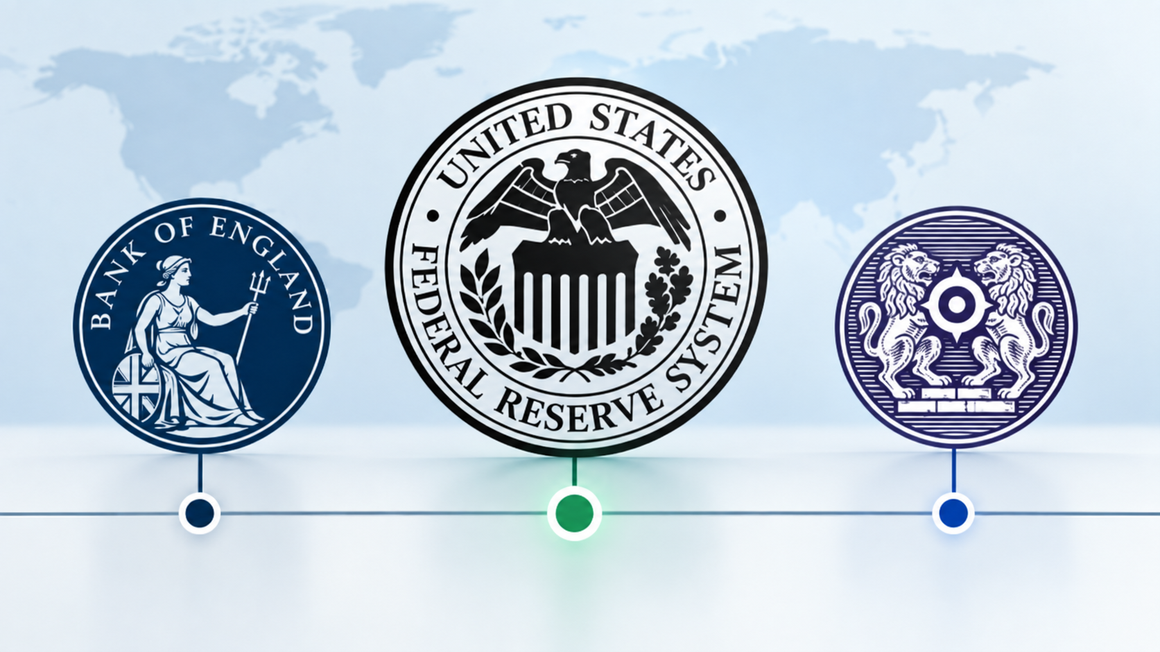
September's busiest week puts three of the world's largest central banks on the calendar at once. The Fed rate decision comes first on Wednesday, followed by the Bank of England on Thursday and the Bank of Japan on Friday, and together they will set expectations for interest rates, bond yields and the major currencies going into autumn.
All posts

16 min
The first week of September settled nothing. The US labour market report showed employment holding up while the pace of hiring slows, which left the Fed's next step exactly where it was. The dollar stayed strong and stock indices finished the week without a clear idea. This week hands the market two answers instead: the ECB decides on Thursday, and the US CPI forecast arrives on Friday as the last major number before the Fed meets in September.

16 min
August closed on a firm note for US stocks, carried by the first corporate reports of the season. Attention now swings back to the macro calendar, and the Non-Farm Payrolls forecast on Friday is what this week comes down to. Before it, the United States reports JOLTS job openings and the ISM Manufacturing PMI on Tuesday, Australia publishes second-quarter GDP on Wednesday, and the Bank of Canada announces its rate decision the same day.

20 min
Eli Lilly has started selling Foundayo, its once-a-day weight loss pill, in the United Kingdom. This is the first European market for a drug that the company hopes will follow Mounjaro and Zepbound, the two products that now bring in almost 15 billion USD every quarter. The LLY stock forecast below sets out what the launch changes for the shares over the next one to three months, with a full set of trade parameters.
16 min
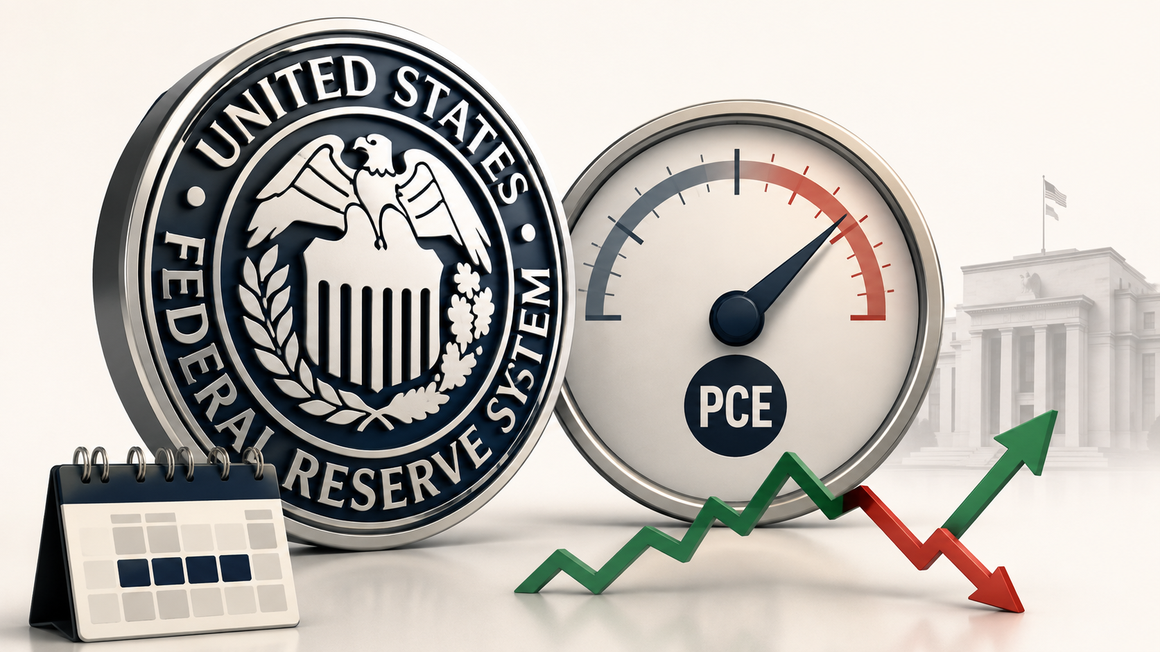
The dollar's direction this week comes down to one release. Core PCE, the inflation gauge the Fed watches most closely, arrives on Wednesday alongside the second estimate of Q2 GDP. Economists expect the monthly figure to accelerate to 0.3% after June's reading of just 0.1%, and that gap is what markets will trade.

18 min
Meta is under pressure from a major court case in California. If the outcome touches the algorithms and the advertising model behind Facebook and Instagram, META shares have room to slide toward 440 USD. Below is the trade setup, the levels that confirm it, and the metrics that will show whether the pressure is reaching the business.
15 min
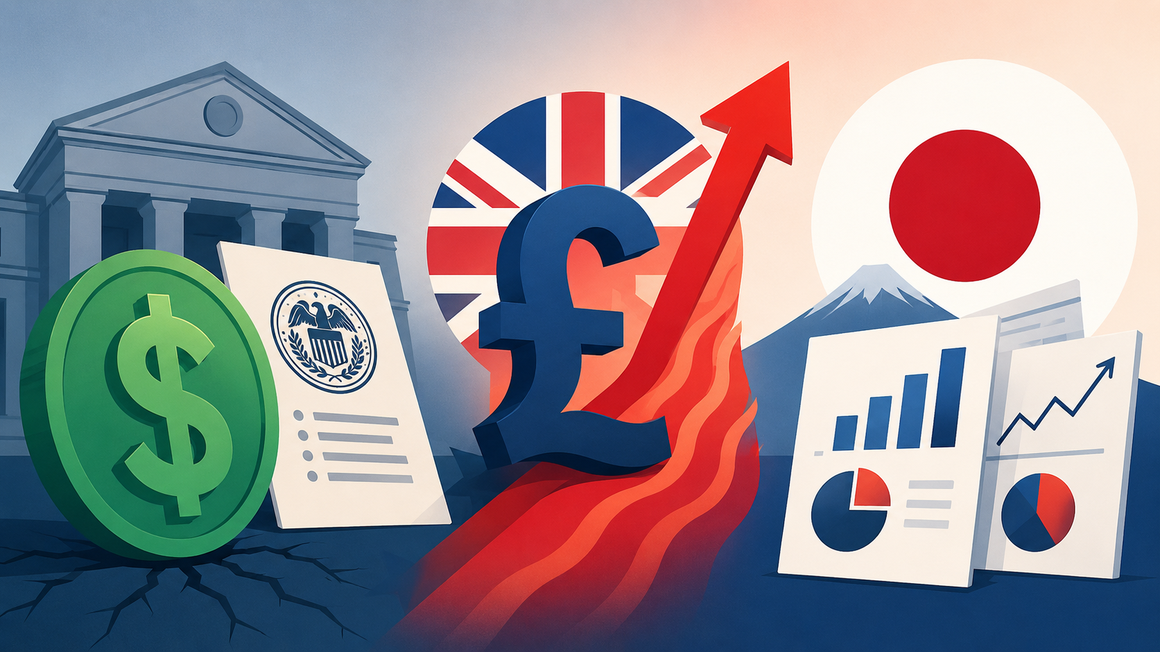
Another August week passed relatively calmly after the series of strong moves at the start of the month. Tension in the Middle East made itself felt again, though everything paused by the end of the week, which reduced the geopolitical premium in oil prices. At the same time investors kept assessing the condition of the American economy after fresh signals from the labour market and the July inflation data.

23 min
Gold Fed rate hike bets have been the single biggest weight on the metal all year, and over one week in August that weight came off. US payrolls fell by 23,000 in July when the market was looking for a gain of about 80,000, and consumer price inflation then slowed to 3.4%. The implied odds of a September rate increase have dropped to around 40%, from roughly two thirds at the start of the month. Gold has recovered more than 430 USD from its June low and now trades at 4,373 USD, just under the 200-day moving average it lost in June.
21 min
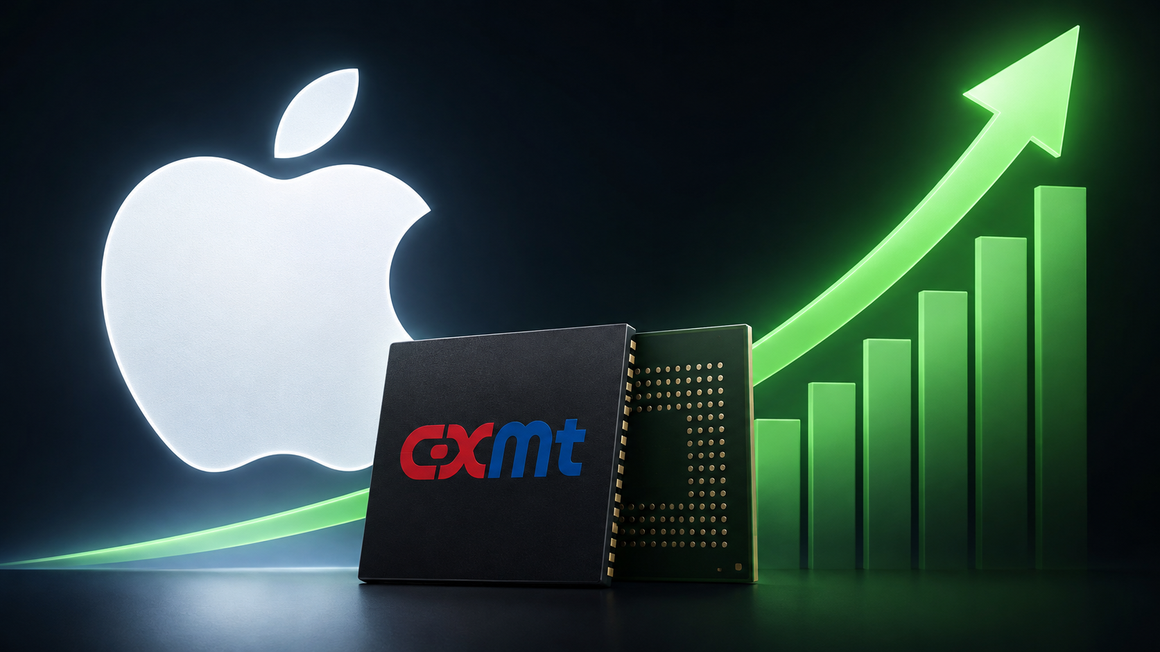
Apple CXMT memory chips are now in testing, and that one supply chain change sits at the centre of this AAPL stock forecast. Memory prices are rising fast enough to squeeze the gross margin on every iPhone and Mac the company builds. Apple's own guidance for the September quarter came in below what the market expected, and the share price fell more than 7% after it was published. A breakout above resistance at 317 USD is the level that turns this story into a trade.

18 min
Last week returned geopolitics to market pricing. Developments in the Middle East periodically added a risk premium to energy prices, although tension eased by Friday. Another headline event was the coordinated action by Japan and the United States in support of the yen, after which USD/JPY dropped sharply away from its 40-year high. At the same time, the US labour market delivered fresh signs of cooling: July Non-Farm Payrolls came in below expectations and earlier readings were revised down, which widened expectations for a softer Fed policy path.

15 min
ExxonMobil doubled its net profit and more than tripled its free cash flow as oil prices climbed. A local correction is possible after such a strong run, yet a breakout above 158 USD could open the way for XOM shares to reach 177 USD.

15 min
The final week of July delivered high volatility and a clear change of drivers. Markets priced in several factors at once: renewed tension in the Middle East, the start of the US corporate earnings season and firm rhetoric from the Federal Reserve, a combination that pushed stock indices into a correction. The currency market added a second source of movement. The Japanese yen strengthened sharply on the likelihood of official intervention, which amplified swings in USD/JPY and forced a broad reassessment of dollar positions.

21 min
NVIDIA is taking on a second job. Alongside selling AI accelerators, the company is now in talks to financially guarantee the data centre that will buy them. Investors sold NVDA shares by 5% on the news, and the daily chart has arrived at a level that decides the next move: support at 195 USD. A confirmed close below it opens the way toward 150 USD.

12 min
Oil prices climbed last week as tensions around the Middle East intensified, with renewed friction near the Strait of Hormuz adding an extra risk premium to commodity markets and lifting volatility across global assets. At the same time, the start of the US corporate earnings season put pressure on stock indices, as investors began locking in profits after the second-quarter rally. The US dollar has held steady through this backdrop, and major currency pairs remain confined to familiar ranges. The week ahead brings the Federal Reserve's rate decision, a fresh batch of Japanese data, the Bank of England's meeting and a heavy block of US macro releases, giving traders plenty to react to across FX, stocks and bonds.

16 min
Boeing has received two important positive signals this week. First, the US Federal Aviation Administration (FAA) expects to certify the Boeing 737 MAX 7 and 737 MAX 10 soon. Second, SMBC Aviation Capital, one of the world's largest aircraft leasing companies, has ordered 100 aircraft from the 737 MAX family.